
Notes to Oblates of Mount Angel Abbey
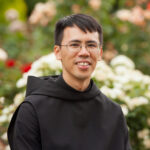 Fr. John Paul Le, OSB, director of the oblates of Mount Angel Abbey, writes frequent notes to the oblates of Mount Angel Abbey. The oblates are a vibrant and active community of lay people and priests who strive to live the Holy Rule of St. Benedict in the spirit of Mount Angel Abbey, as far as their state in life permits. The notes are a mix of spiritual reflection, instruction, and updates on current events within the community of monks and oblates.
A Note to Our Dear Oblates
October 9, 2026
Dear Oblates,
The Tools of Good Works, continued
“You must not be proud, nor be given to wine. Refrain from too much eating or sleeping, and from laziness.” (RB 4:34-38)
These verses immediately follow St. Benedict’s words on patiently enduring injury, curses and persecution. Is there a connection with these two paragraphs? I would say, “Yes.” When we are wronged, there can be a strong drive towards pride. We think to ourselves, “I was in the right.” “He shouldn’t have done that.” “She was cruel with her speech.” We may even adopt a victim mentality, seeing the world as bent against us. Our pride leads us to replay these unjust scenarios, and we always come out as the righteous servant, who bears the blows of unfair treatment. This prideful brooding can lead us to judge and even condemn others as people with evil intent. These thoughts and interior dispositions can have devastating consequences for community life.
This pride can also lead us to self-indulgent behavior. We think that because we have been wronged, we now have a right and duty to fulfill our own needs and desires. Therefore, when negativity and sadness and anger creep in, we seek comfort in material things. We give ourselves over to wine; we eat too much; sleep too much; and we fall into laziness. Modern activities may include shopping, scrolling, and isolation. The danger with these actions is that they do give us consolation in our difficulty and sorrow. Eating and drinking and sleeping make us feel better, and we do need to do these to a certain extent. However, we easily fall into excessiveness, attachment and addiction. Rather than going to God in prayer when we are sad, we seek physical comforts. As time progresses, we have developed the vices of gluttony and acedia and find it difficult to free ourselves.
St. Benedict recognizes the need for food and drink, sleep and rest, but he desires that these be done in moderation. We are to care for the needs of the body and also those of the spirit.
Do you find yourself going to physical comforts when you feel sad? What can you do spiritually instead?
Our next Oblate Sunday is October 18th with Fr. Michael giving the fourth of his four part series. The fourth topic focuses on leisure. For in-person, click here; for remote option, click here. The Oblate Sunday begins with Mass at the Abbey at 9am. It is followed by a potluck brunch after Mass in the guesthouse dining room. The conference starts at 11am in the Westminster Room.
Prayer request. Please pray for Abbot Jeremy and all those on his Fellowship Retreat. Thank you for your prayers for Abbot Gregory; he is home now and recovering well. Please know that you can always send your prayer requests through our Oremus program.
Yours in Christ,
Fr. John Paul, OSB
Director of Oblates
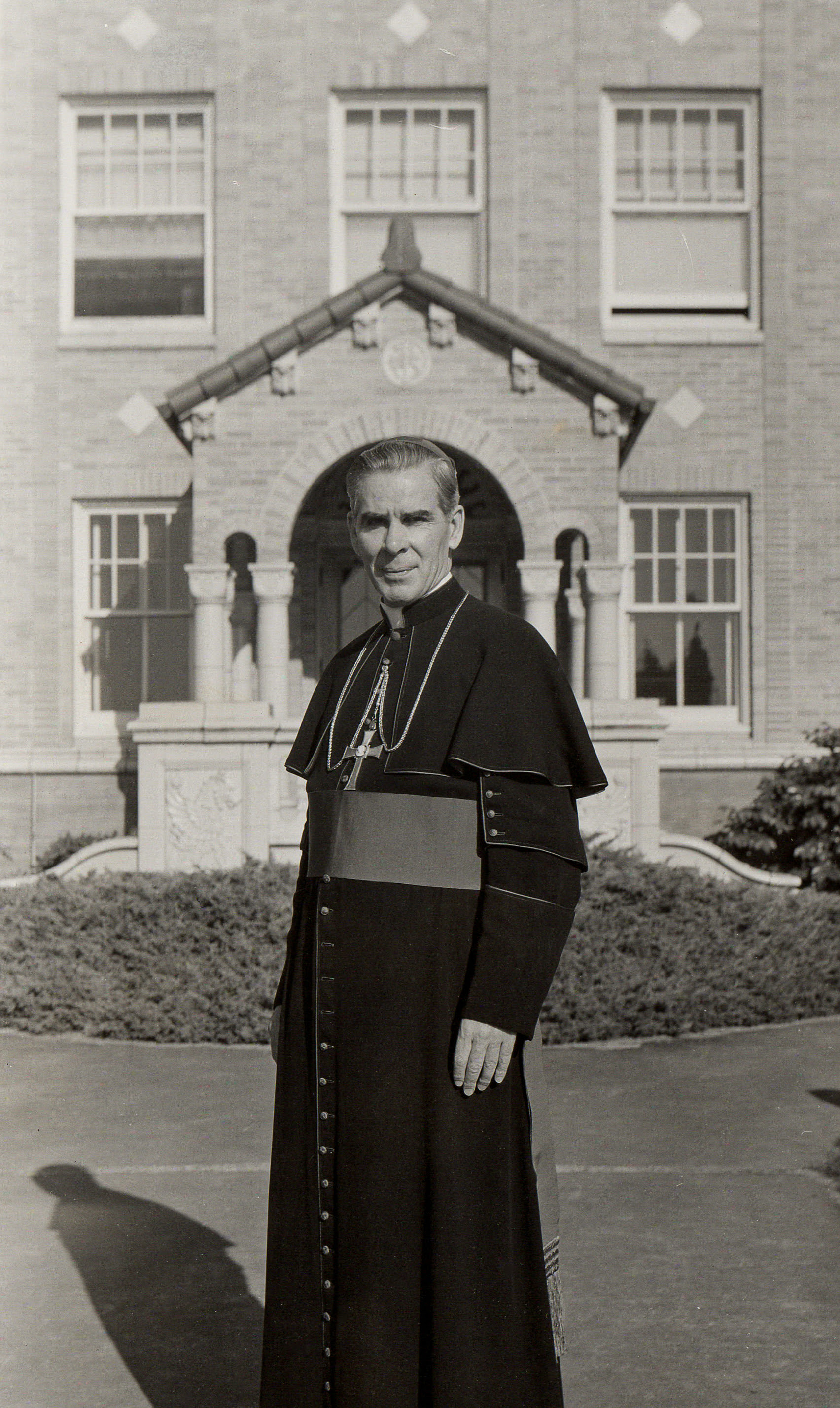
Around the year 1958 the Blessed Bishop Fulton Sheen gave a retreat to the priests of the Archdiocese of Portland here at the Abbey.
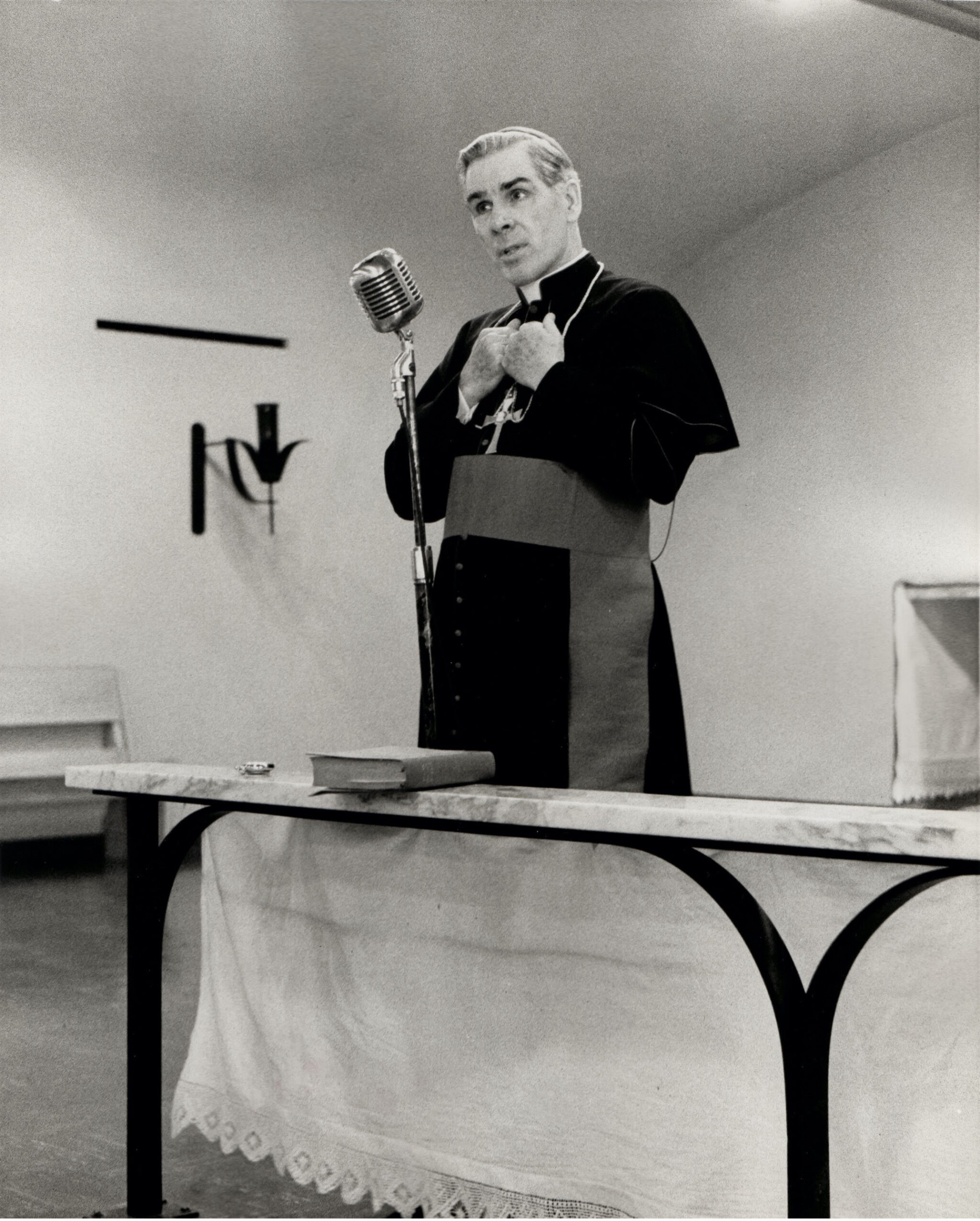
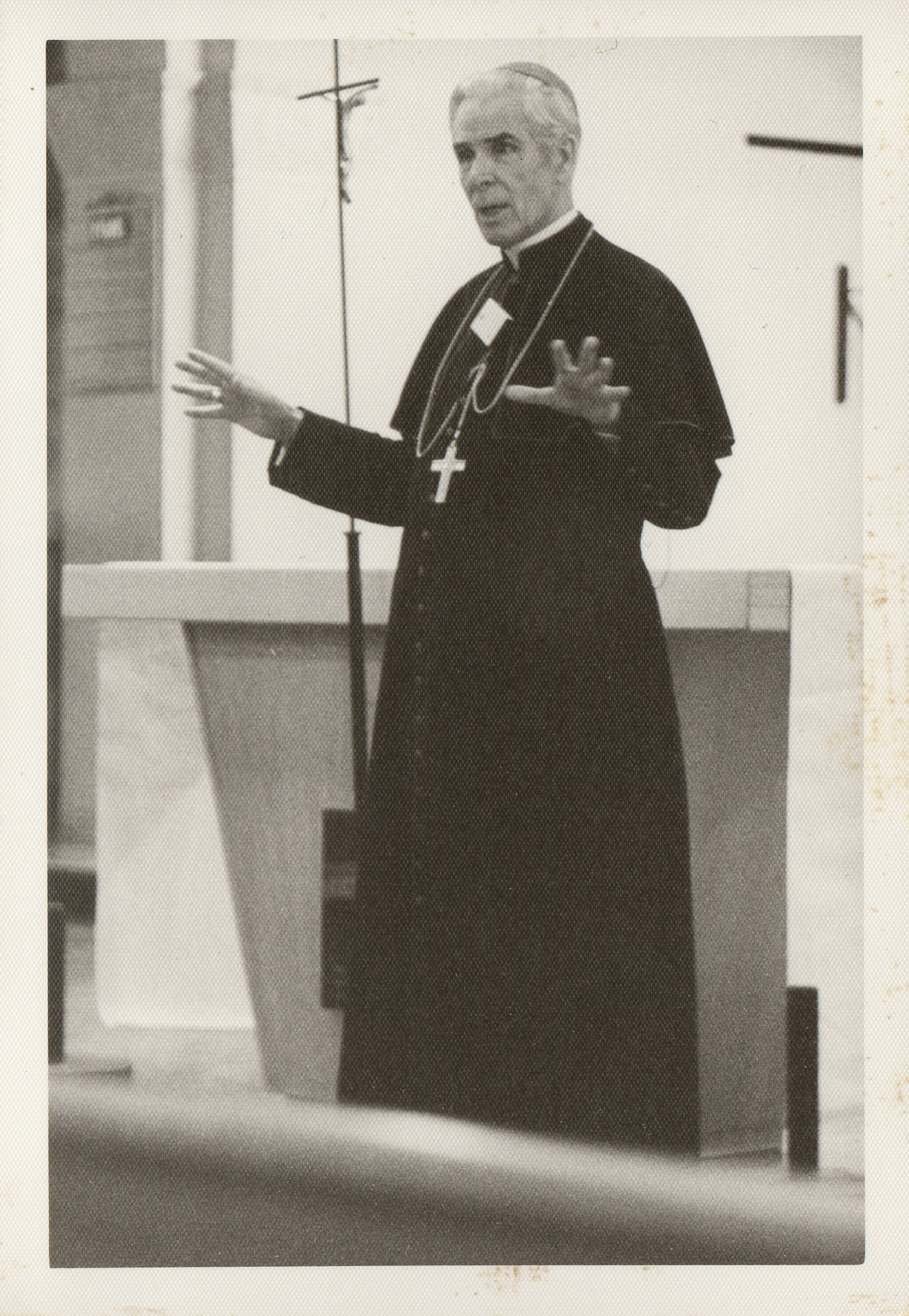
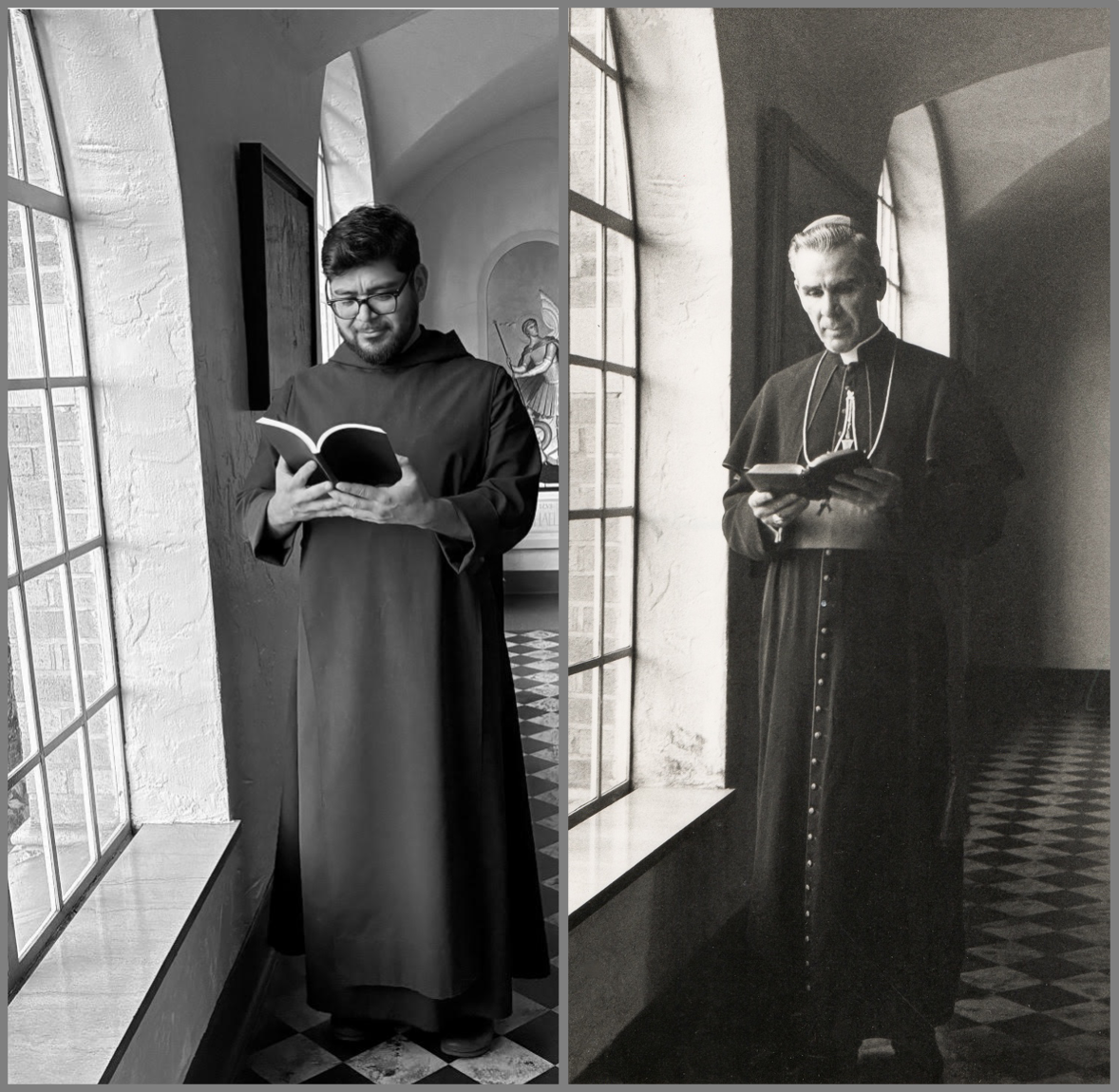
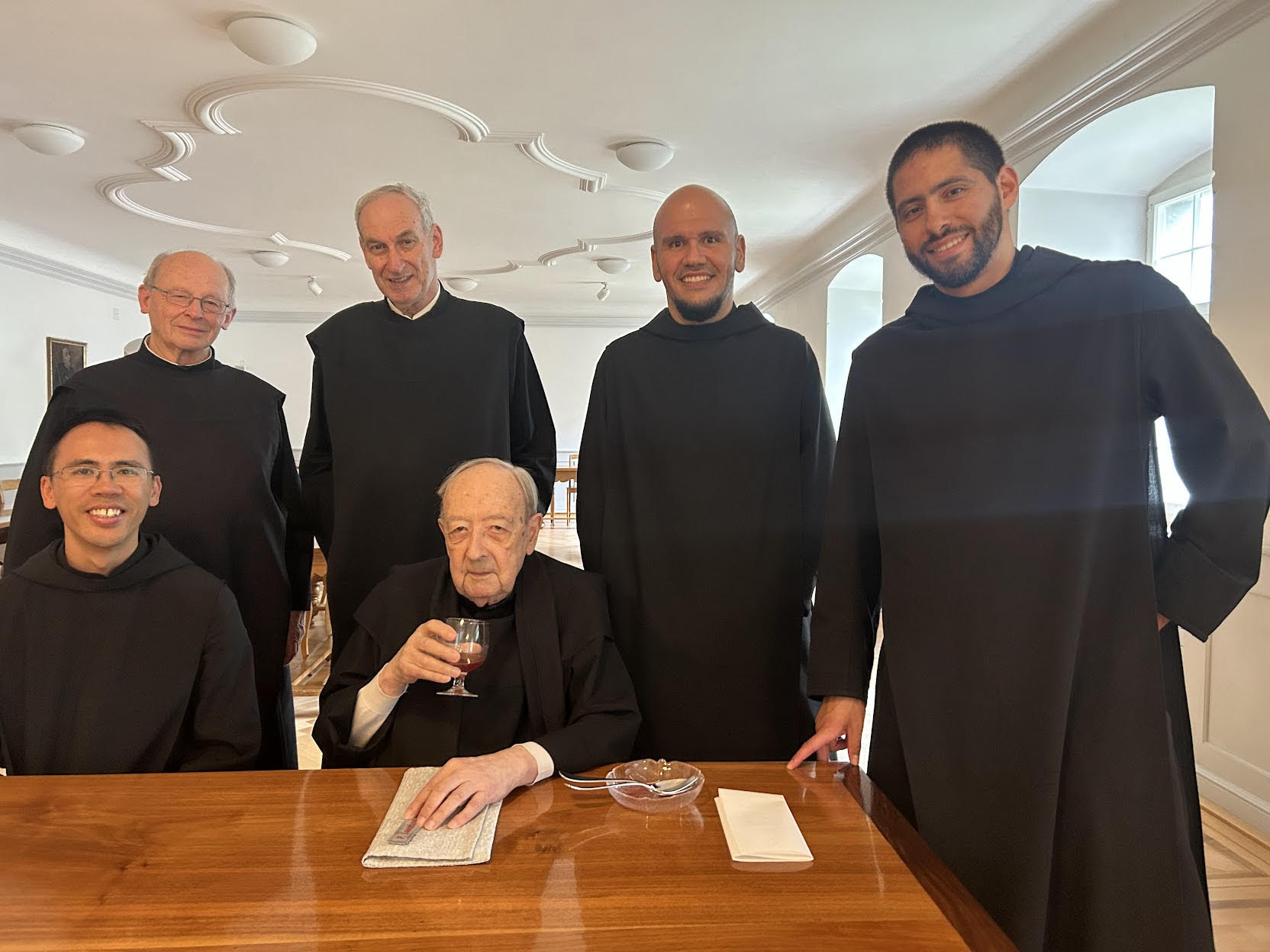
Fr. Israel asked me to read at table for him one night, and when I agreed he sent me this picture of Blessed Fulton Sheen. The next night he asked me to read for him again, and I replied, “it will cost you another photo.” So I took one in the same spot as Blessed Fulton Sheen. And here we have a Blessed of the Church and hopefully a future Blessed.
Oblate Calendar
2026
Oct
18- Oblate Sunday: Fr. Michael. Leisure.
Nov
6-8 – Oblate Retreat. Fr. Michael
8 – Oblate Sunday: Fr. Philip. Our Lady of Guadalupe: Part I.
Dec
8 – Immaculate Conception (plenary indulgence may be obtained by oblates)
13 – Oblate Sunday: Br. Louis. Our Lady of Guadalupe: Part II.
-
A Note to Our Dear Oblates - October 2, 2026
A Note to Our Dear Oblates
October 2, 2026Dear Oblates,
The Tools of Good Works, continued
“Do not repay on bad turn with another. Do not inure anyone, but bear injuries patiently. Love your enemies. If people curse you, do not curse them back but bless them instead. Endure persecution for the sake of justice.” (RB 4:29-33)
St. Benedict does not gloss over the challenges inherent with living in community. He knew all too well how sin and self-will could disturb the internal peace of the community. These verses speak to us of the real pain and struggle we will experience from others and cause for others. What is to be our response when someone wrongs us, insults us, or persecutes us? The answer: we should respond like Christ by not returning evil with evil but by conquering the evil with the good. To overcome hatred with love, to show compassion and mercy rather than contempt and judgement. If these challenges can be found in a monastery, where men are consecrated to God, then we can be sure that similar challenges will be present in our communities.
Why is this the case? I propose two answers. One answer is so that we may grow in love. What a tragedy it would be if we got along with everyone in our community. We would never be challenged to grow deeper in love. Indeed, in the Prologue, St. Benedict writes about our “hearts overflowing with the inexpressible delight of love” (RB Prologue:49). The difficult members of our community are placed there precisely by God so that we can learn to love others as God loves us. We can be kind and patient with others, even if they mistreat us. We can pray for others even if they judge and gossip about us. And if love never fails, our every act of love is not only transforming ourself, but others as well.
The second reason why we may have difficulties in community is that we can be more united to Christ in His passion. Christ loves the world with an infinite, unconditional love. What did He receive in return? Blows, scourges and a bloody death. He we ridiculed, falsely accused and spat upon. Was this fair? Absolutely not. He was suffering for the sake of our sins. So too, we can unite ourselves to the suffering Lord when we are persecuted, insulted, or injured in any way. This union with Christ’s passion can move us to a deeper understanding of the depths of His love for us, and we can offer up our daily crosses for the building up of the Church, which is the body of Christ. Therefore, in the challenges of community living, let us choose the better part. Let us be patient, let us bless, let us be merciful, let us love.
What is an evil you are faced with in your own community life that you struggle to respond to with patience and love? What might a response of compassion and mercy look like? Ask Christ to give you His response so that you may offer love in return for evil.
Our next Oblate Sunday has been moved to October 18th due to a conflict in the guesthouse. A registration link will be sent next week.
Prayer request. Please pray for Abbot Jeremy who has had recent health issues. Please also pray for Abbot Gregory who was taken to the hospital. Please know that you can always send your prayer requests through our Oremus program.Yours in Christ,
Fr. John Paul, OSB
Director of Oblates
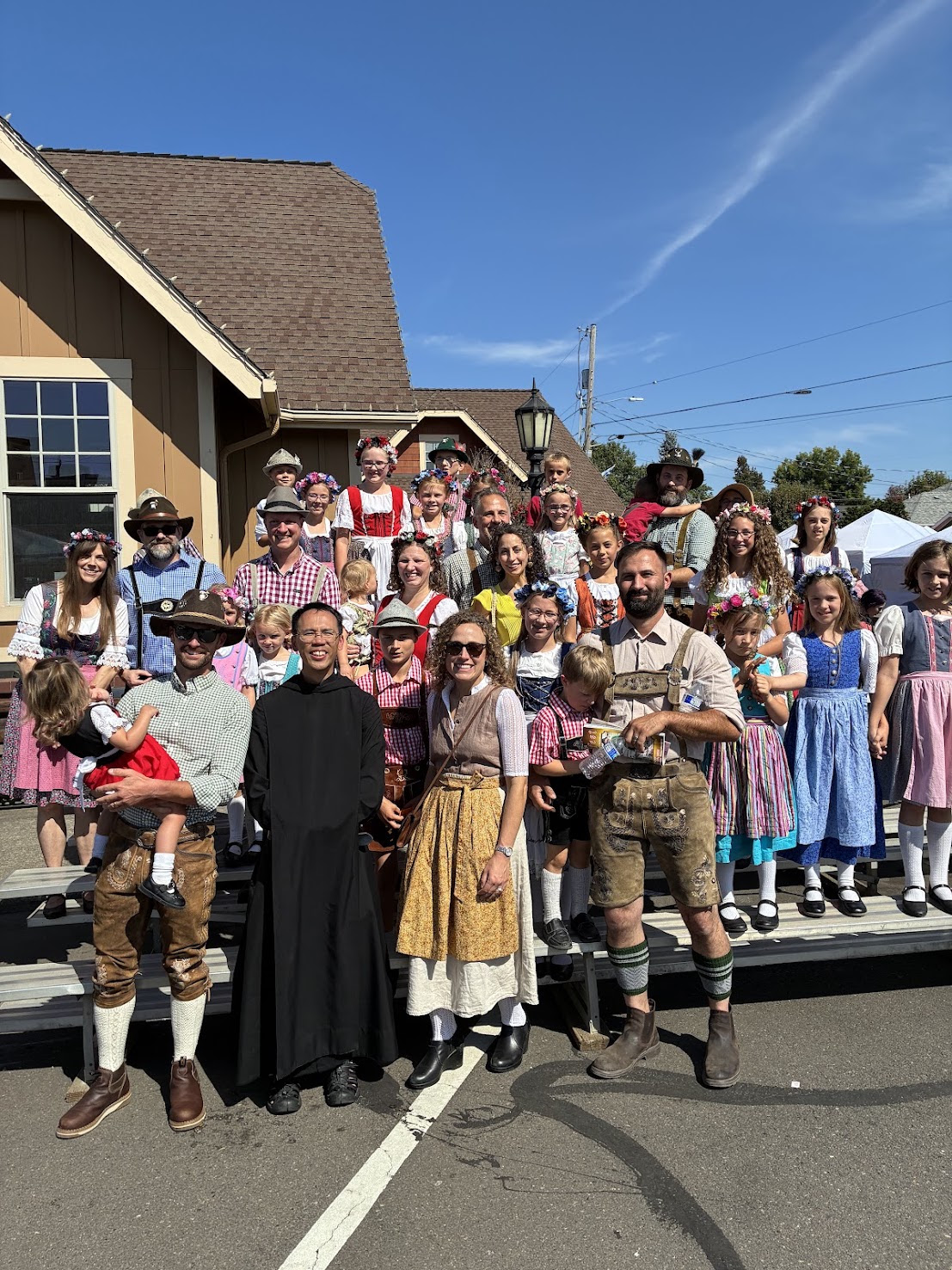
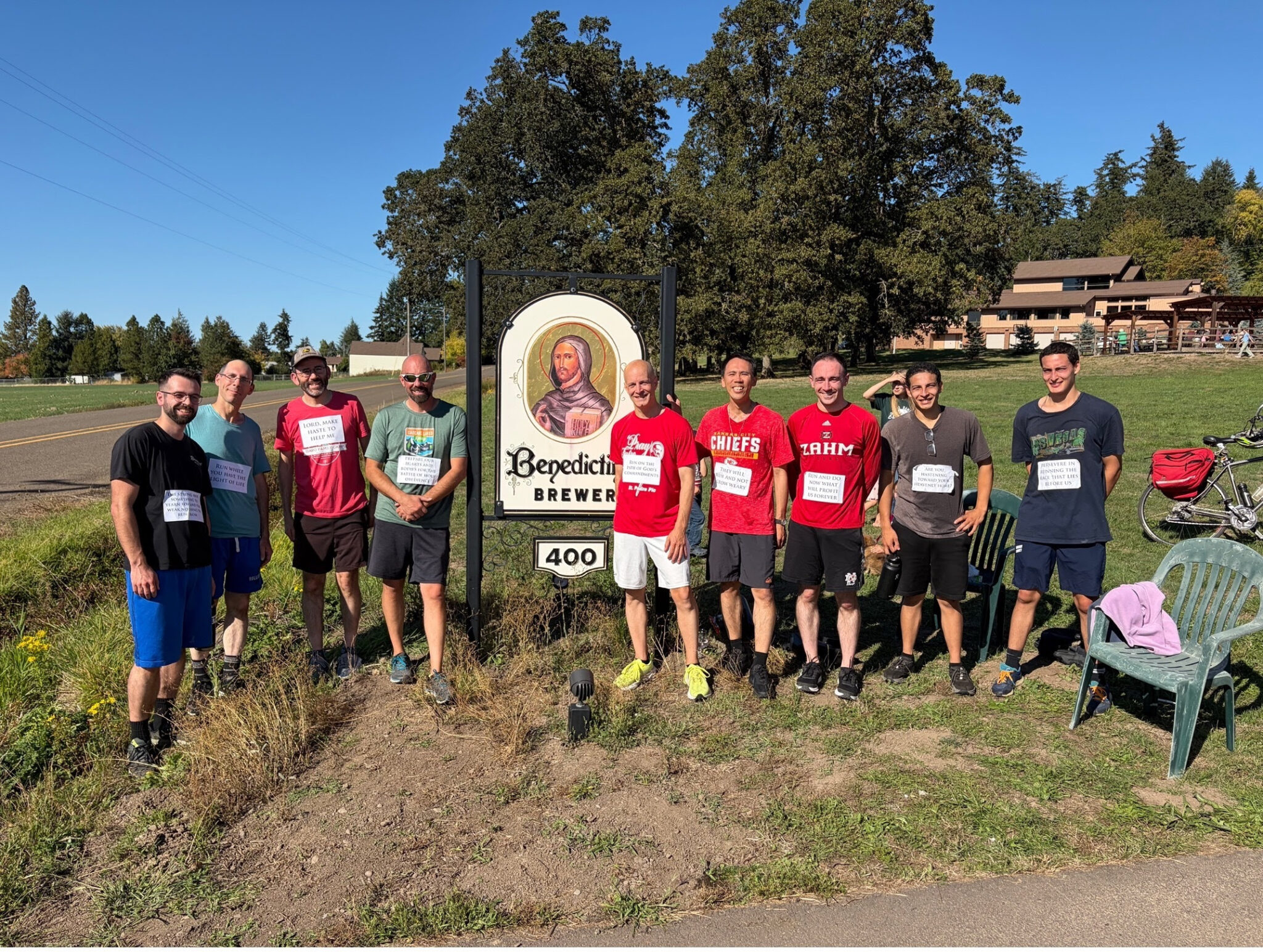
Ofest with oblates.
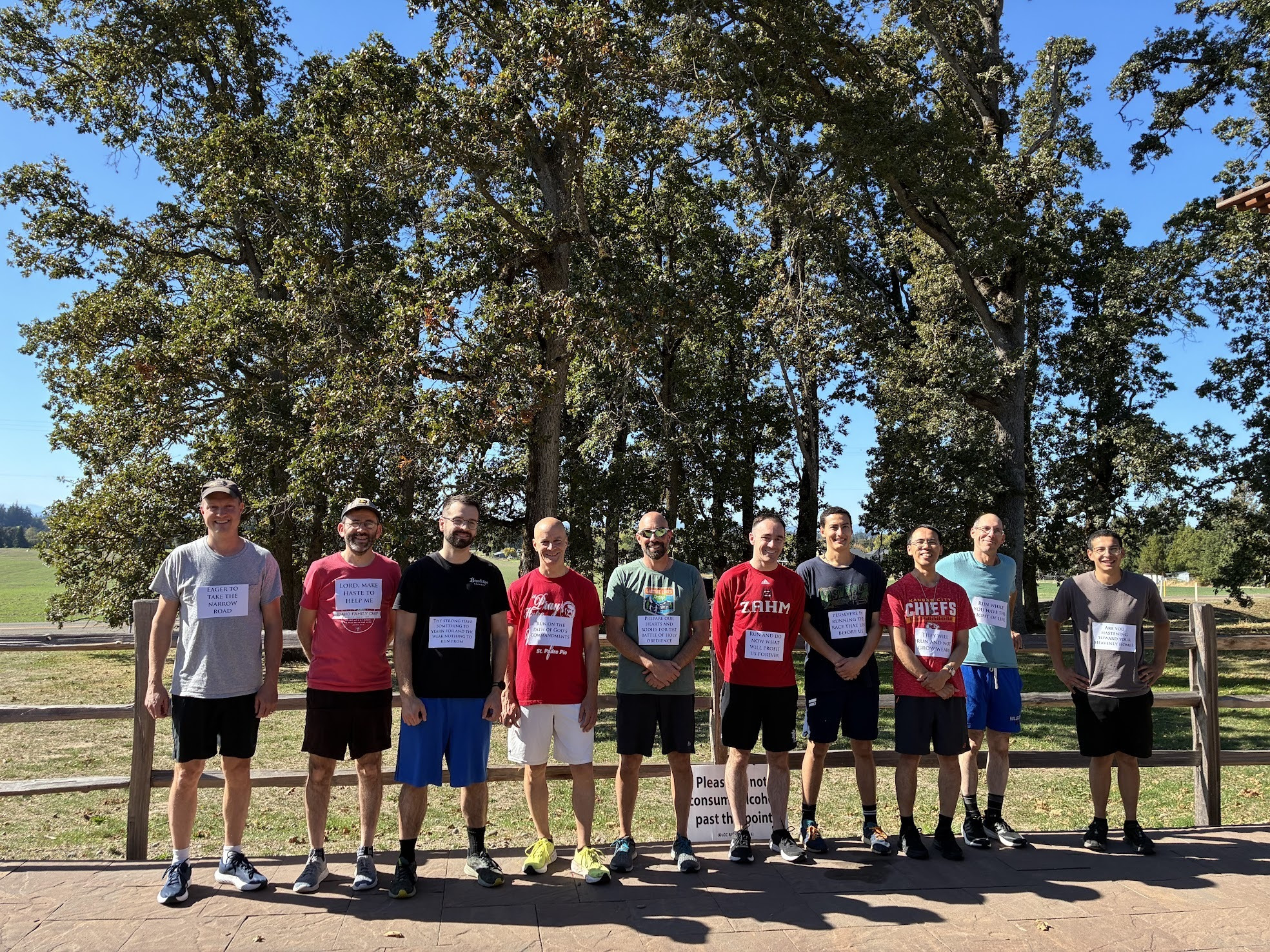
Annual monastic 5K run (8 monks and 2 oblates).
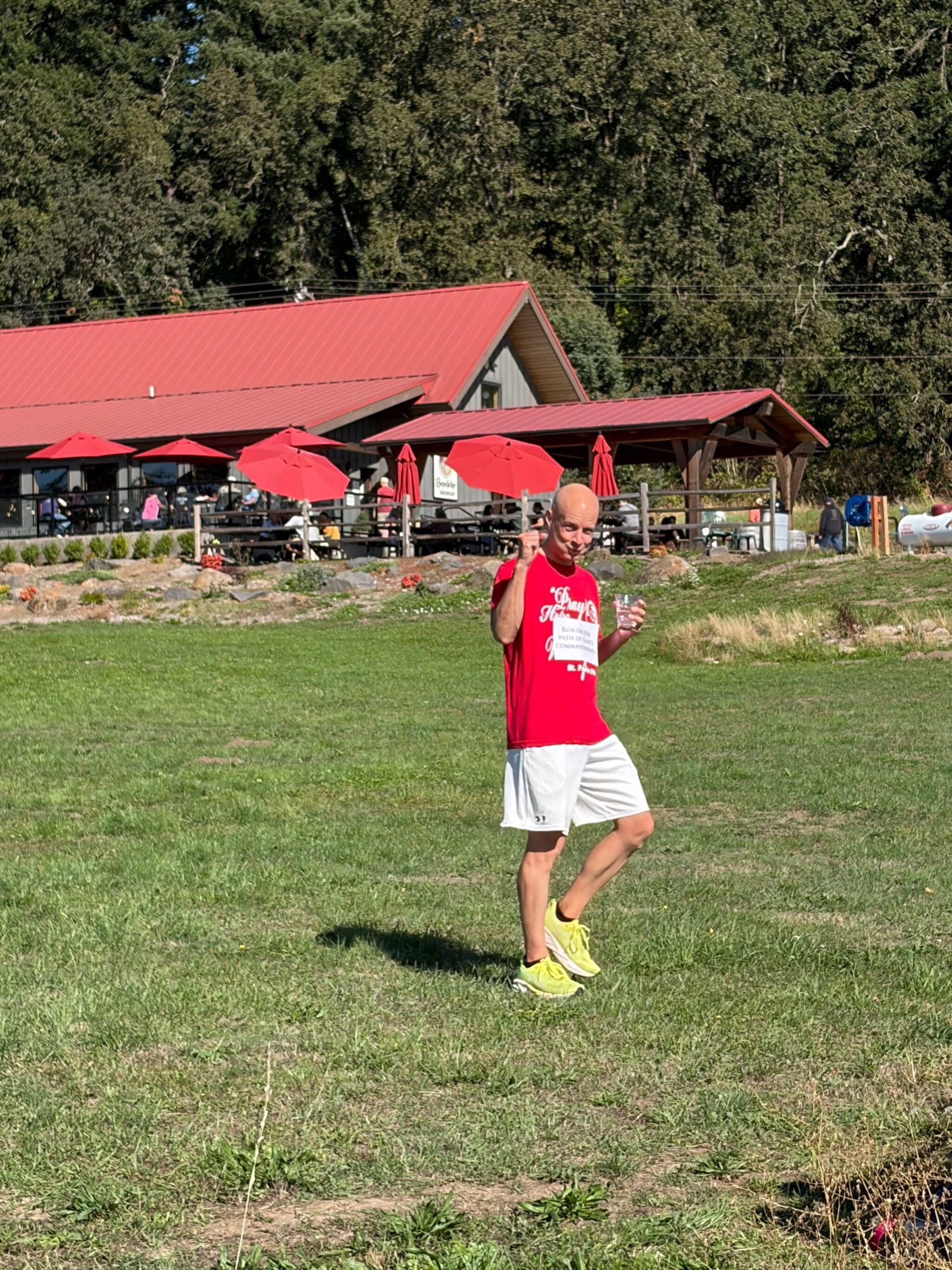
Fr. Michael took home the first prize.
Oblate Calendar
2026
Oct
18- Oblate Sunday: Fr. Michael. Leisure.
Nov
6-8 – Oblate Retreat. Fr. Michael
8 – Oblate Sunday: Fr. Philip. Our Lady of Guadalupe: Part I.
Dec
8 – Immaculate Conception (plenary indulgence may be obtained by oblates)
13 – Oblate Sunday: Br. Louis. Our Lady of Guadalupe: Part II.-
A Note to Our Dear Oblates - September 25, 2026
A Note to Our Dear Oblates
September 25, 2026Dear Oblates,
The Tools of Good Works, continued
“Not to gratify anger, not to harbor a desire of revenge, not to foster guile in your heart, not to make a feigned peace, not to forsake charity. Not to swear, lest perchance you perjure yourself; to utter truth from your heart and your mouth.” (RB 4:22-28)
The tools described in these verses can be described as growth in authentic love. Living in community has its fair share of challenges, but it is also the place where God shapes the heart. We are to first avoid doing evil to those closest to us, that is, not giving in to anger or desiring revenge when we have been wronged. Rather, we should be moved to mercy, compassion and forgiveness. This is the way of Christ, the way of love. However, the action should flow forth from a pure heart. St. Benedict does not want his monks to be duplicitous, so he says that we should have no guile in our hearts or offer a false sign of peace.
He then goes on to say that we are not to turn away when someone needs our love. That is a huge statement. If only we could be faithful to these words, then half the work would be done. Throughout the day, how many people are reaching out for our love? Will we turn our backs on them or will we open our hearts to them? Throughout the gospel, we read of Jesus dropping everything to respond to the needs of others. He sacrifices time, energy, sleep and even prayer to extend love to someone in need.
Lastly, St. Benedict tells us to simply be honest in our speech, to speak the truth with heart and tongue. Words are powerful. They can wound or heal; divide or unite. Sometimes, we use our words to manipulate a situation, or we sugarcoat the truth, or we are overly diplomatic in our speech trying to keep the peace. How can we be more honest in our speech, more transparent, more authentic? Yes, speaking the truth with heart and tongue comes at a price, but in the long run it fosters charity in a community.
Lord, help me to love those closest to me and the people who reach out to me for love today. Please help me to acknowledge them and open my heart to them. Please give me the grace of charity to sacrifice my own needs or desires for someone in need. Be the guard of my tongue that I may speak in truth.
Oblate Margaret “Clare” Kellermann is is offering a retreat at the Abbey October 5-7, entitled: Keeping a Journal With God. Here is a link to sign up: https://www.
mountangelabbey.org/event/ keeping-a-journal-with-god/ Prayer request. Please pray for Andrew Brands (former Br. Gabriel) who recently discerned that God was not calling him to Mount Angel Abbey. Please know that you can always send your prayer requests through our Oremus program.Yours in Christ,
Fr. John Paul, OSB
Director of Oblates

Andrew Brands at the Milk Ranch during the juniorate vacation.
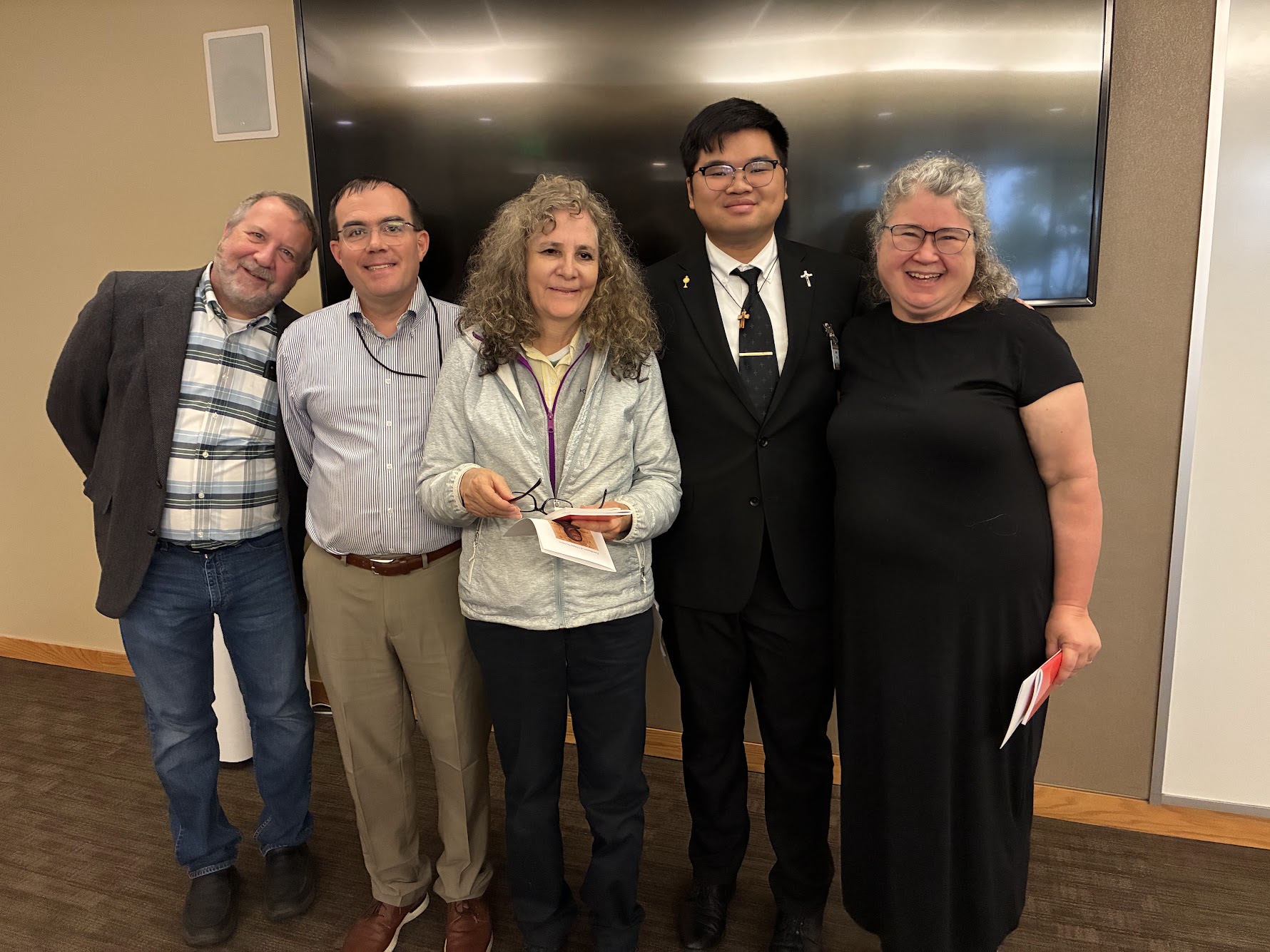
The five new novices.
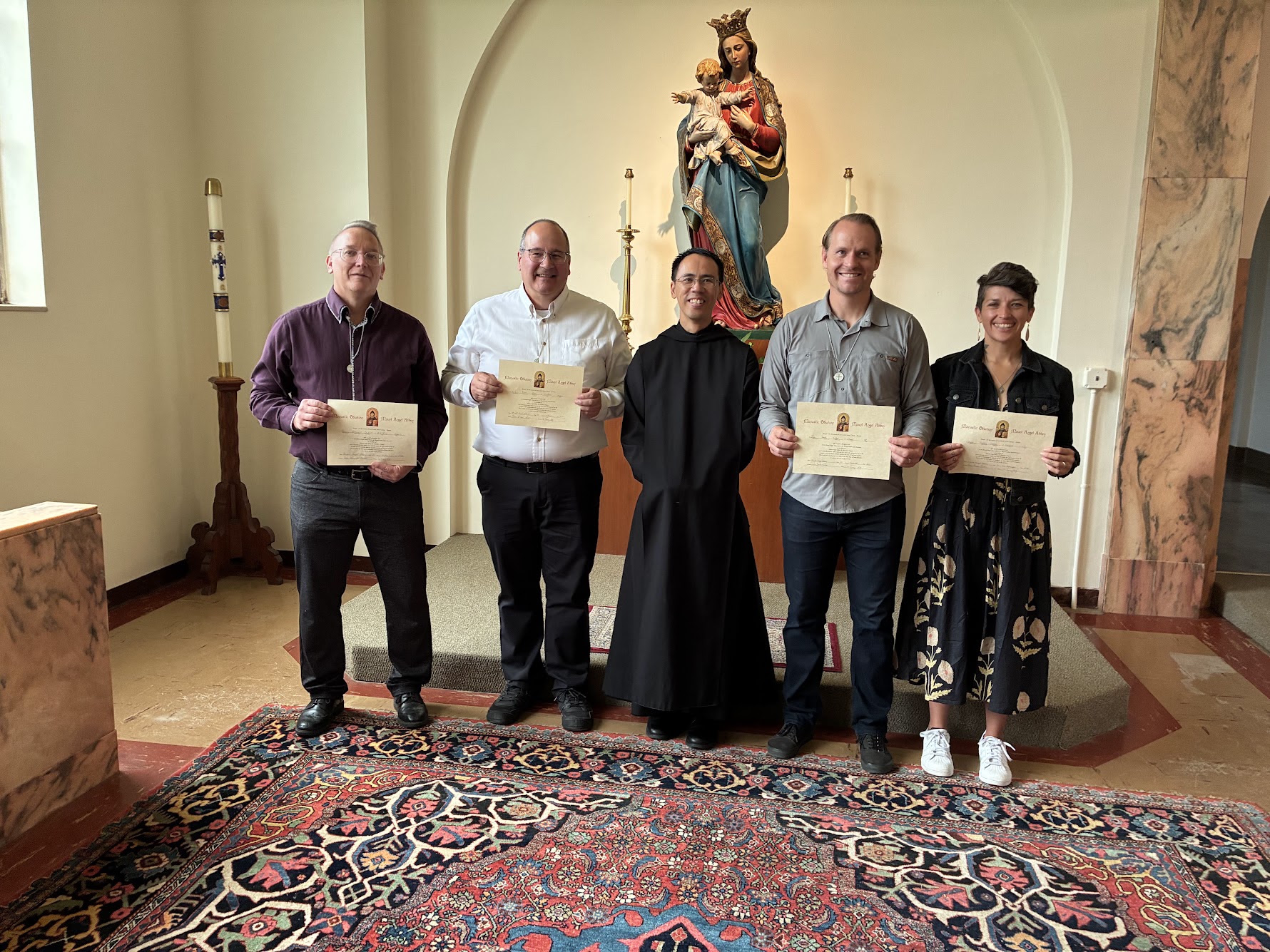
The new oblates: Ron “Romuald” Oswald, Mark “Bosco” Gross, Ian “Jonah” Nelson, Nina “Francis” Nelson
Oblate Calendar
2026
Sept
29 – Solemnity of Archangels (plenary indulgence may be obtained by oblates)
Oct
11- Oblate Sunday: Fr. Michael. Leisure.
Nov
6-8 – Oblate Retreat. Fr. Michael
8 – Oblate Sunday: Fr. Philip. Our Lady of Guadalupe: Part I.
Dec
8 – Immaculate Conception (plenary indulgence may be obtained by oblates)
13 – Oblate Sunday: Br. Louis. Our Lady of Guadalupe: Part II.-
A Note to Our Dear Oblates - September 18, 2026
A Note to Our Dear Oblates
September 18, 2026Dear Oblates,
The Tools of Good Works, continued
“To keep aloof from worldly actions; to prefer nothing to the love of Christ.” (RB 4:20-21)
As a Christian in the world we are pulled into its current, its values and way of acting. St. Benedict tells us that we should be a stranger to the ways of the world, which is contrary to God’s way. In a sense, we should feel out of place or that we don’t quite belong where we are at because we are longing for our heavenly homeland. When we seek the things that are above, when we prefer nothing to the love of Christ, we experience a little of that heaven in our lives.
The preference of the love of Christ has two sides. The first is Christ’s love for us. The Benedictine is thoroughly convinced of the depth of Christ’s love for him, and in that he finds his stability and identity. He knows that he is loved by Christ simply because he is and not because of what he has or what he can do. Christ proved His love for us by dying for our sins and granting us new life by His resurrection. Every day Christ reveals His love to us. We experience His love through the sacraments, through our prayer, in the people we meet, in nature, and even in the everyday pots and pans. Give thanks to the Lord, for He is good; His love endures forever.
The other side of the coin to the preference of the love of Christ is that of our love for Him. The whole of the Benedictine rule is simply a concrete spilling out of this preference. Because we love Christ above all things, we commit ourselves to prayer, stability and conversion. We value silence, obedience and humility. We flee from the world but receive the guest as Christ. We devote ourselves to spiritual reading and live a moderate life-style. All these things are signs of our preference of Christ to all things. We slowly strip ourselves of our self-love and pride, and grow in the inexpressible delights of love.
How are you experiencing Christ’s love today? How did you experience it yesterday? Lord, please remind me through the day that I am yours. Thank you for your goodness and the ways you show me your love. Help me to respond with love to you.
There are several new employment opportunities at the Abbey which you can view at https://www.
mountangelabbey.org/join-us/ employment/. To set the Abbey bells as your ring tone you can download the app here. You can also add download the 5-minute and 2-minute bells.
Prayer request. Thank you for your prayers for Abbot Peter. He is back home now. Please pray for Br. Thomas. He will be ordained to the diaconate today. Please also pray for all those on the oblate retreat, especially those five who will be making their final oblation. Please know that you can always send your prayer requests through our Oremus program.Yours in Christ,
Fr. John Paul, OSB
Director of Oblates
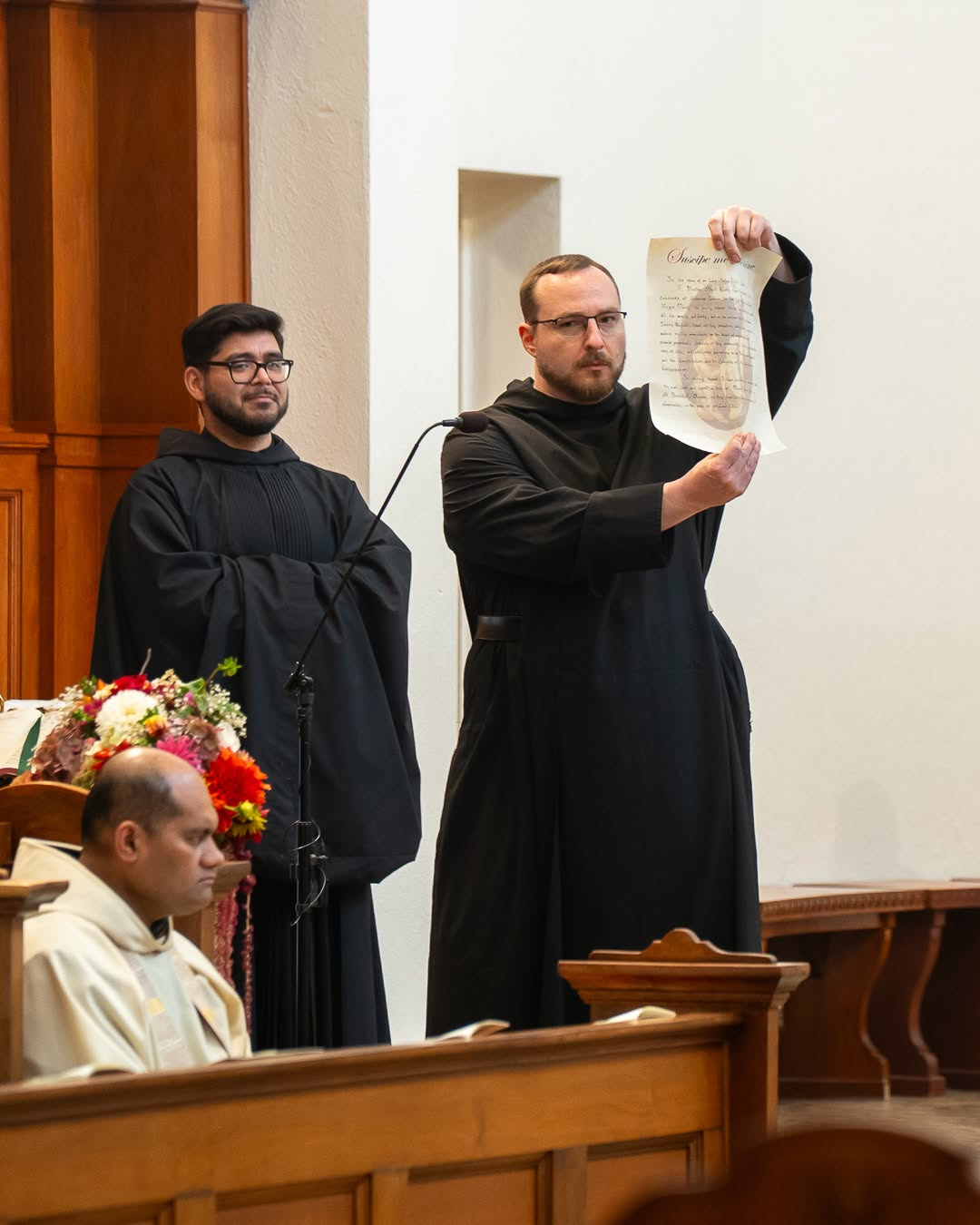
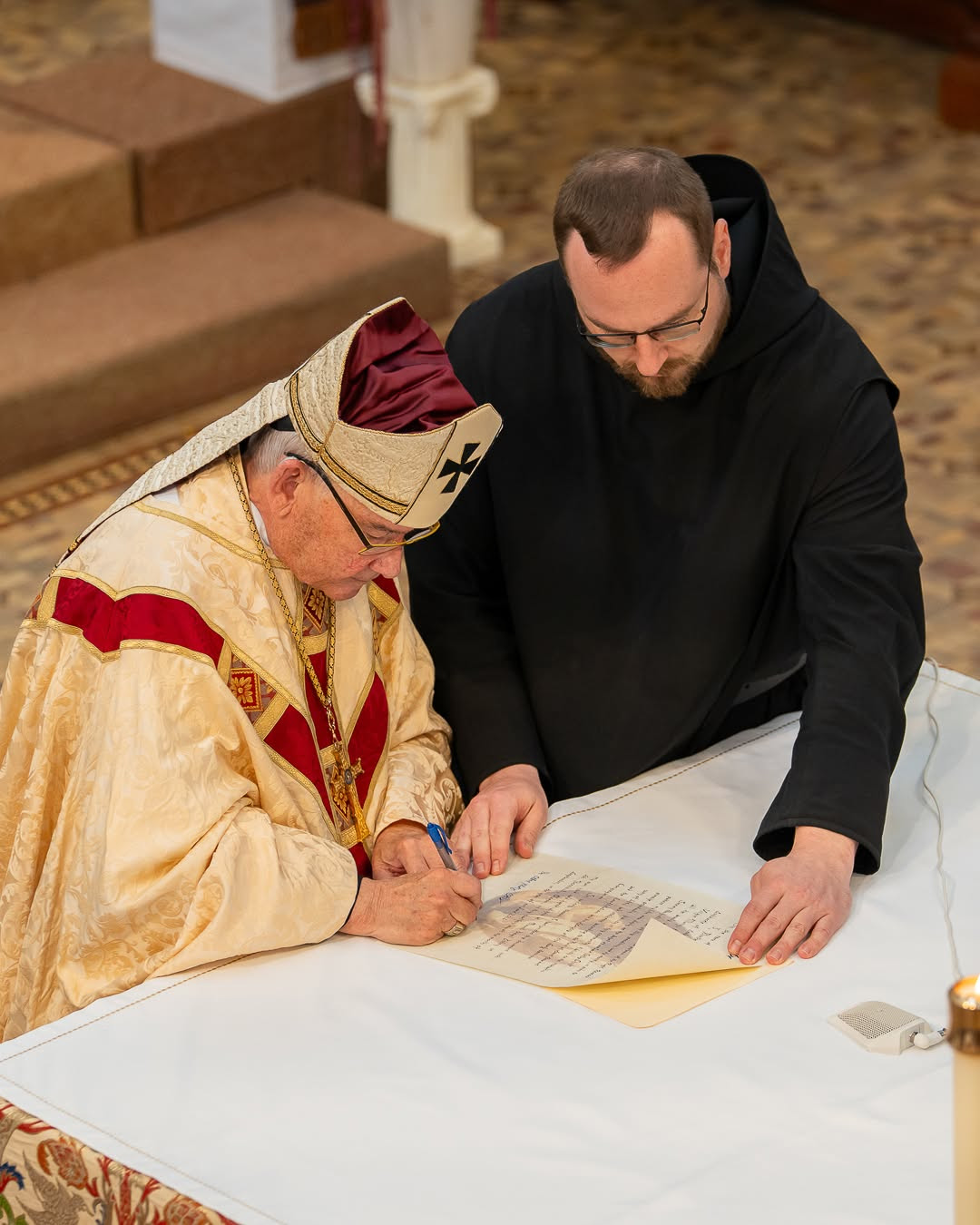
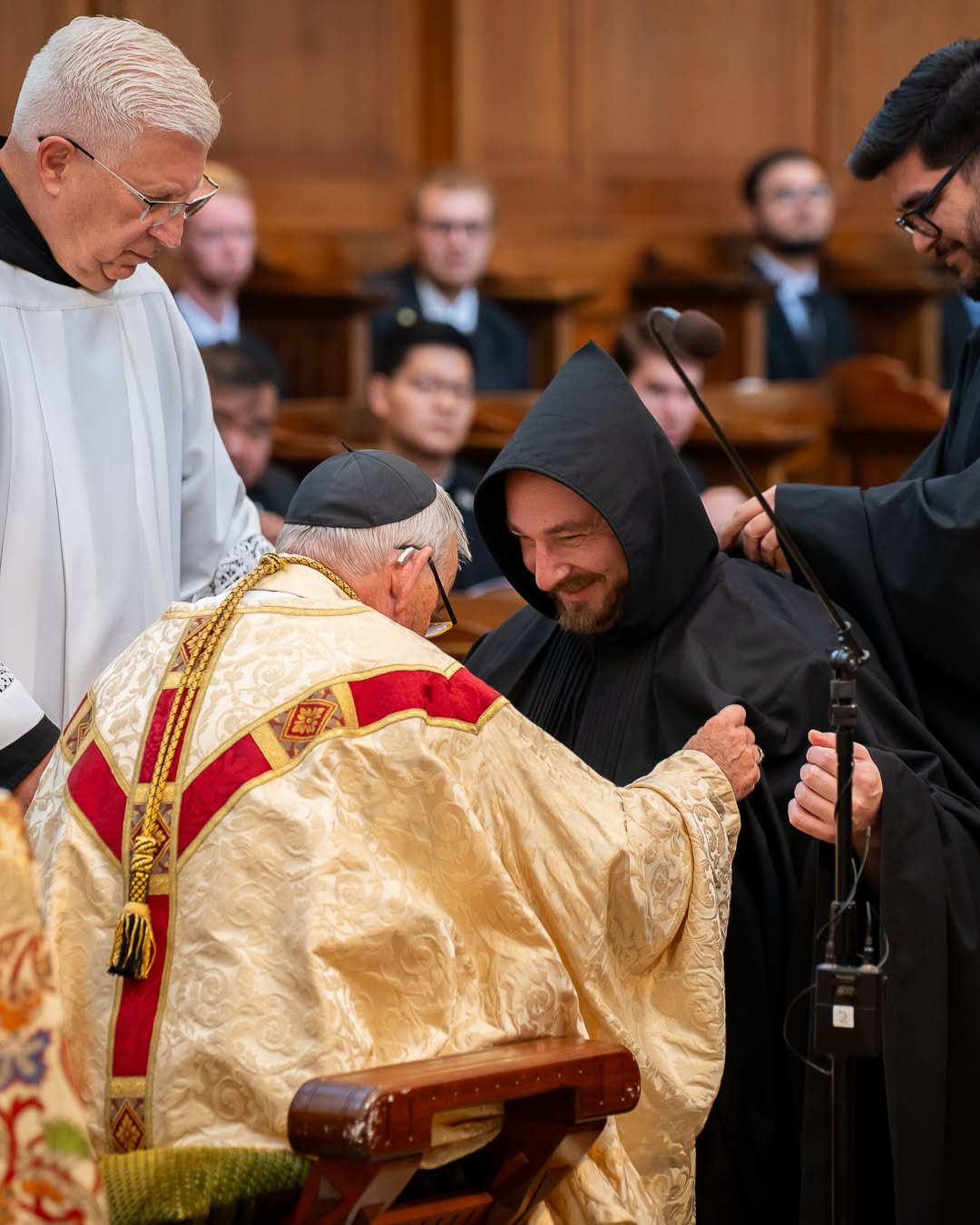
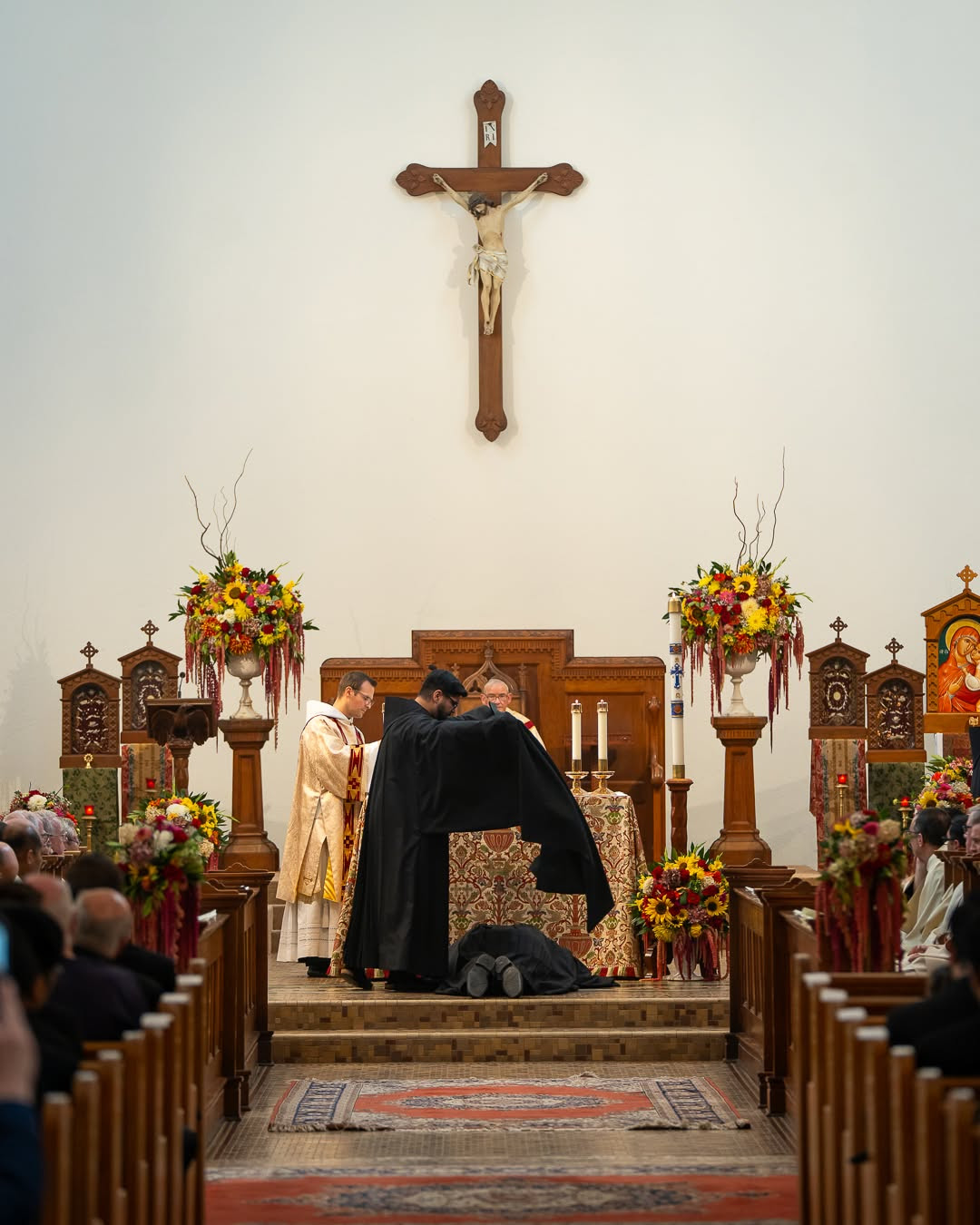
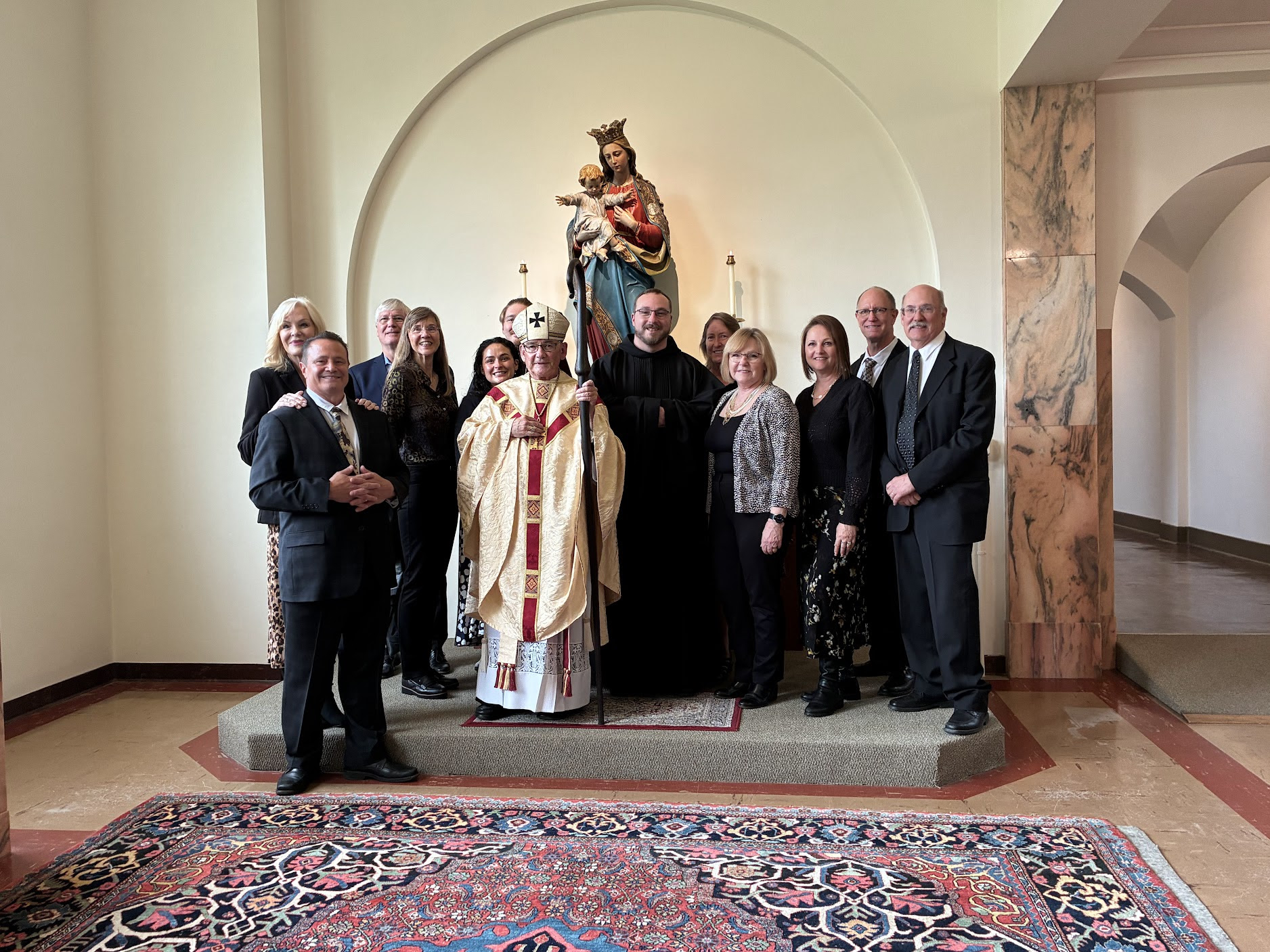
The solemn profession of Br. Albert.
Oblate Calendar
2026
Sept
18-20 – Oblate Retreat. Fr. Ephrem.
29 – Solemnity of Archangels (plenary indulgence may be obtained by oblates)
Oct
11- Oblate Sunday: Fr. Michael. Leisure.
Nov
6-8 – Oblate Retreat. Fr. Michael
8 – Oblate Sunday: Fr. Philip. Our Lady of Guadalupe: Part I.
Dec
8 – Immaculate Conception (plenary indulgence may be obtained by oblates)
13 – Oblate Sunday: Br. Louis. Our Lady of Guadalupe: Part II.-
A Note to Our Dear Oblates - September 11, 2026
A Note to Our Dear Oblates
September 11, 2026Dear Oblates,
The Tools of Good Works, continued (RB 4:10-19)
To deny oneself in order to follow Christ (Matthew 16:24).
To chastise the body (1 Corinthians 9:27).
Not to become attached to pleasures (2 Peter 2:13).
To love fasting (Joel 1:14).
To relieve the poor (Tobias 1:21).
To clothe the naked (Isaiah 58:7).
To visit the sick. (Matthew 25:36).
To bury the dead (Tobias 1:21).
To help in trouble (Isaiah 1:17).
To console the sorrowing (1 Thessalonians 5:14).Our Lord tells us that if we wish to follow Him, we must deny ourself and pick up our cross. St. Benedict follows in this line of thought with these next verses in the tools of good works. The first four tools are ascetical practices, and the following six are ways in which we can follow Christ in His charity. St. Benedict is basically saying that we cannot genuinely love our neighbor if we do not deny ourselves.
We can deny ourselves by chastising the body through waking up at a certain time, being disciplined in prayer, and kneeling or standing when we pray. We can deny our pleasures by not always seeking what is comfortable, taking less, or what is least agreeable. We can fast and abstain from certain food and drink, but we can also fast on technology, what we take in with our eyes and ears.
These ascetical works open up the soul and free the heart to practice the works of charity, such as, helping the poor, the sick, the naked, praying for the dead and consoling those who are in trouble and sorrowful. This group of people are in need and unable to help themselves. They are dependent on the love of others to reach out to them and assist them. When we reach out to those who are in need we are following Christ in his ministry of love.
These good works are not always easy to practice because they both require sacrifice. Whether we are called to ascetism or charity, there is an element of self-love that must be overcome. We must in a way mortify ourselves, that is, die to ourselves, in order to allow Christ to live in us and love through us.
What is a simple, ascetical work that might I add to my daily life to help open my soul and free my heart? Help me to notice, Lord, who is in need around me, and please help me to offer You to them.
Our next Oblate Sunday is September 13th with Fr. Michael on work. For in-person, click here; for remote option, click here. The Oblate Sunday begins with Mass at the Abbey at 9am. It is followed by a potluck brunch after Mass in the guesthouse dining room. The conference starts at 11am in the Westminster Room.
Prayer request. Please pray for Abbot Peter who is still in the hospital recovering from his surgery. It is taking longer than we had hoped. Please also pray for Br. Albert who will be making his solemn vows tomorrow at the 9am Mass. Please know that you can always send your prayer requests through our Oremus program.Yours in Christ,
Fr. John Paul, OSB
Director of Oblates
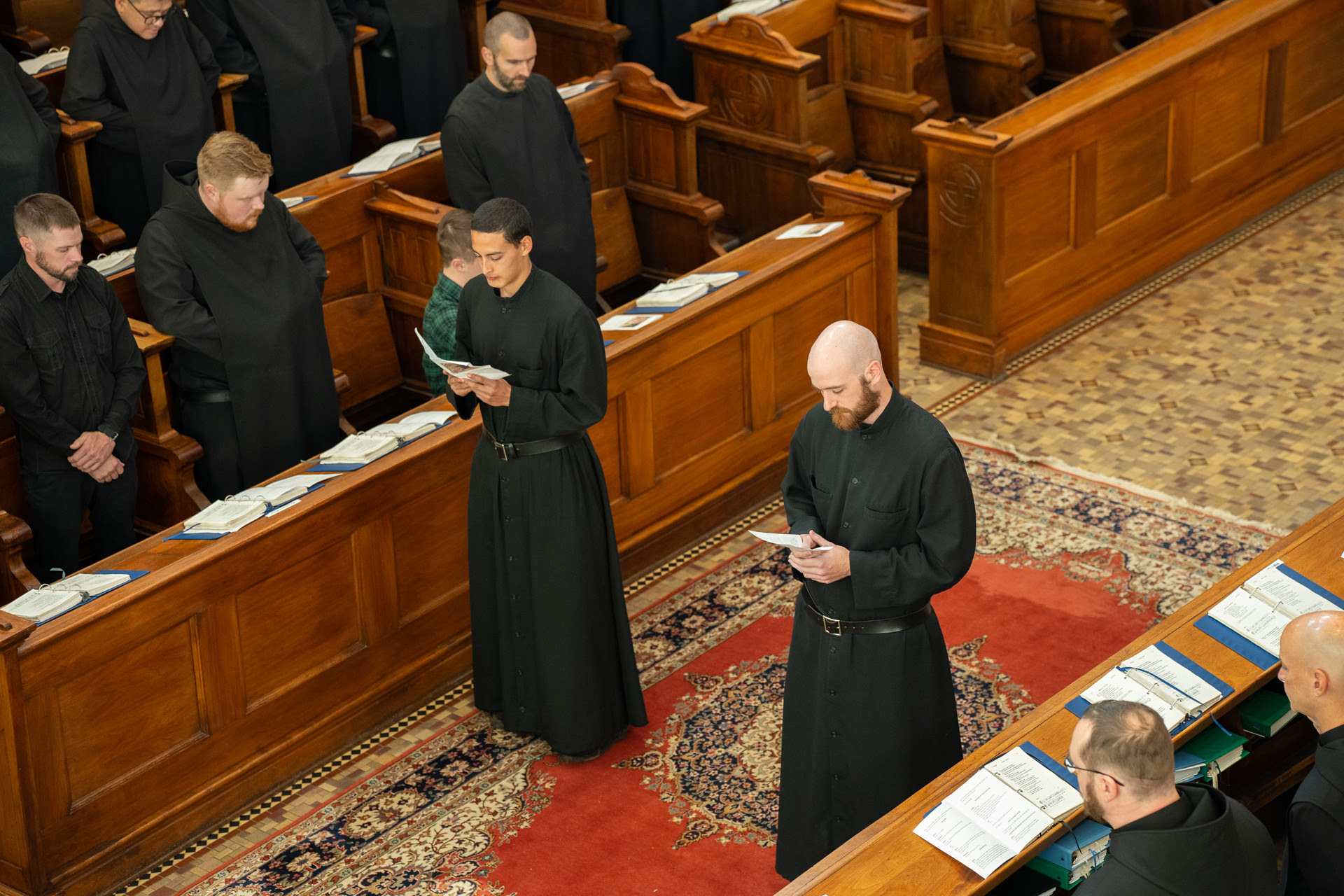
Entrance into the novitiate
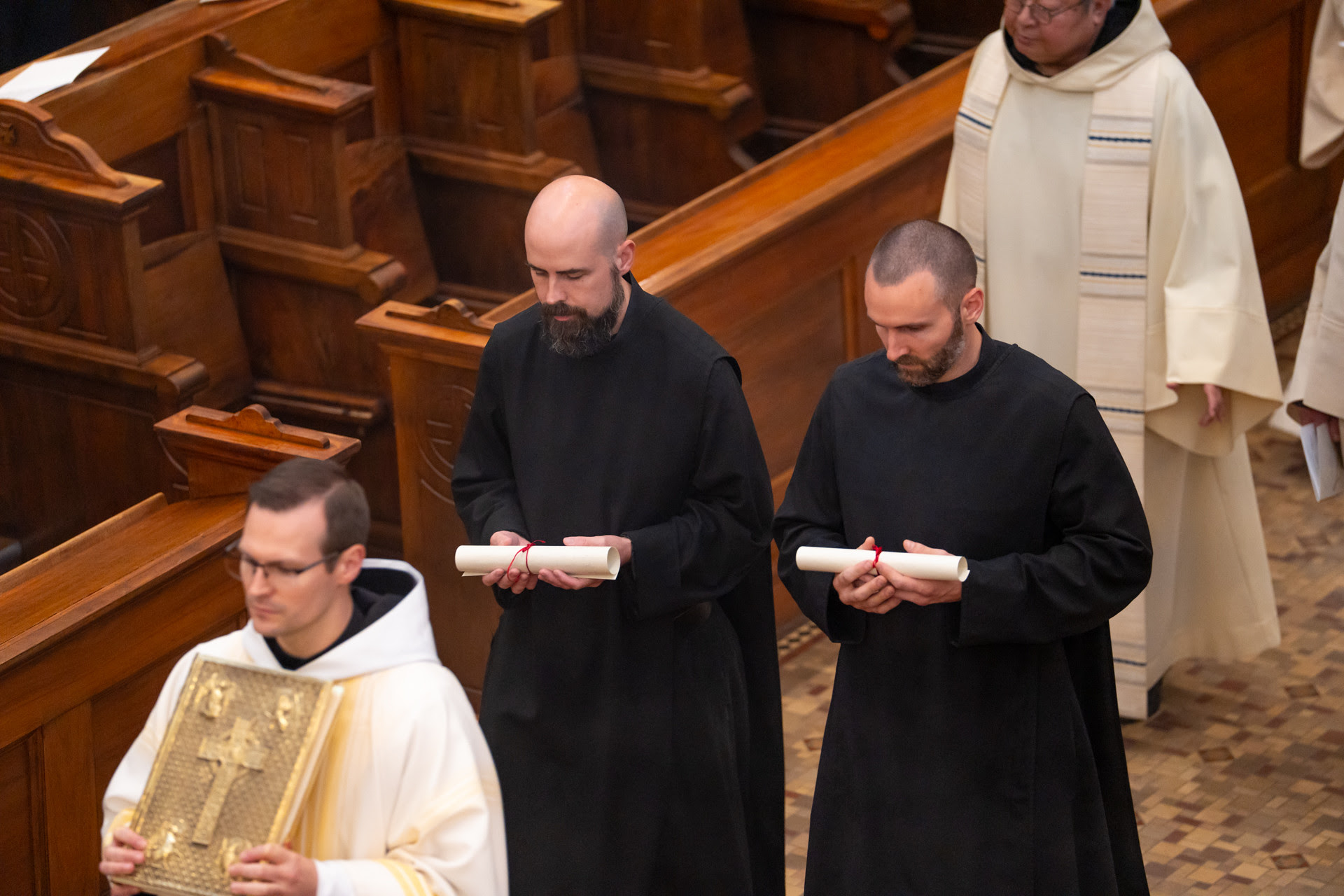
Simple Profession
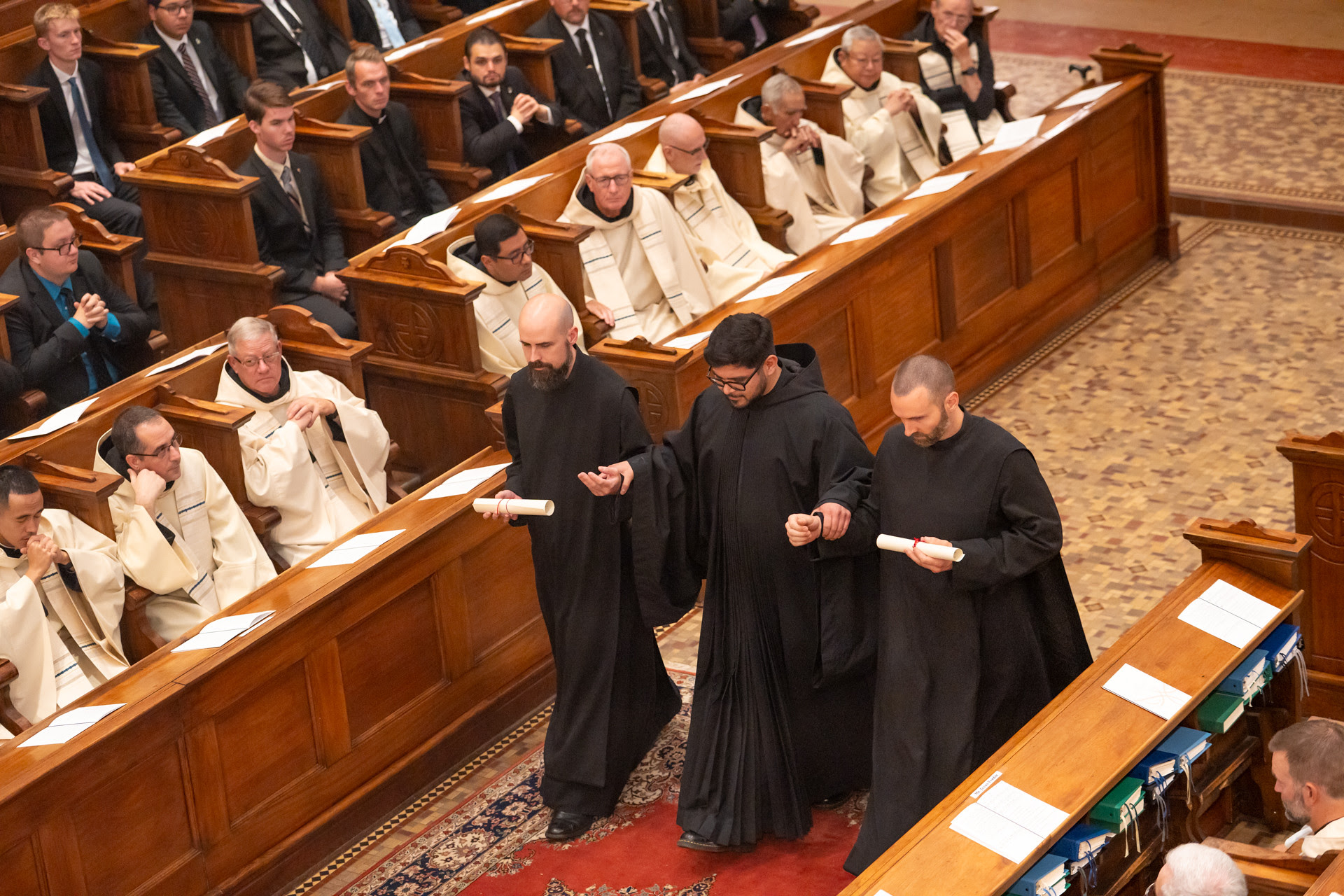
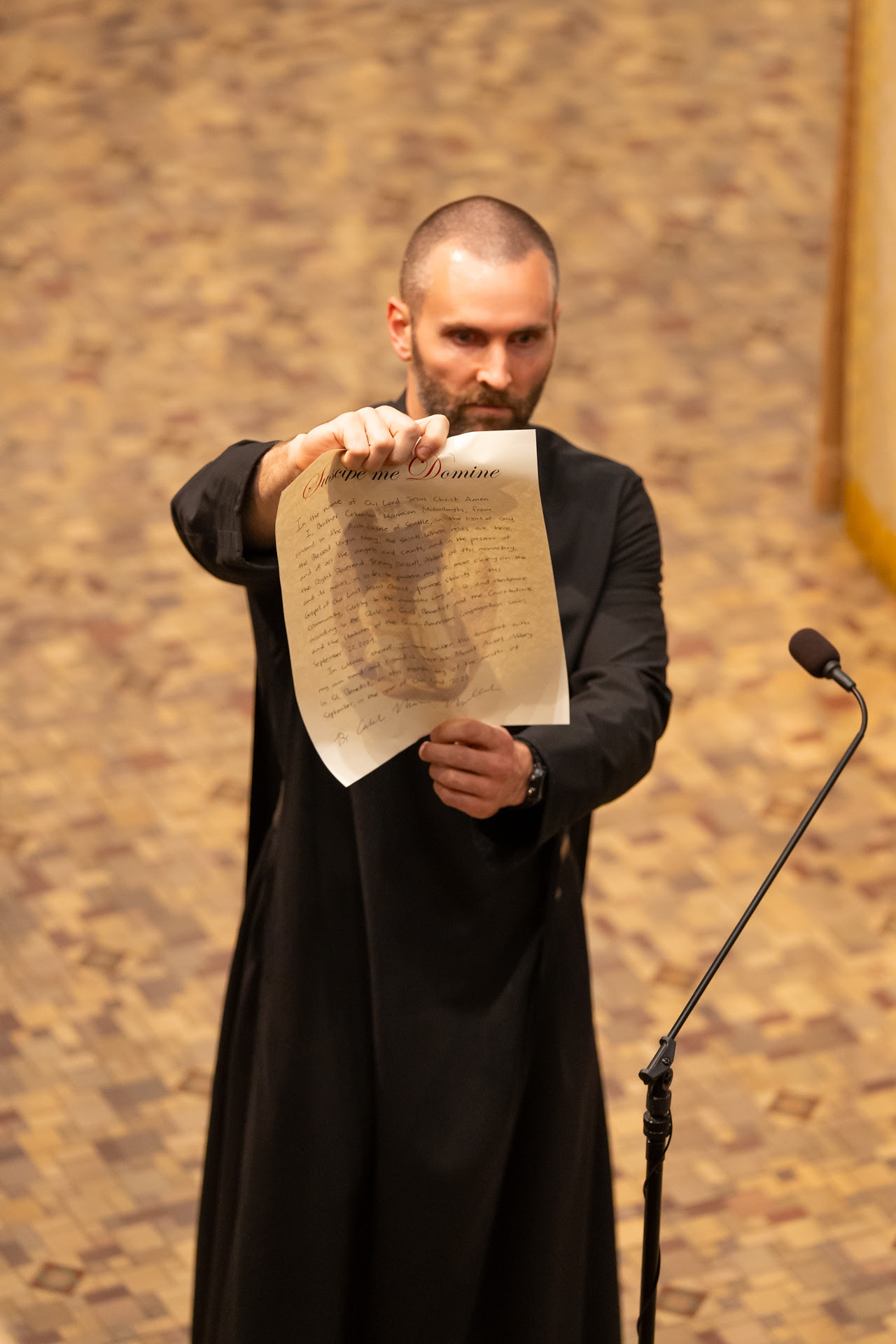
Br. Columba Marmion reading his profession
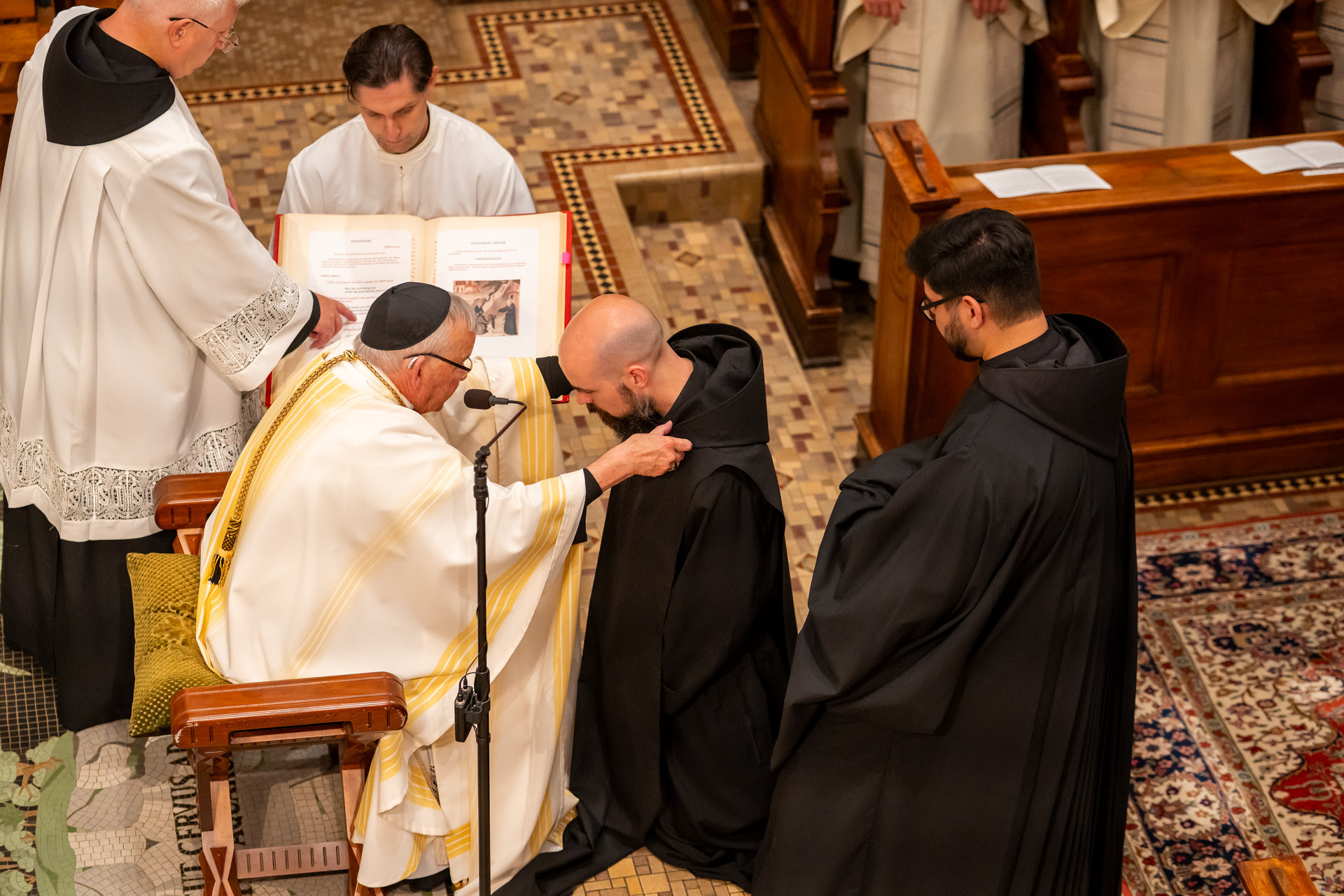
Br. Mark receiving his scapular
Oblate Calendar
2026
Sept
13 – Oblate Sunday: Fr. Michael. Work.
18-20 – Oblate Retreat. Fr. Ephrem.
29 – Solemnity of Archangels (plenary indulgence may be obtained by oblates)
Oct
11- Oblate Sunday: Fr. Michael. Leisure.
Nov
6-8 – Oblate Retreat. Fr. Michael
8 – Oblate Sunday: Fr. Philip. Our Lady of Guadalupe: Part I.
Dec
8 – Immaculate Conception (plenary indulgence may be obtained by oblates)
13 – Oblate Sunday: Br. Louis. Our Lady of Guadalupe: Part II.-
A Note to Our Dear Oblates - September 4, 2026
A Note to Our Dear Oblates
September 4, 2026Dear Oblates,
The Tools of Good Works, continued (RB 4:3-9)
In the first place, to love the Lord God with the whole heart, the whole soul, the whole strength (Deuteronomy 6:5).
Then, one’s neighbor as oneself (Luke 10:27).
Then not to murder (Luke 18:20).
Not to commit adultery (Matthew 19:18).
Not to steal (Exodus 20:15).
Not to covet (Deuteronomy 5:21).
Not to bear false witness (Mark 10:19).
The respect all men (1 Peter 2:17).
And not to do to another what one would not have done to oneself (Tobias 4:16).Flowing forth from the two greatest commands are the other commandments given in the decalogue. Putting these verses at the beginning show us that being a good Benedictine is grounded on being a good Christian. The commandments are the fundamental building blocks of the virtuous life, so that without them, the other works mean very little.
When we reflect upon these commandments, our minds probably go quickly to the sermon on the mount where Our Lord teaches us not only to keep the letter of the law but the spirit as well. Yes, we should not kill, but we should also not be angry with our brother, or hurt him in any way. Yes, we are not to commit adultery, but we should also not look upon others with lust or use them as a means towards an end. This spirit of the law can be applied to the next three commandments. Do we steal or take from others what belongs to them, that is, their good name, freedom, or rights? We may covet not only what another person has, but we may also covet their gifts, their personality and even their holiness. We bear false witness not only by telling lies but by not being transparent, authentic, and honest. We may be given to deceit or manipulation.
In keeping the letter and spirit of the commandments, we show in a very concrete way the love of our neighbor. We are showing them respect and kindness, and are doing to them what we want to do to ourselves.
St. Benedict urges us not to ascend the spiritual life too quickly and leave out the building blocks. By having a firm foundation on the commandments, the Benedictine can then aspire to the loftier summit of the virtues.
Lord, please make my heart to love your commandments and to obey them in love for You and in love for all people through You. Please see where, in the commands I keep in letter, I tend to falter in spirit. Make me transparent before you, Lord; purify my heart and grow it as You will.
Our next Oblate Sunday is September 13th with Fr. Michael on work. For in-person, click here; for remote option, click here. The Oblate Sunday begins with Mass at the Abbey at 9am. It is followed by a potluck brunch after Mass in the guesthouse dining room. The conference starts at 11am in the Westminster Room.
Prayer request. Please pray for Br. Andrew and Br. Allen who will be making the simple vows on September 8th. Please pray for Br. Albert who begins his retreat for solemn vows on Sunday. Please know that you can always send your prayer requests through our Oremus program.Yours in Christ,
Fr. John Paul, OSB
Director of Oblates
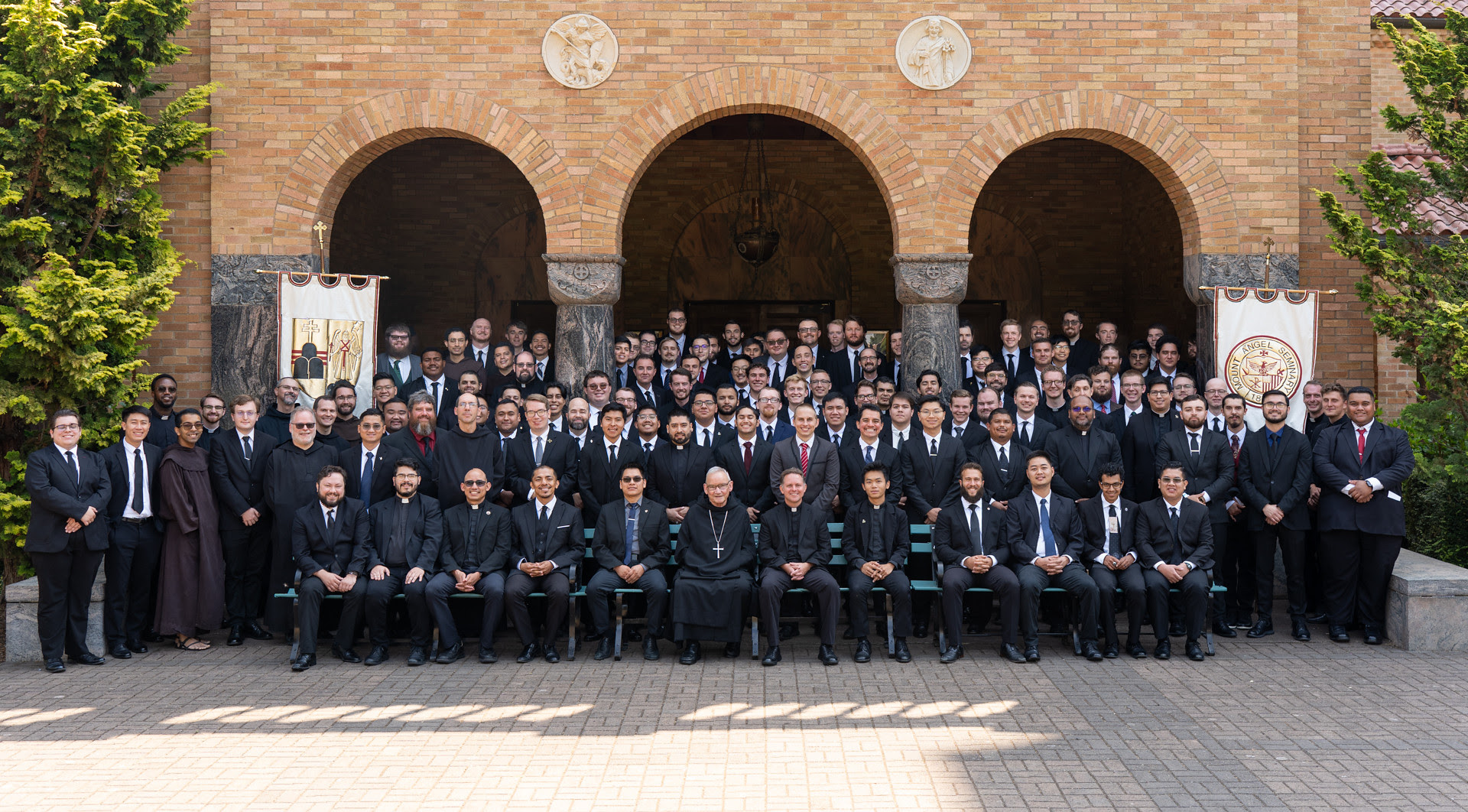
Oblate Calendar
2026
Sept
13 – Oblate Sunday: Fr. Michael. Work.
18-20 – Oblate Retreat. Fr. Ephrem.
29 – Solemnity of Archangels (plenary indulgence may be obtained by oblates)
Oct
11- Oblate Sunday: Fr. Michael. Leisure.
Nov
6-8 – Oblate Retreat. Fr. Michael
8 – Oblate Sunday: Fr. Philip. Our Lady of Guadalupe: Part I.
Dec
8 – Immaculate Conception (plenary indulgence may be obtained by oblates)
13 – Oblate Sunday: Br. Louis. Our Lady of Guadalupe: Part II.-
A Note to Our Dear Oblates - August 28, 2026
A Note to Our Dear Oblates
August 28, 2026Dear Oblates,
The Tools of Good Works, Part 1
“In the first place, to love the Lord God with the whole heart, the whole soul, the whole strength. Then, one’s neighbor as oneself” (RB 4:1-2).
This chapter of the Holy Rule ought to be for oblates a sure guide in the way of Benedictine Spirituality. In these verses, we read of the many concrete ways that we can live out our oblation. St. Benedict begins these tools with the greatest commandments: to love God with all our heart, soul and strength, and to love our neighbor as oneself. All of the other good works depend upon these two, for without love, works are meaningless.
The Benedictine is first and foremost a perfect Christian. He knows that God has created us for Himself, and because of the love he has revealed to us in Christ, we no longer live for ourselves, but for Him who suffered and died for us. Secondly, we love God in our brothers and sisters, for in them we see a reflection of God’s goodness and beauty. We love God in them and them in God.
However, there is another love that stands in the way of these two loves, and it is the love of self, which is the root of our sins. We prefer ourselves to others. We do our will and not God’s will. We don’t make sacrifices because it is difficult. We pursue our base desires because it gives us comfort. But we are not without hope. Today’s saint reminds us that the power of God’s love and grace radically transform a wayward soul. St. Augustine sought himself through selfish indulgence and sought the world through intellectual curiosity, yet he was never satisfied. Only once the love of God shattered his self-image did he come face to face with the love that knows no bounds. Thus, he was able to write, “You called, you shouted, you broke through my deafness. You flashed, you shone, and you dispelled my blindness. You breathed your fragrance on me; I drew in breath and now I pant for you. I have tasted you, now I hunger and thirst for more. You touched me, and I burned for your peace.”
Lord, how can I live for you? How can I uphold my brothers and sisters in love for you today? What sacrifice can I make for you today?
One of our oblates, Manolito S. Jaldon Jr., D.Min., has recently published a book on Benedictine spirituality. It has been endorsed by Abbot Jeremy and Dr. Myrna Keough. You can order the book here.
Prayer request. Please pray for the postulants who are on retreat for their novitiate. Next week the two novices will be on retreat in preparation for their vows. Please also pray for Abbot Peter, who is recovering from surgery. Please know that you can always send your prayer requests through our Oremus program.
Yours in Christ,
Fr. John Paul, OSB
Director of Oblates
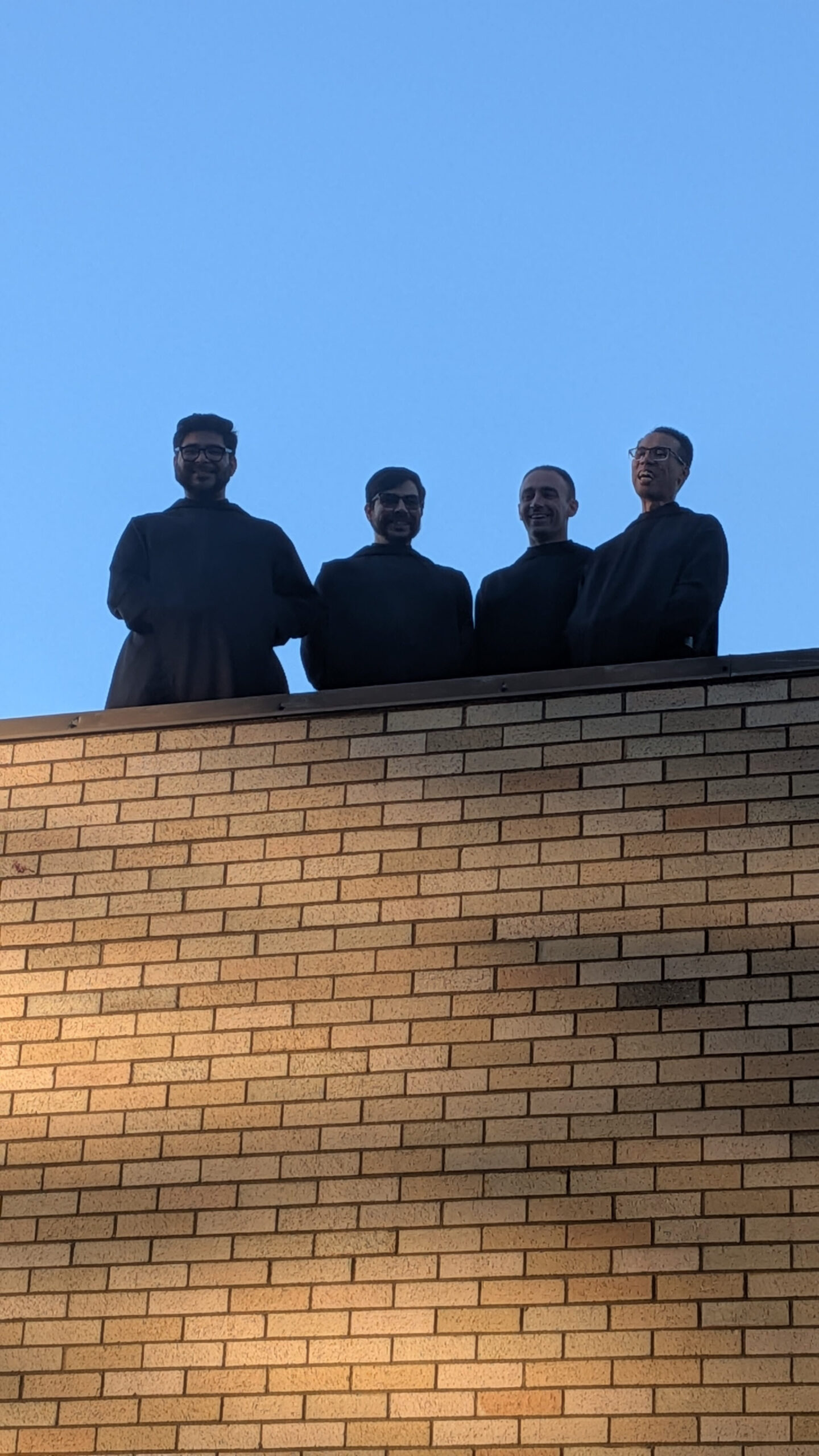
A murder of monks.
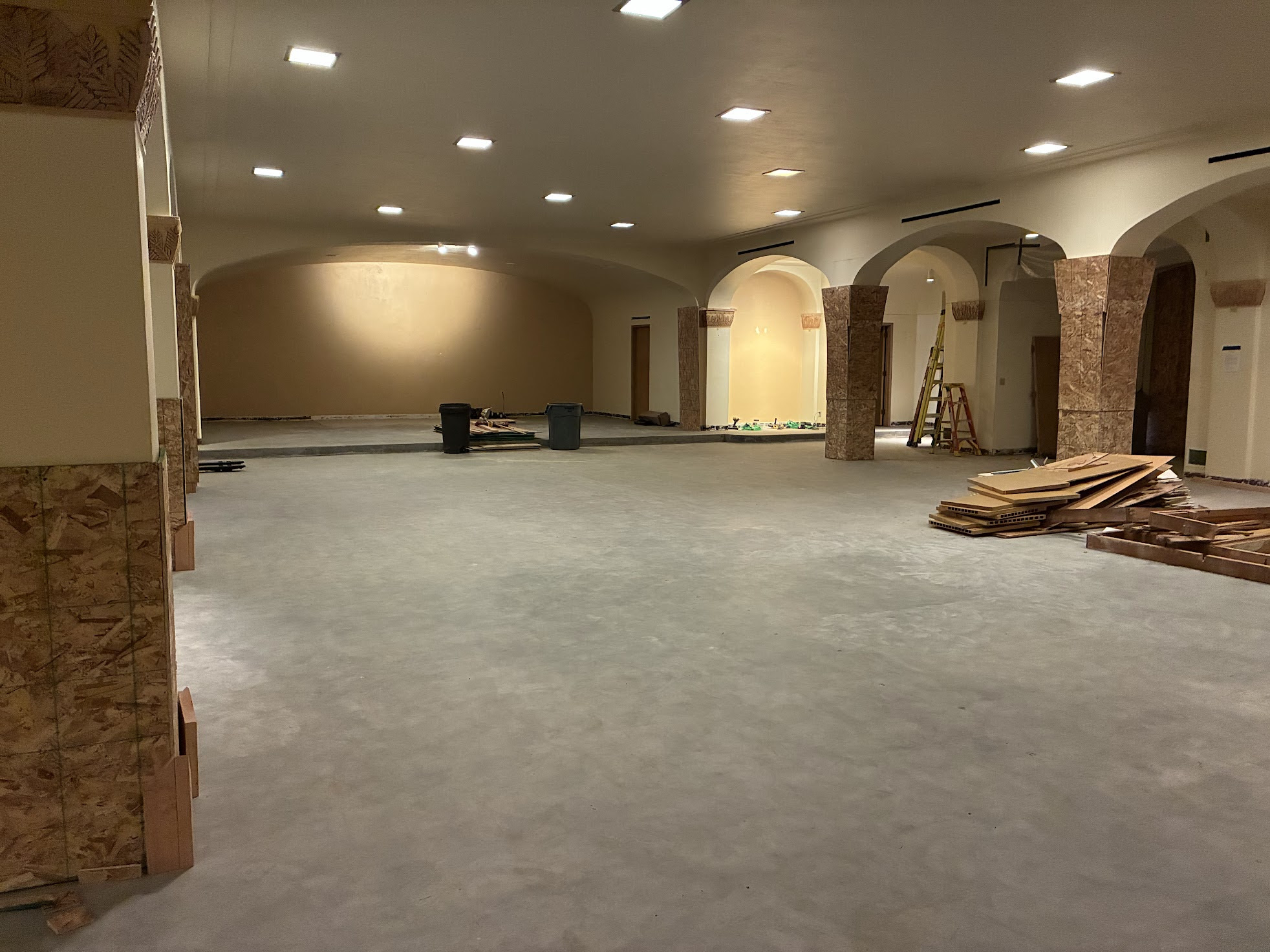
St. Joseph’s Crypt renovation.
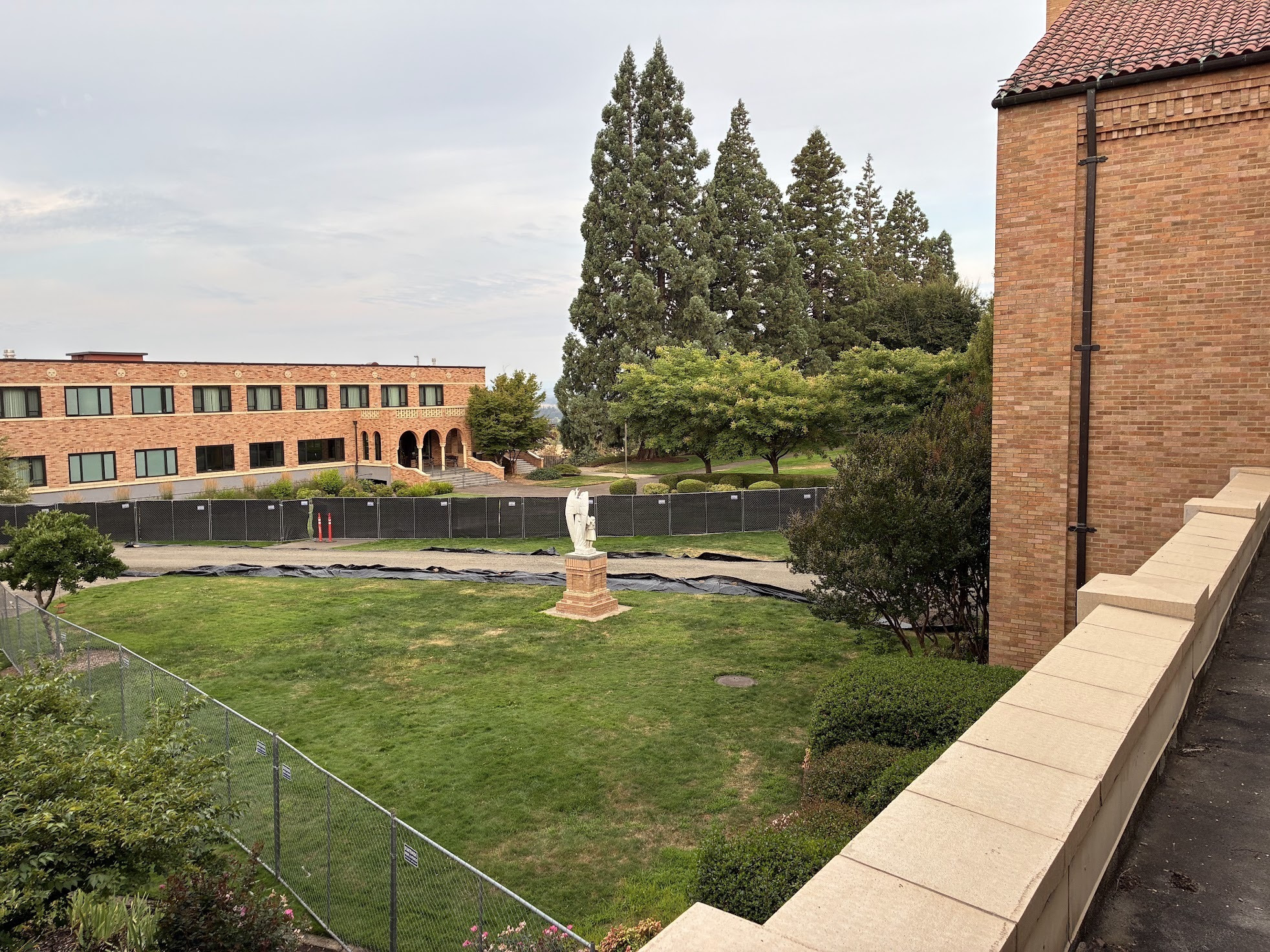
Oblate Calendar
2026
Sept
13 – Oblate Sunday: Fr. Michael. Work.
18-20 – Oblate Retreat. Fr. Ephrem.
29 – Solemnity of Archangels (plenary indulgence may be obtained by oblates)
Oct
11- Oblate Sunday: Fr. Michael. Leisure.
Nov
6-8 – Oblate Retreat. Fr. Michael
8 – Oblate Sunday: Fr. Philip. Our Lady of Guadalupe: Part I.
Dec
8 – Immaculate Conception (plenary indulgence may be obtained by oblates)
13 – Oblate Sunday: Br. Louis. Our Lady of Guadalupe: Part II.-
A Note to Our Dear Oblates - August 21, 2026
A Note to Our Dear Oblates
August 21, 2026Dear Oblates,
Summoning the Brothers for Counsel
This past week Mount Angel Abbey was privileged to host the Vatican Dicastery of Diving Worship to address the question of what is needed for better liturgical formation. These meetings took place in a synodal style giving time to prayerful silence, discernment and open sharing. However, long before the synodal method became a buzz word, Benedictines were already putting it into practice.
In the third chapter of the Holy Rule, immediately following the chapter on the Abbot, St. Benedict writes about summoning the brothers for counsel “when anything important is to be done” (3:1). By placing the chapter here, St. Benedict is telling us that the abbot and all leaders ought not act as a lone-ranger but invoke the opinions of other members of the community so that God’s will may be discerned. Our Lord tells us that “where two or three are gathered together, there am I in the midst of them” (Matthew 18:20). God has designed it such that better decisions are made when we listen to one another, for no one person has all the information or the best answers. Therefore, humility and attentive listening is to be practiced on both sides. The abbot for his part is to take to heart the voice of his monks, and the monks are called to present their “opinions with all humility.”
Surprisingly, St. Benedict says that “the Lord often reveals what is better to the younger” (3:4). Commentators state that these were probably the child oblates, who were offered to the monastery. We can enlarge the term “younger” to include those who are less intelligent, marginalized, and unpleasant. God often reveals Himself to those who are humble and weak and not the proud and strong.
The challenge is to listen and be open to such voices, especially if it runs contrary to our own opinions. We all have an interior pope, who desires to have everything our way, but let us thank God that this is not the case. This chapter on community meetings is so vital to Benedictine monasteries because it fosters unity and Concord. How is it possible for fifty men to live with each other if they are not listening to each other, not coming together to discuss impactful decisions. No, it is only by gathering together in a spirit of faith that we can properly discern God’s will. In order to discern well we need deep humility and an attentive spirit, and once a decision has been made, we are called to trust that this is the will of God. By this, we will have peace.
When do you struggle to be open to the opinions and ideas of others? What behavior could you adjust to be more open to hearing God speak through others?
As some of you may know there is an oblate spiritual directors peer supervision group. If you are interested in this please contact Jodi Kilcup at jkilcup@gmail.com.
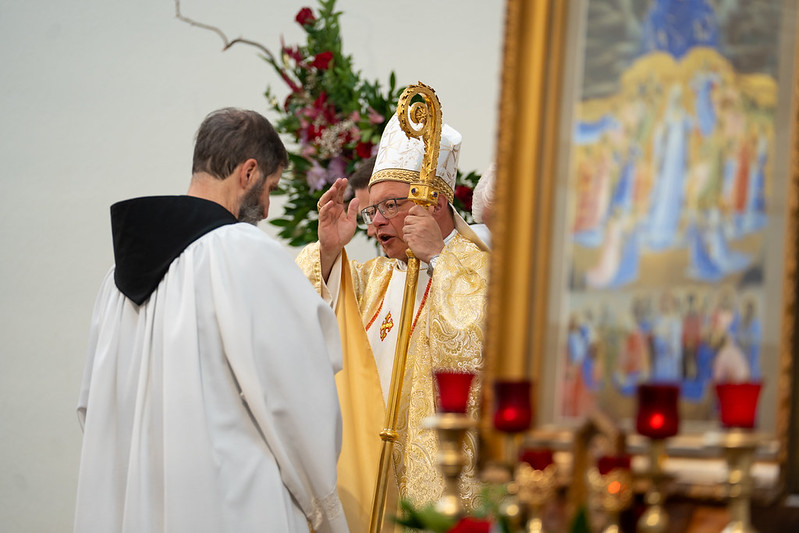
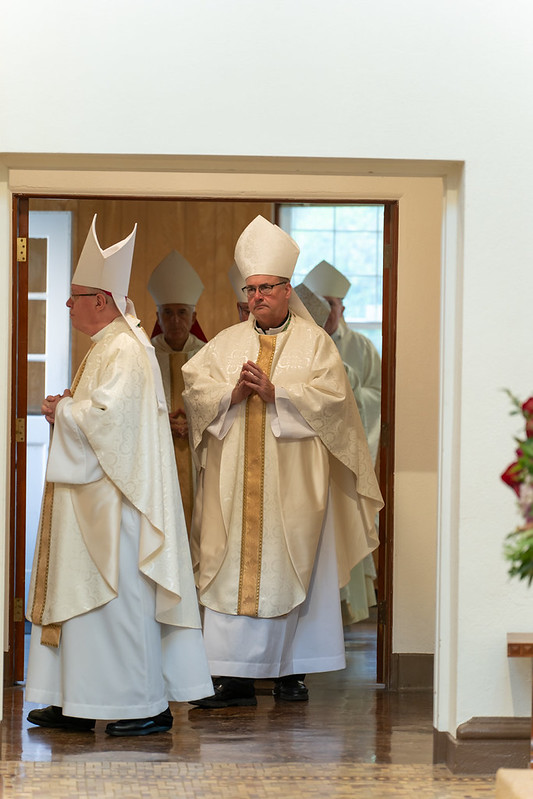
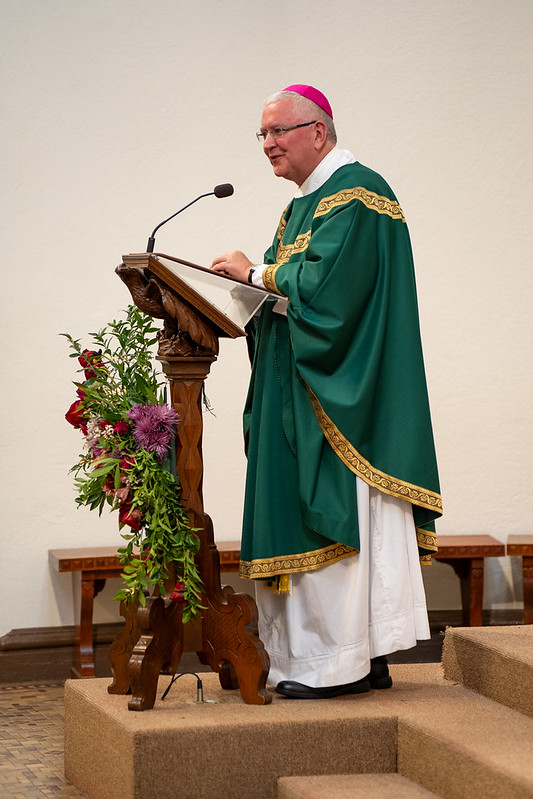
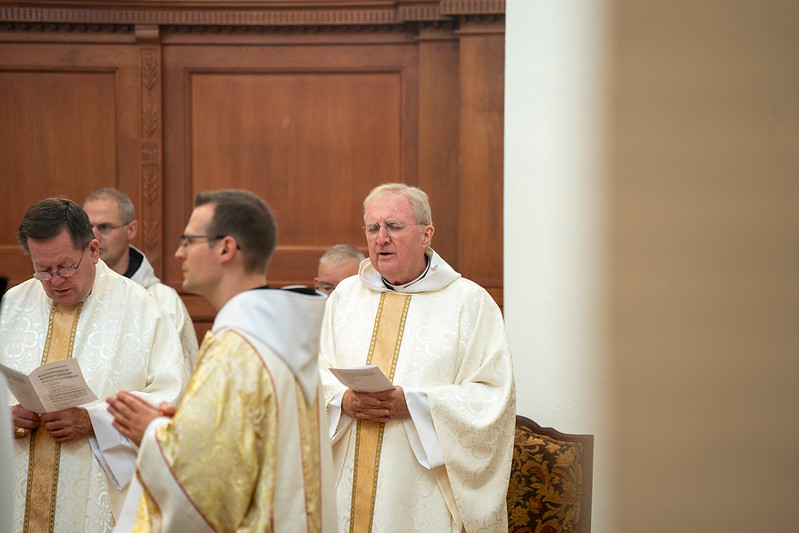
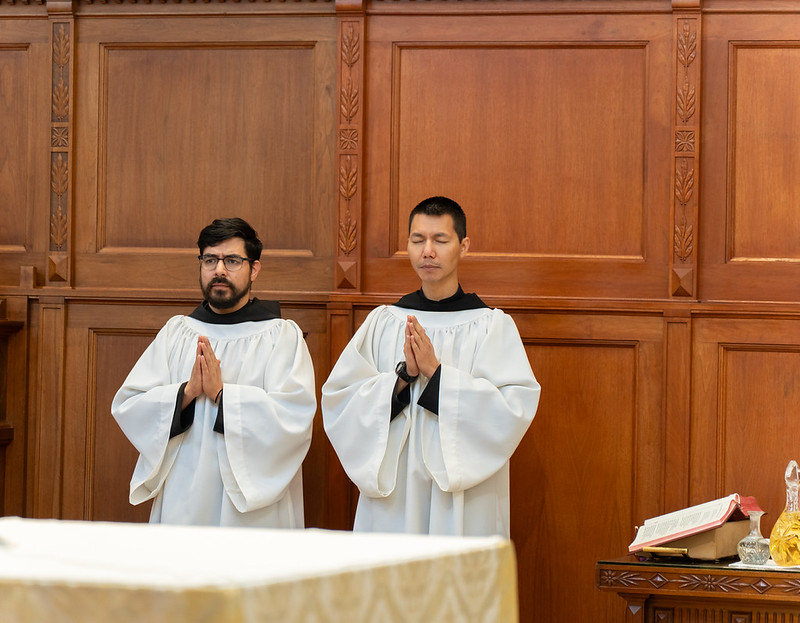
Below are some pictures from last week. Click here to see photos of the liturgical celebration during the past week when the Dicastery for Divine Worship and the Discipline of the Sacraments was meeting here.
Prayer request. Please pray for all the students who will be traveling this weekend and for blessings upon the beginning of the new school year, which starts next week. Please know that you can always send your prayer requests through our Oremus program.
Yours in Christ,
Fr. John Paul, OSB
Director of Oblates
Oblate Calendar
2026
Sept
13 – Oblate Sunday: Fr. Michael. Work.
18-20 – Oblate Retreat. Fr. Ephrem.
29 – Solemnity of Archangels (plenary indulgence may be obtained by oblates)
Oct
11- Oblate Sunday: Fr. Michael. Leisure.
Nov
6-8 – Oblate Retreat. Fr. Michael
8 – Oblate Sunday: Fr. Philip. Our Lady of Guadalupe: Part I.
Dec
8 – Immaculate Conception (plenary indulgence may be obtained by oblates)
13 – Oblate Sunday: Br. Louis. Our Lady of Guadalupe: Part II.-
A Note to Our Dear Oblates - August 14, 2026
A Note to Our Dear Oblates
August 14, 2026Dear Oblates,
The Assumption of the Blessed Virgin Mary
There is a large mosaic in the Annunciation building depicting the Annunciation of Mary. In this mosaic, the Blessed Virgin Mary is weaving together red yarn. The symbolism behind this is that Our Lady is the one who clothes Christ in His humanity. That is, He receives His flesh from her flesh. This is one of the reasons why God did not desire that her body undergo decay. As it is written in the preface, “You would not allow her to see the corruption of the tomb since from her own body she marvelously brought forth your incarnate Son, the author of life.”
Mary’s sharing in the fruits of Christ’s resurrection is for us, the Church, a “sign of sure hope and comfort.” From all eternity, God has desired to bring us all to Himself and Our Lady is the first among us to do so. She gives us hope because now we know that through God’s grace it is possible to live for Him. She is the Queen of heaven, who intercedes for her children, who traverse this vale of tears. As Our Lady shared in Christ’s suffering and glory, so too, we will one day share in that glory when He comes again to judge the living and the dead.
The Assumption of our Blessed Mother points us to the greatness of God. When our first parents disobeyed God, He did not abandon us, but He sent to us a perfect redeemer in His Son, and Our Lady, the first of the redeemed has been redeemed in a most perfect way. Yes, our loving and powerful God can do all things. He desires that we be with Him body and soul for all eternity. As He has done with Mary, so He desires to do with us.
I want to share with you in advance that Mount Angel Abbey will be hosting a significant gathering of senior Vatican officials, bishops, abbots, priests and international theological and liturgical experts beginning this Friday, August 14.
The gathering will focus on the important question, “What is needed for better liturgical formation?” Cardinal Arthur Roche, Prefect of the Vatican’s Dicastery for Divine Worship and the Discipline of the Sacraments, and Archbishop Vittorio Francesco Viola, OFM, Secretary of the Dicastery, will preside at the meeting.
Prayer request. Please pray for the Vatican meeting taking place at the Abbey this week. Please know that you can always send your prayer requests through our Oremus program.
Yours in Christ,
Fr. John Paul, OSB
Director of Oblates
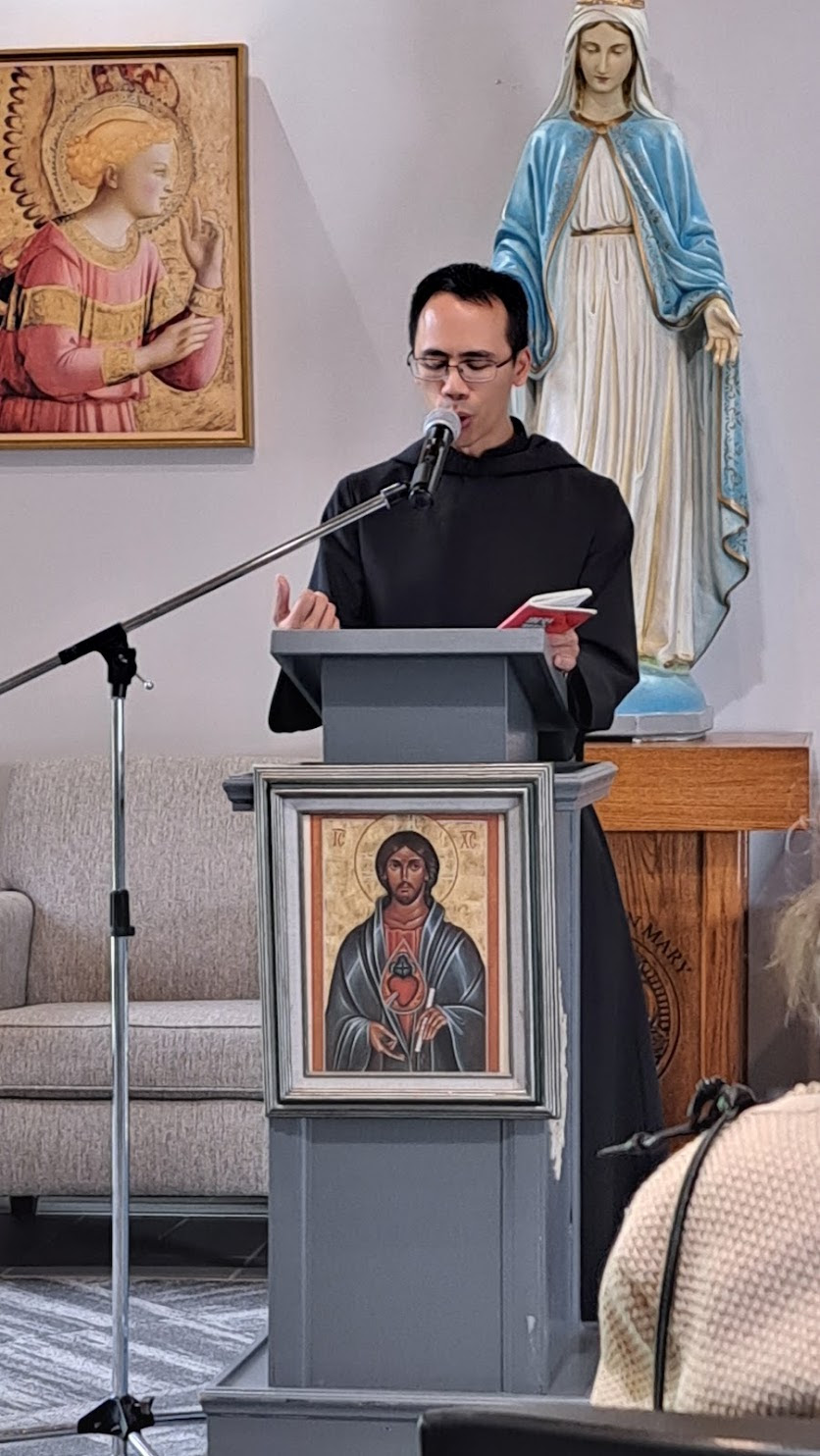
Giving a talk to the oblates on the discipline of children in the Holy Rule.
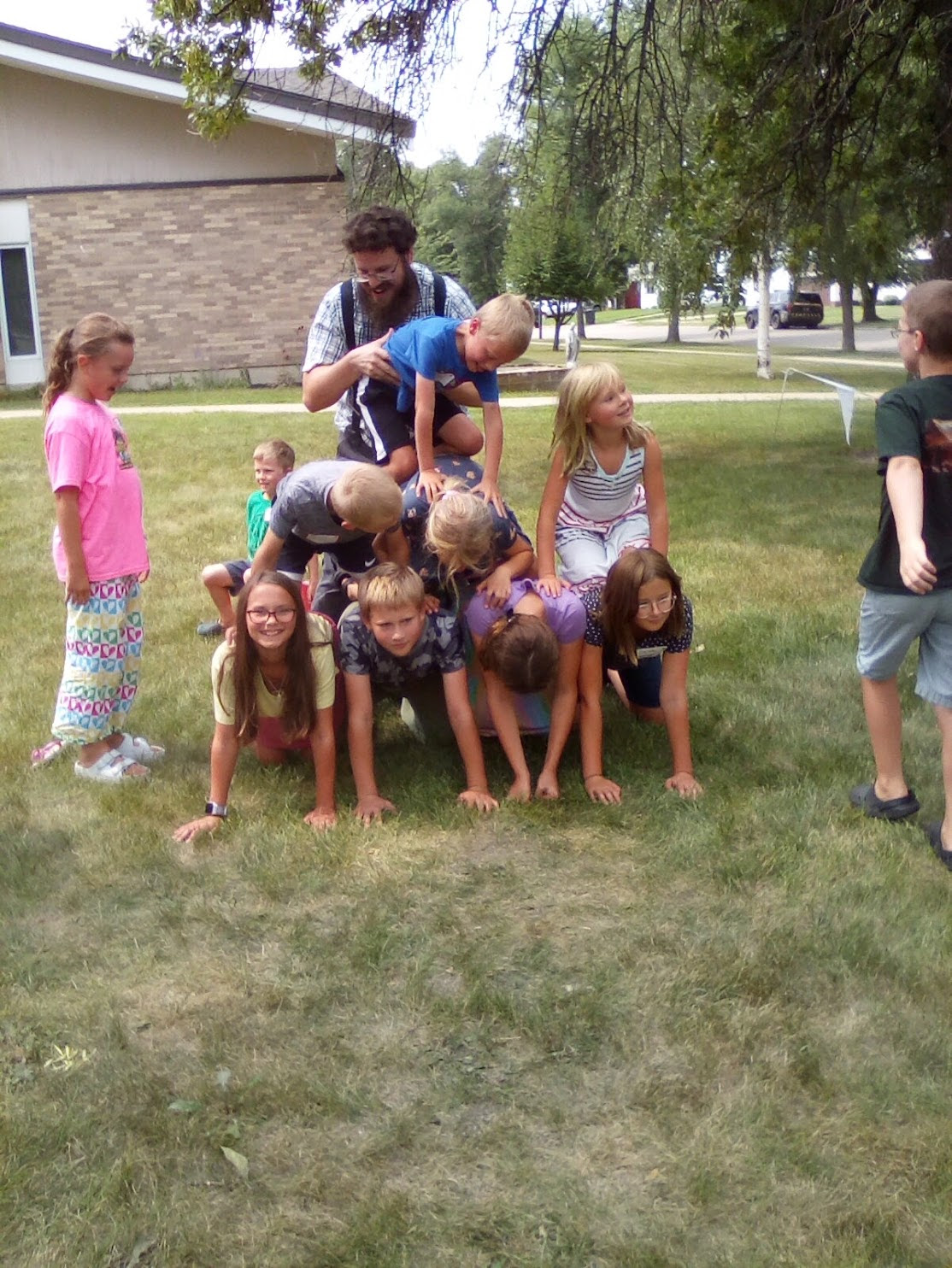
Another attempt (and failure) at building the tower of Babel.
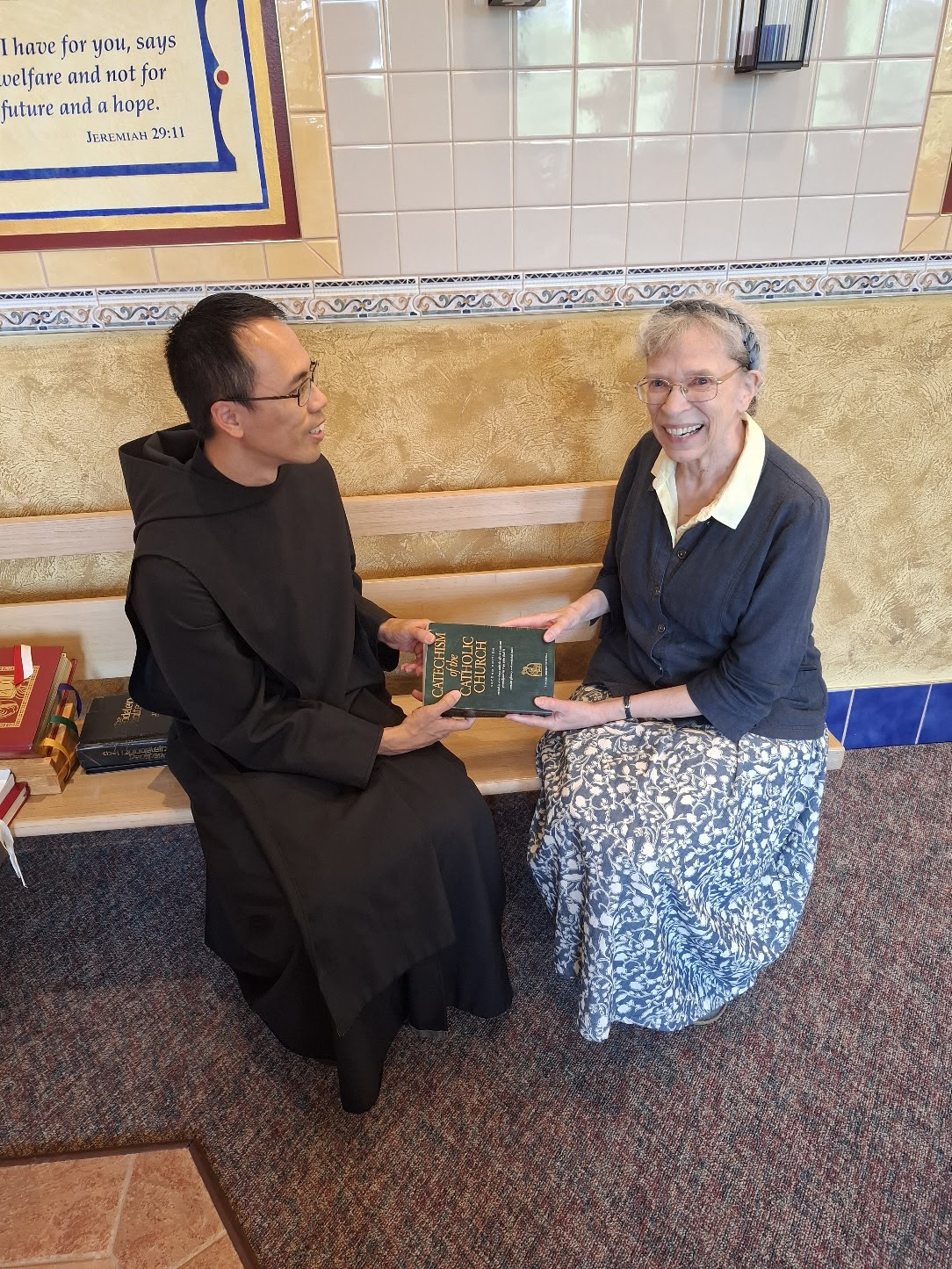
With Dr. Caroline Farey, a world-renowned catechist. In 2012, the Year of Faith, she received a catechism from Pope Benedict XVI on behalf of all catechists.
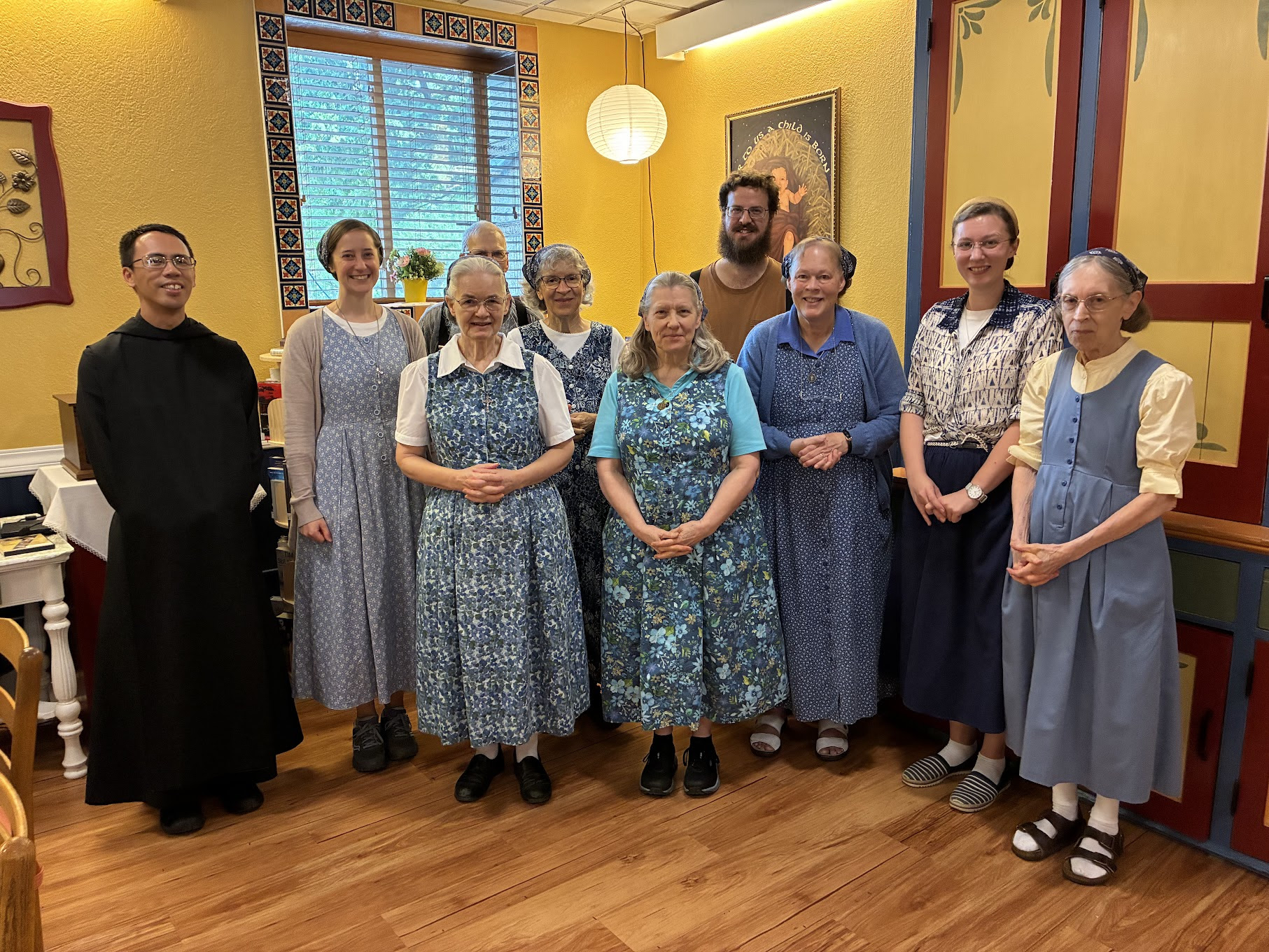
With the Bethlehem community of Benedictine oblates.

A beautiful view of Mt. Hood on my way home.
Oblate Calendar
2026
Sept
13 – Oblate Sunday: Fr. Michael. Work.
18-20 – Oblate Retreat. Fr. Ephrem.
29 – Solemnity of Archangels (plenary indulgence may be obtained by oblates)
Oct
11- Oblate Sunday: Fr. Michael. Leisure.
Nov
6-8 – Oblate Retreat. Fr. Michael
8 – Oblate Sunday: Fr. Philip. Our Lady of Guadalupe: Part I.
Dec
8 – Immaculate Conception (plenary indulgence may be obtained by oblates)
13 – Oblate Sunday: Fr. Philip. Our Lady of Guadalupe: Part II.-
A Note to Our Dear Oblates - August 7, 2026
A Note to Our Dear Oblates
August 7, 2026Dear Oblates,
19th Sunday
It is through the storms of life that our faith is put to the test. St. Peter had faith that Jesus was there in the middle of the storm, but he needed more faith. When he saw the strong wind, he became frightened and began to sink. Such is our faith in times of trials and tribulation. We believe in Jesus, but only to a degree. We don’t completely trust that he will take care of everything, and we are frozen by fear and begin to sink spiritually. The troubles and cares of the world are like the strong wind and waves that completely overwhelm us. In these moments, St. Peter models our only response.
He cries out in desperation, “Lord, save me.” It is a simple, honest and heartfelt prayer. St. Peter realizes that his own feeble human efforts are of no avail against the raging wind and sea. God is his only helper, and God responds promptly. The gospel says, “Immediately, Jesus stretched out his hand and caught Peter.” There was no delay between the prayer of St. Peter and the action of Our Lord. He was right there, close to St. Peter the whole time; he was just a prayer away. In the same way, we can call upon the Lord when the seas threaten to drown us, and like with St. Peter, he responds immediately by stretching out his hand.
The image of Christ stretching out his hand to catch St. Peter points to the cross where he will once more stretch out his hand to save a drowning world. On the cross, Christ conquered the chaos and disruption of sin and has restored harmony and peace within our souls and in the world. The only answer to these tumultuous times is to cry out, “Lord, save me.”
When in your life have you cried out for assistance and received help immediately? Remember a time that you responded instantly to another’s cry for help. Find a time in your day, in the middle of worries or trouble, to interrupt your thoughts and call “Lord, save me.”
Our next Oblate Sunday is August 9th with Fr. Michael. This is the first of his four talks on the Holy Rule and will be about food and drink. For in-person, click here; for remote option, click here. The Oblate Sunday begins with Mass at the Abbey at 9am. It is followed by a potluck brunch after Mass in the guesthouse dining room. The conference starts at 11am in the Westminster Room.
As you may know, there are new office books for the Divine Office. The two publishing companies who have been charged with this task are Word on Fire Press and Ascension Press. The Word on Fire office books are a bit more expensive, but if you are regularly praying the Divine Office, I would recommend this company. A single-volume edition will become available from other publishers in mid-2028.
From Ascension Press:
“If I am required to pray the Liturgy of the Hours now, when will I be required to use the new edition?
The USCCB established the first-use date as Ash Wednesday, February 10th, 2027, and the mandatory-use date as the first Sunday of Advent, December 3rd, 2028.”Prayer request. Please pray for Br. Thomas, who is on retreat in preparation for his diaconate ordination on September 18th at 4pm. Please pray for me as I fly out to North Dakota to visit the oblates there. Please know that you can always send your prayer requests through our Oremus program.
Yours in Christ,
Fr. John Paul, OSB
Director of Oblates
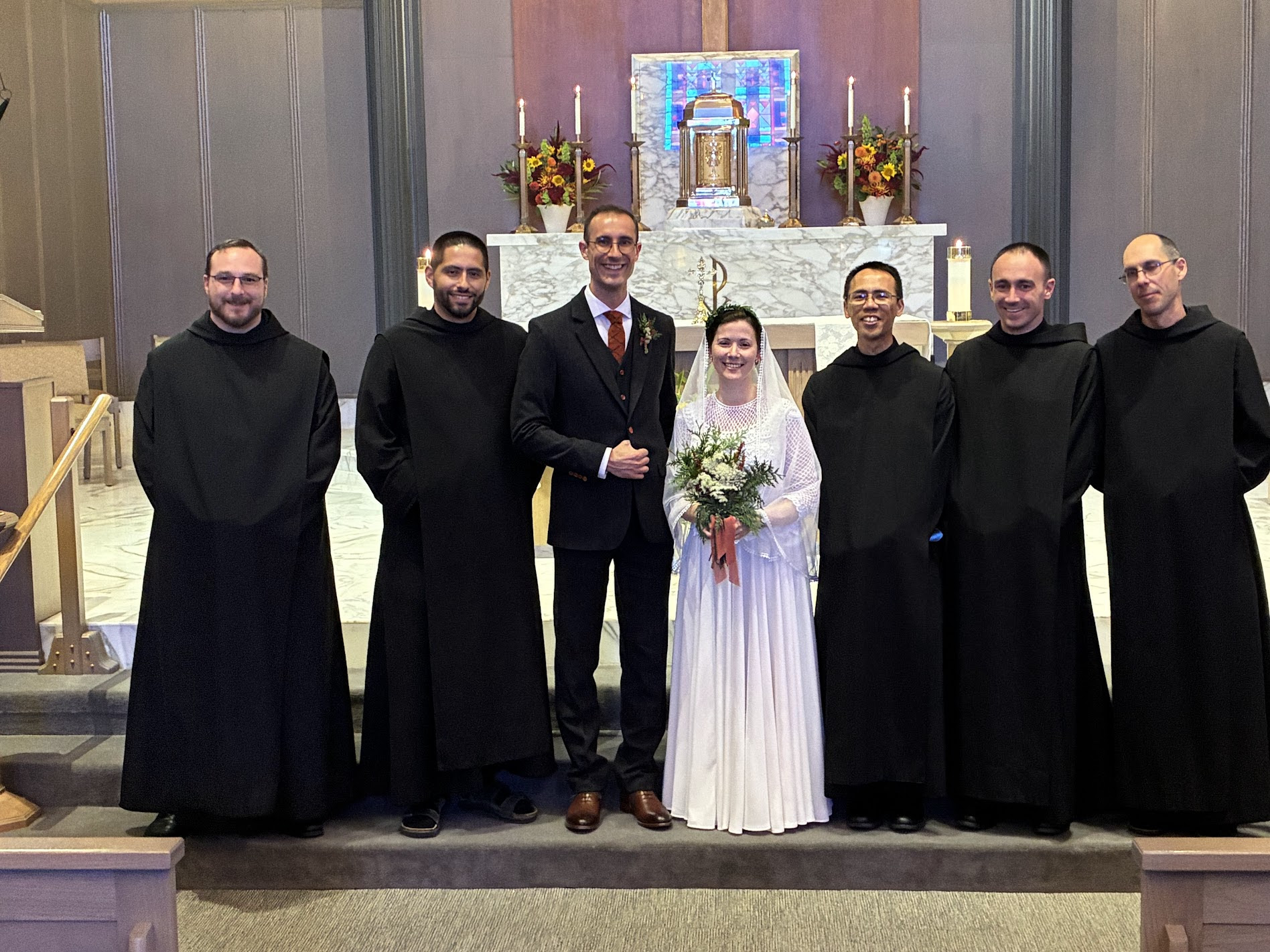
The monks with Brody and Rachel Stewart. Please pray for them while they are on their honeymoon in the UK.
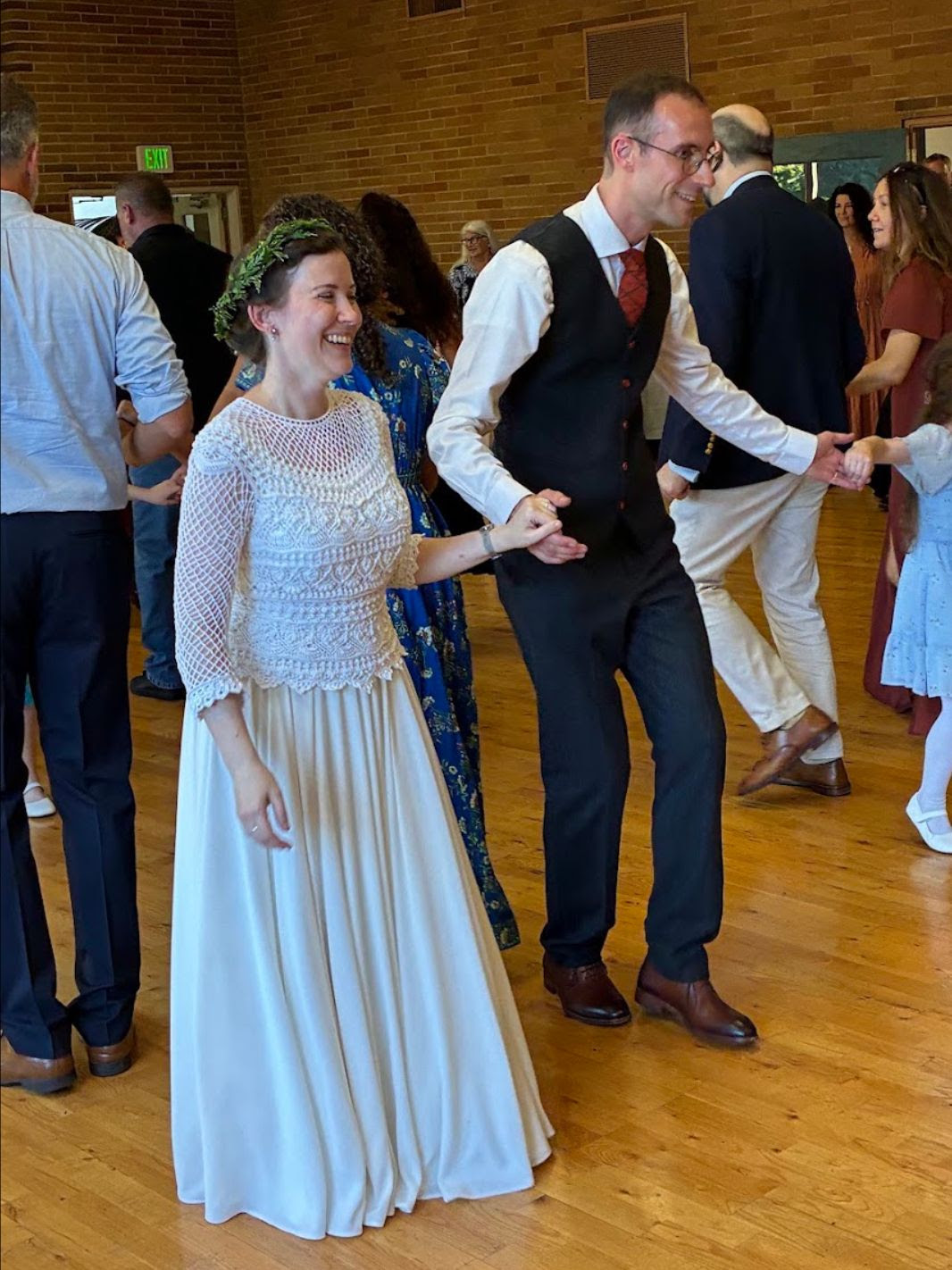
The newlyweds having fun at their reception.
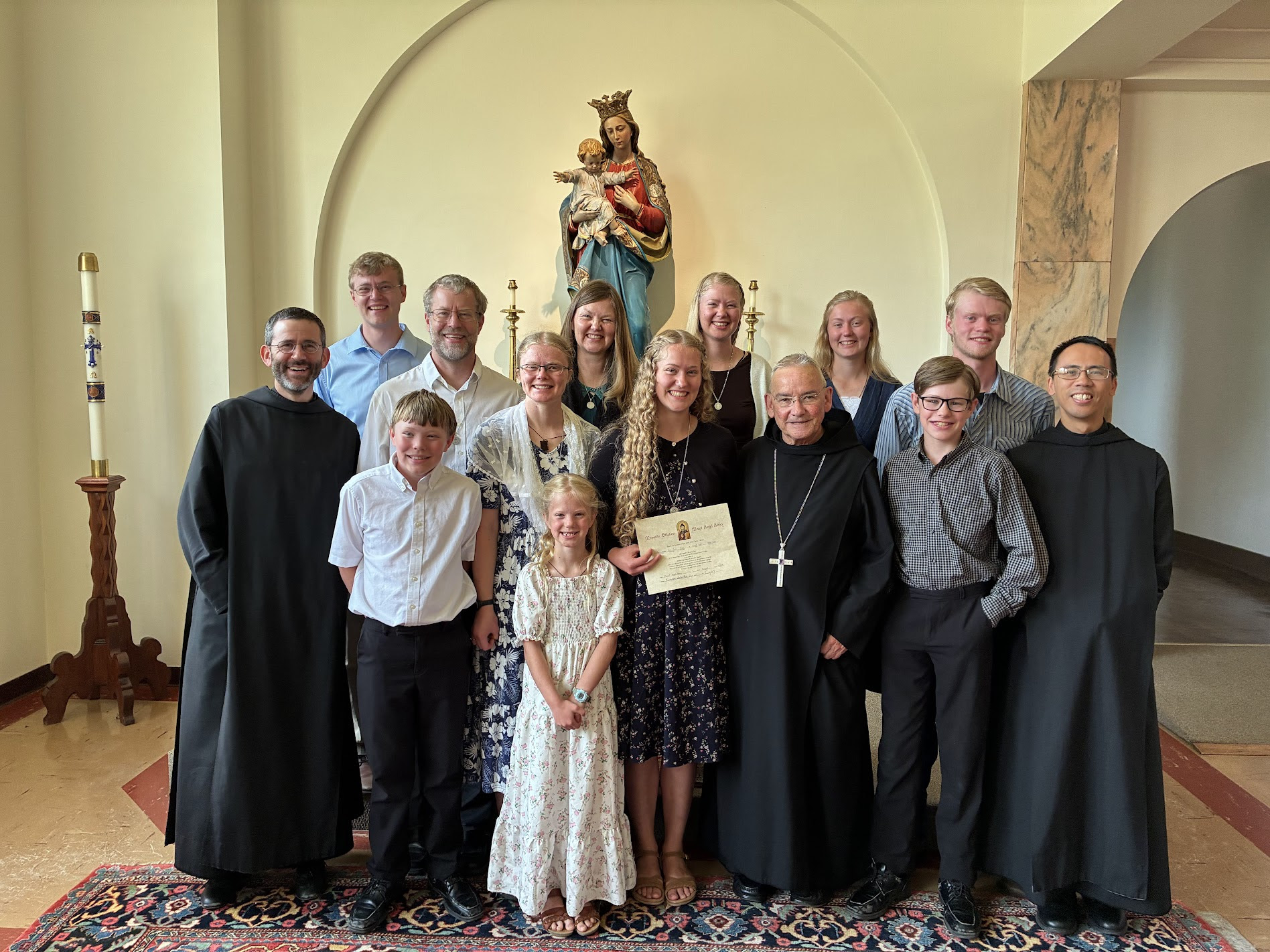
Bernadette “John Paul” Treis with her family and the monks. There are now seven oblates in the Treis family.
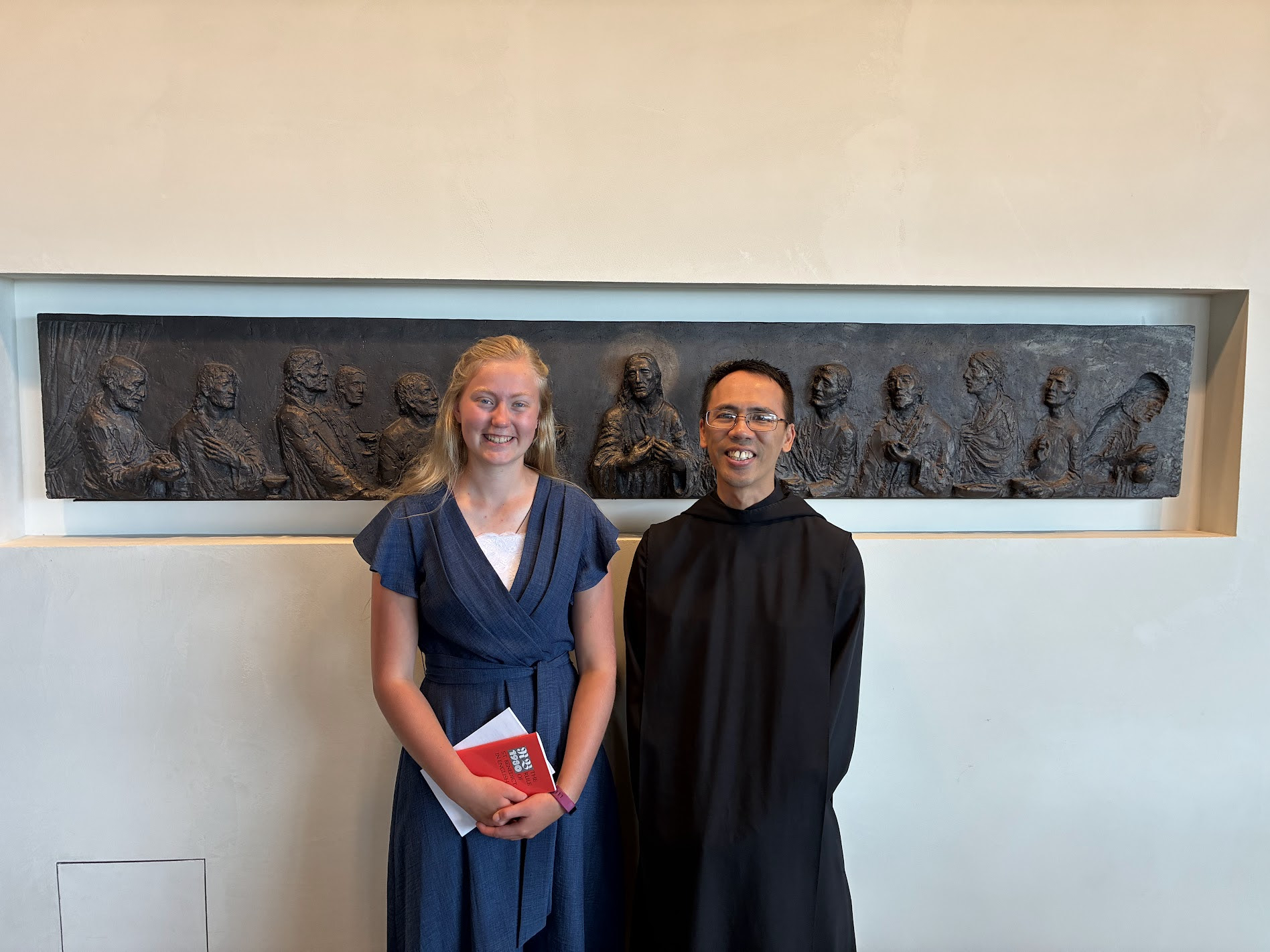
Teresa Treis was enrolled in the novitiate on the same day.
Oblate Calendar
2026
Aug
9 – Oblate Sunday: Fr. Michael. Food and Drink.
Sept
13 – Oblate Sunday: Fr. Michael. Work.
18-20 – Oblate Retreat. Fr. Ephrem.
29 – Solemnity of Archangels (plenary indulgence may be obtained by oblates)
Oct
11- Oblate Sunday: Fr. Michael. Leisure.
Nov
6-8 – Oblate Retreat. Fr. Michael
8 – Oblate Sunday: Fr. Philip. Our Lady of Guadalupe: Part I.
Dec
8 – Immaculate Conception (plenary indulgence may be obtained by oblates)
13 – Oblate Sunday: Fr. Philip. Our Lady of Guadalupe: Part II.-
A Note to Our Dear Oblates - July 31, 2026
A Note to Our Dear Oblates
July 31, 2026Dear Oblates,
18th Sunday
I wonder what the experience was for those men. They took their wives and children to follow an upstart preacher and miracle worker. Did they act out of faith or desperation? Whatever the motivation, they found themselves in a deep hole. They did not have food to feed their family. They might have thought, “I’m such a bad person, taking my family out here and making them starve,” or “Will we be able to make it back home,” or perhaps they prayed, “God, help me.” In such a situation, they were unable to do anything themselves and needed the help of another person.
Jesus enters the scene; his heart is moved with pity for them. He collects the little that they have; five loaves and two fish. He doesn’t need a lot, but just something to work with, and with this little amount he feeds the multitudes. They all ate and were satisfied. How delighted and grateful the men must have been to the Lord for working such a loving miracle.
We can be like the men in the gospel. We make our journey through life, but we don’t have enough, either for ourselves or for our family. We become worried and anxious about what the future holds. We ask, “Will there be enough? Will everything be okay? How can I provide for those I love?” Like the men, we do not have enough or what it takes to provide for the welfare of those we love. Of ourselves, we can only do so little. This is where Jesus enters the scene. He takes the little we have and blesses it.
We give him the little trust that we have, the few words that we utter, the limited strength that is left, the imperfect love in our hearts, and he takes it, blesses it and multiplies it. Therefore, Christ is the one who feeds and nourishes us and our loved ones. Like the five thousand men, if we simply follow him and give him the little we have, he will transform it into a little miracle.
What is a little that you can offer Christ today; what do you need multiplied? Recall a time when you had only a fragment to offer the Lord and he responded to you with an abundance.
Pope Leo XIV recently visited the Abbey of Montecassino.
Our next Oblate Sunday is August 9th with Fr. Michael. This is the first of his four talks on the Holy Rule and will be about food and drink. For in-person, click here; for remote option, click here. The Oblate Sunday begins with Mass at the Abbey at 9am. It is followed by a potluck brunch after Mass in the guesthouse dining room. The conference starts at 11am in the Westminster Room.
Prayer request. Please pray for the continued success of the Bach Festival. Please also pray for Brody Stewart (former Br. Ambrose) and Rachel Campbell, who will be married tomorrow. Pray also for the six seminarians who have recently begun their Intensive Spirituality Program. Please know that you can always send your prayer requests through our Oremus program.
Yours in Christ,
Fr. John Paul, OSB
Director of Oblates
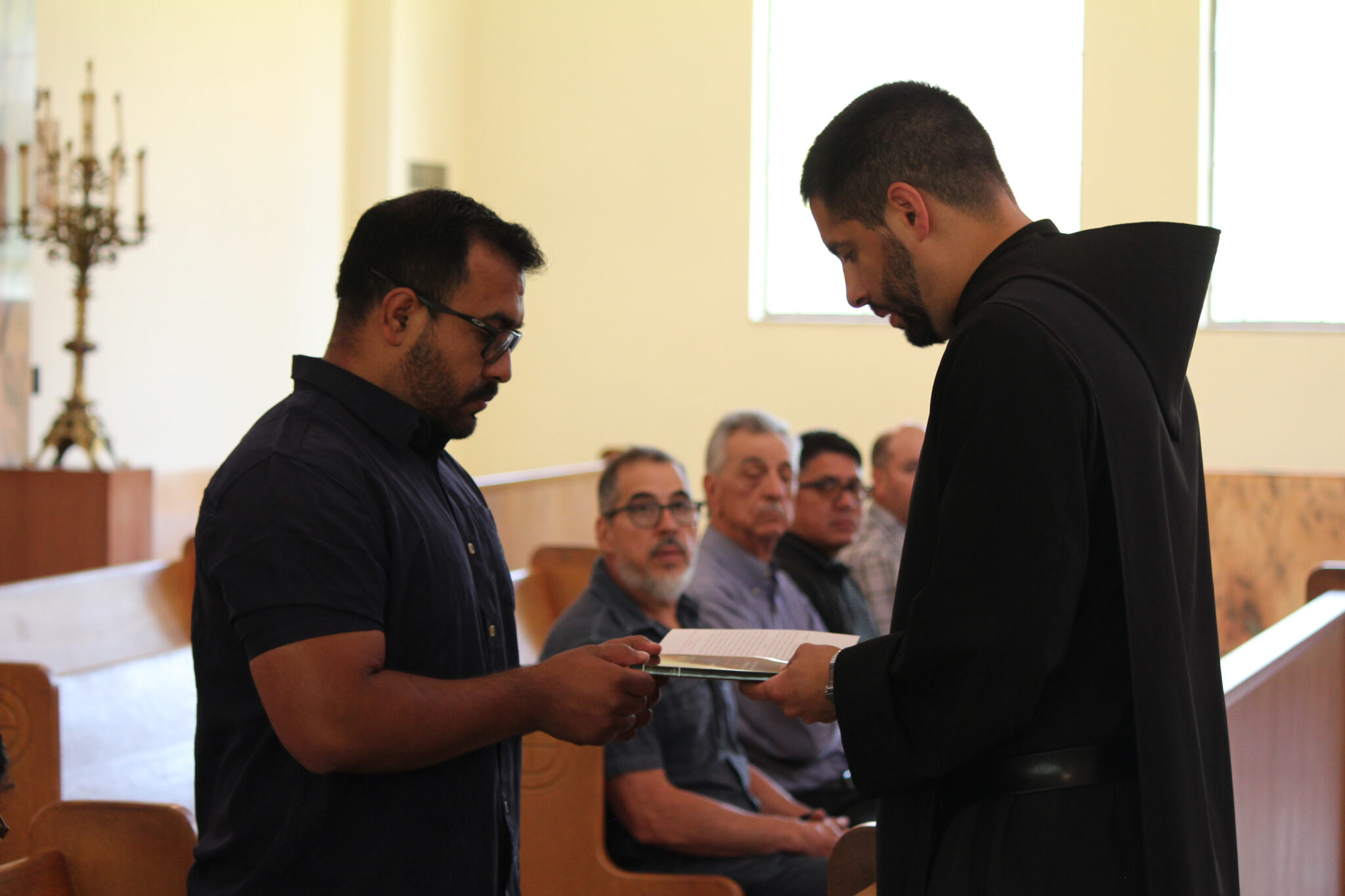
Enrollment of the new Hispanic novices.
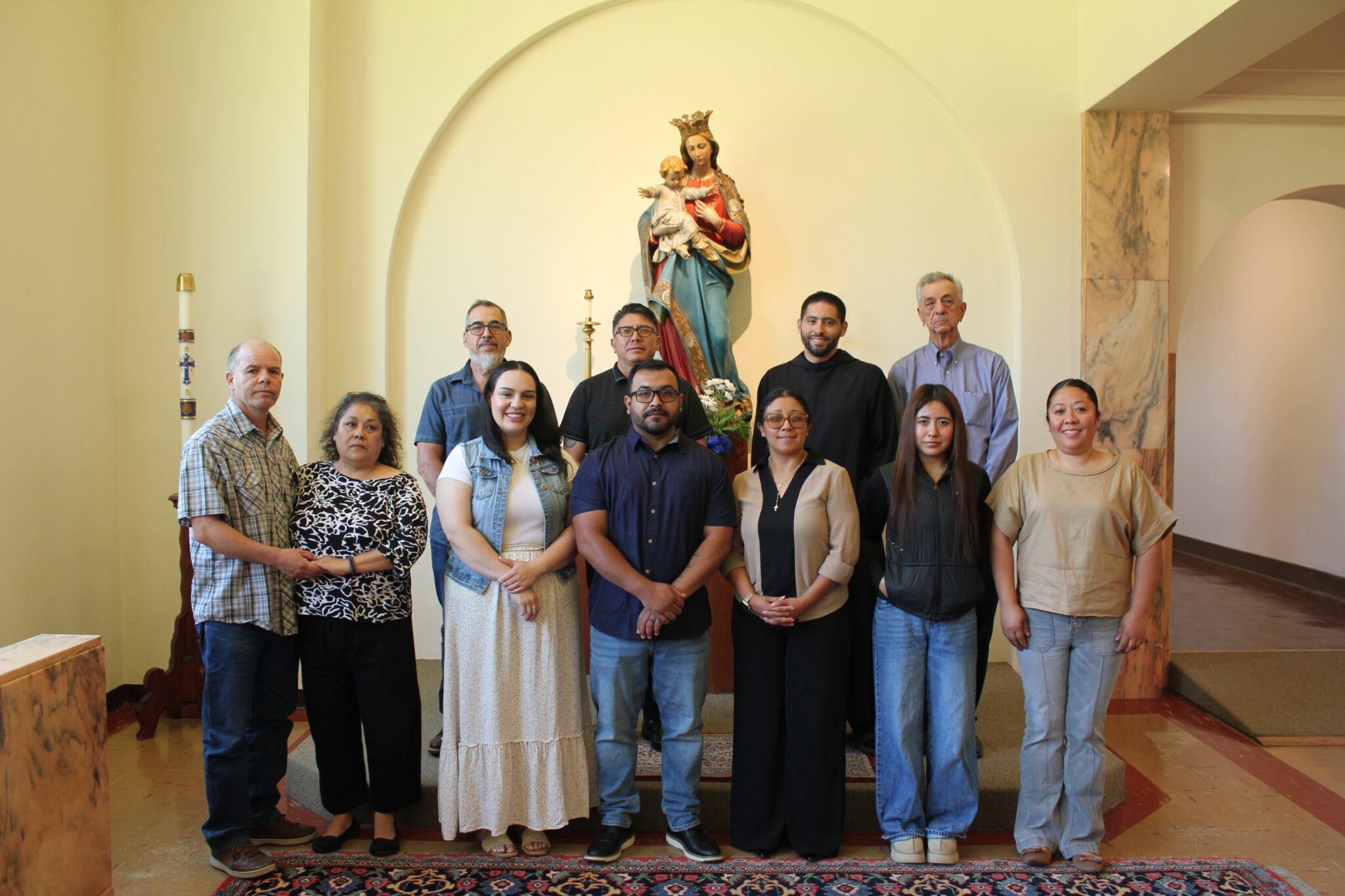
The new Hispanic novices.
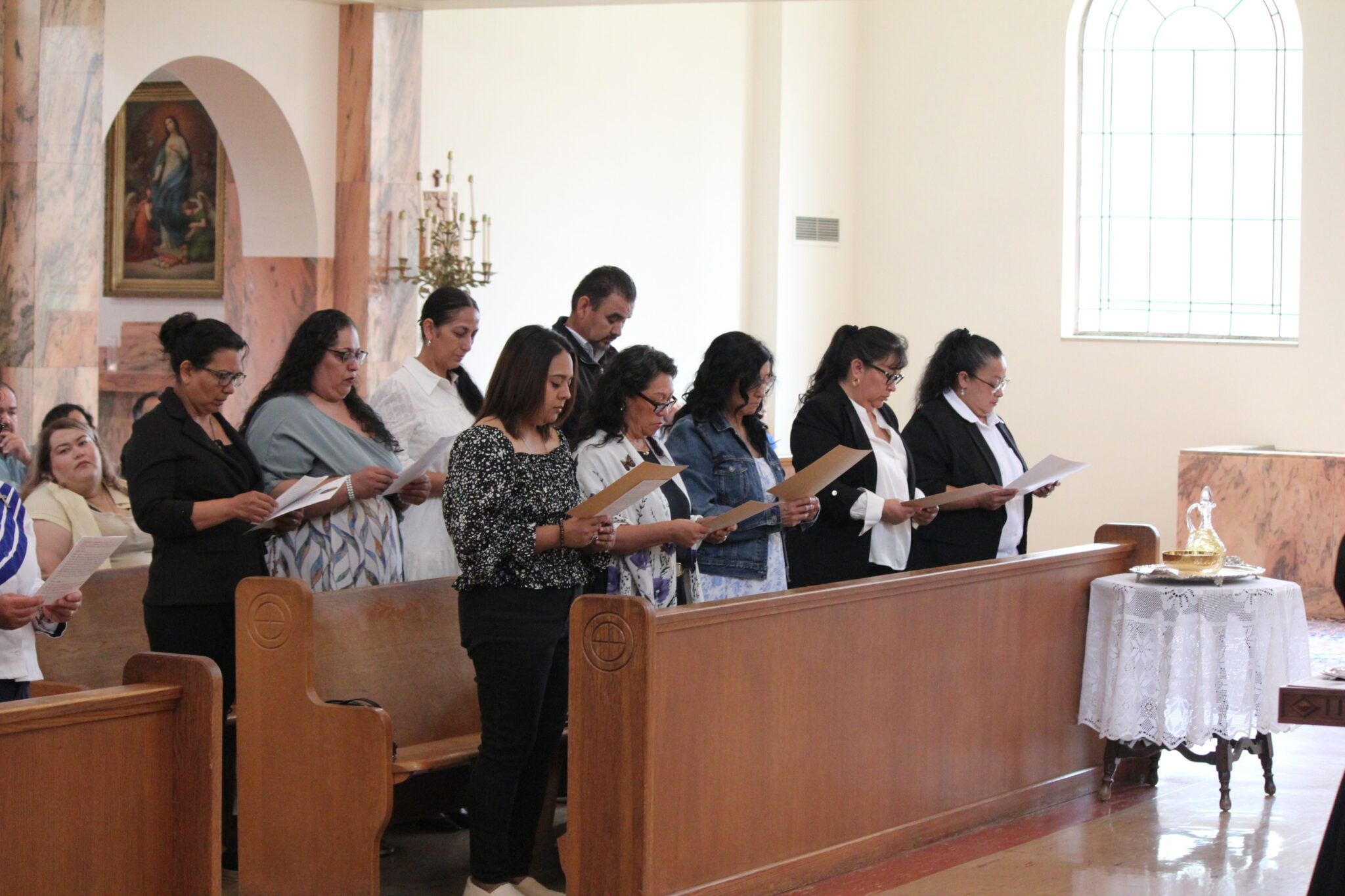
Rite of final oblation for the Hispanic oblates.
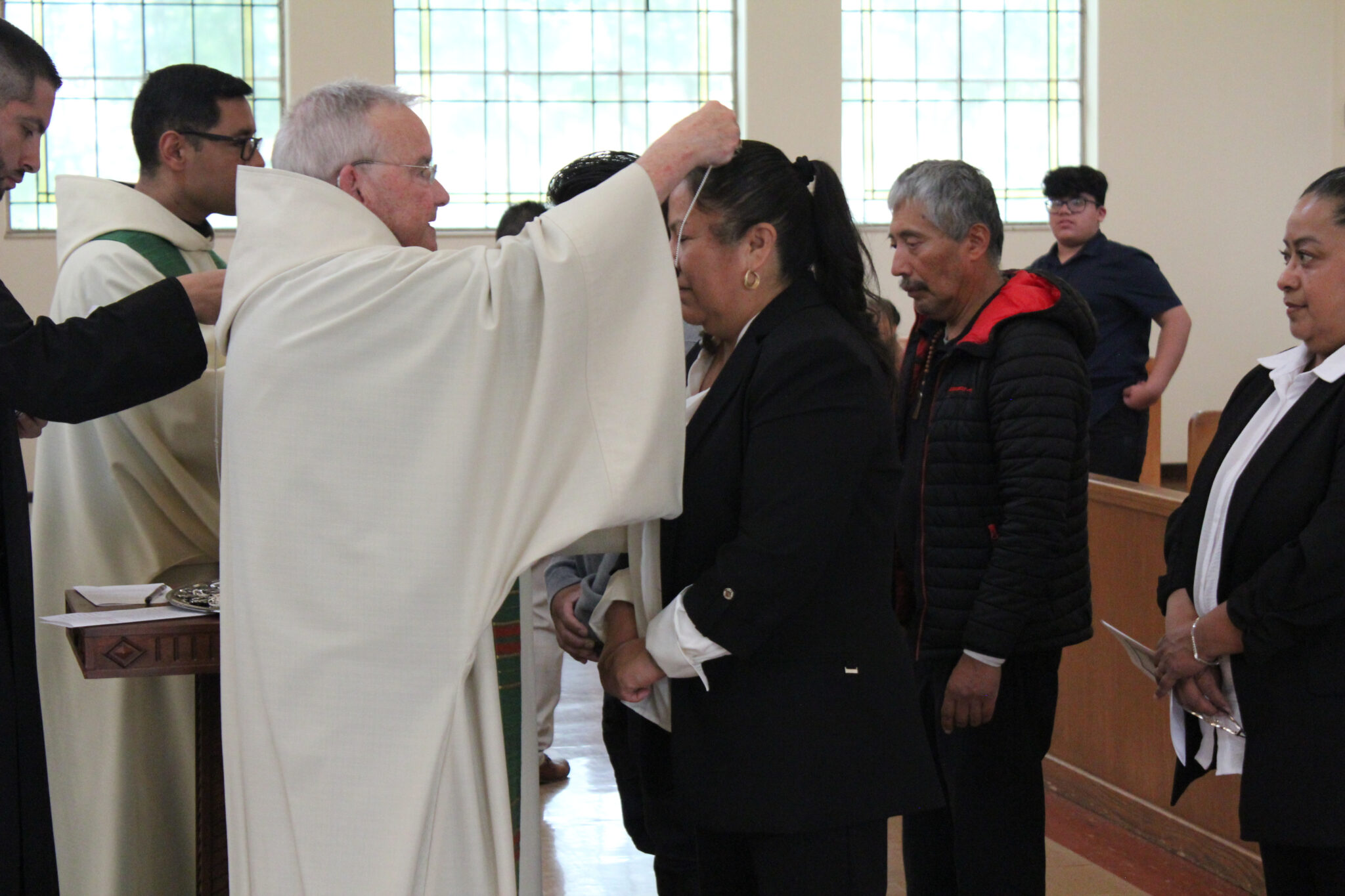
Rite of final oblation for the Hispanic oblates.
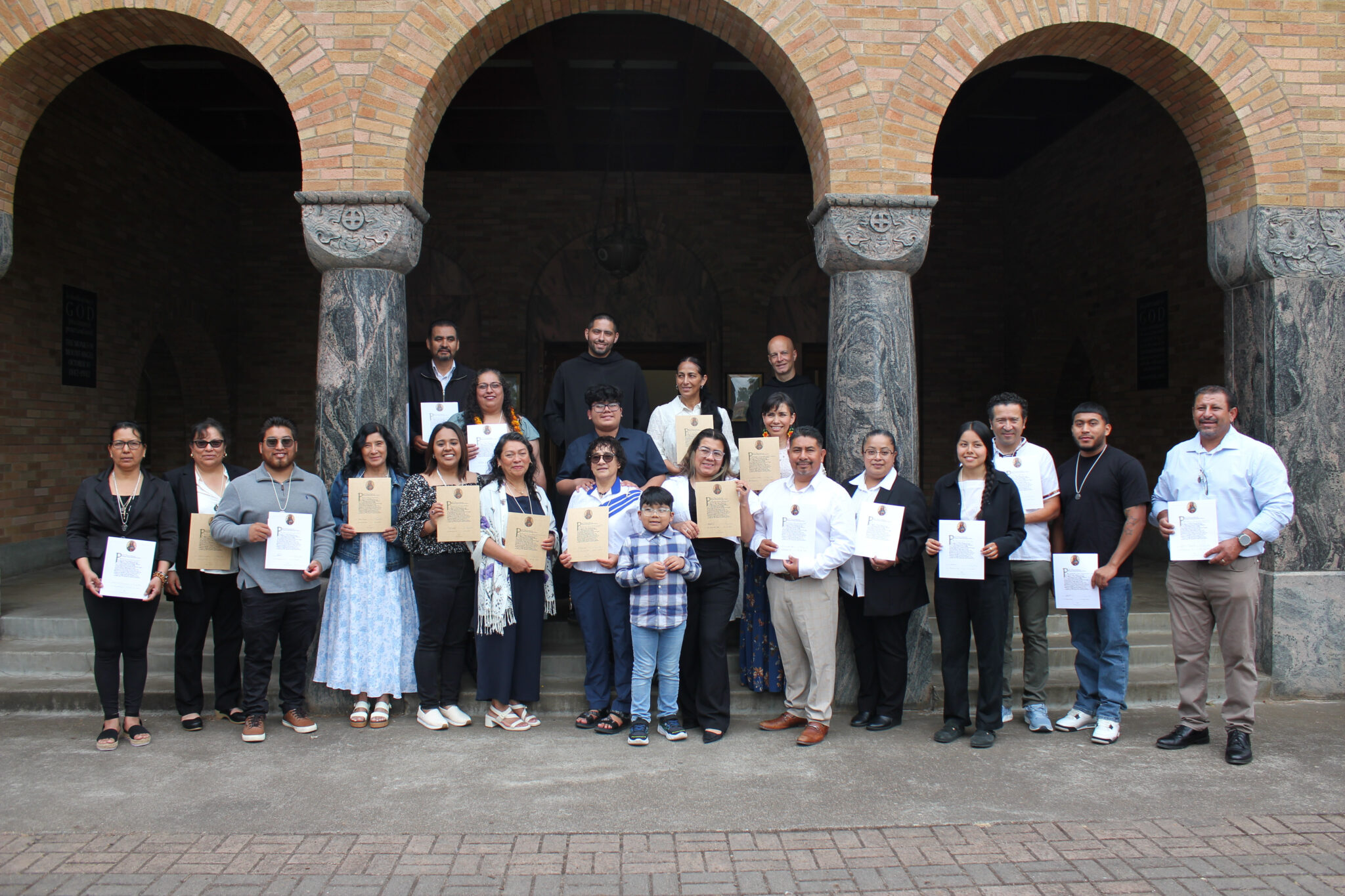
The new Hispanic oblates.
Oblate Calendar
2026
Aug
9 – Oblate Sunday: Fr. Michael. Food and Drink.
Sept
13 – Oblate Sunday: Fr. Michael. Work.
18-20 – Oblate Retreat. Fr. Ephrem.
29 – Solemnity of Archangels (plenary indulgence may be obtained by oblates)
Oct
11- Oblate Sunday: Fr. Michael. Leisure.
Nov
6-8 – Oblate Retreat. Fr. Michael
8 – Oblate Sunday: Fr. Philip. Our Lady of Guadalupe: Part I.
Dec
8 – Immaculate Conception (plenary indulgence may be obtained by oblates)
13 – Oblate Sunday: Fr. Philip. Our Lady of Guadalupe: Part II.-
A Note to Our Dear Oblates - July 24, 2026
A Note to Our Dear Oblates
July 24, 2026Dear Oblates,
17th Sunday
The spiritual life is like a great treasure hunt and the precious treasure is Christ. We go out on this journey driven by faith, believing that the prize will be worth the effort. Therefore, we have to make plans to take practical steps to make the excursion possible. In doing so, we necessarily have to leave things behind, people, activities, and belongings. Along with this, the journey also involves sacrifice and pain. The way to find Christ is through the cross. Perhaps, the sufferings may be so great, that we would wish to abandon the expedition altogether, but that is where we need the virtue of perseverance and fortitude. The hidden treasure does not come easily, but we do receive signs that we are on the right path through the graces God bestows on us along the way.
Eventually we arrive at the glorious moment when the fruit of all our labors are realized. We find the treasure hidden in a field. We at long last encounter the God for whom we sought for so long. And what joy and bliss is poured into our hearts as we behold his beauty. Like a gemstone with many facets, there are many sides to the wonder and glory of the Lord.
May you persevere in your seeking of God and may you have a taste of his divine goodness. It is an adventure worth embarking upon, for St. Augustine says, “To fall in love with God is the greatest romance; to seek him the greatest adventure; to find him, the greatest human achievement.”
What graces do you recognize God bestowing on you in your adventure of seeking him? What are some of the facets of God that he has let you see about himself? What parts of him do you already treasure that fill you with wonder and joy?
The 2026 Bach Festival Promo Code you can use to receive your 30% Oblate discount for up to 6 regular tickets is OBLATE26. Only tickets for the Wednesday and Saturday (kids) show remain. Here is your link to the ticket page: Bach Festival Tickets.
Prayer request. Please pray for the Hispanic Oblate Novices who will be making their final oblation on Sunday. Please also pray for the success of the Abbey Bach Festival. Please know that you can always send your prayer requests through our Oremus program.
Yours in Christ,
Fr. John Paul, OSB
Director of Oblates
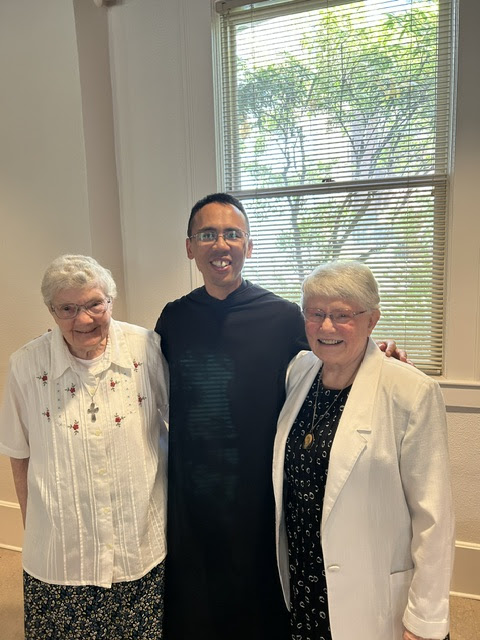
After jubilee Mass of 70 years for Sr. Joseph and Sr. Maureen.
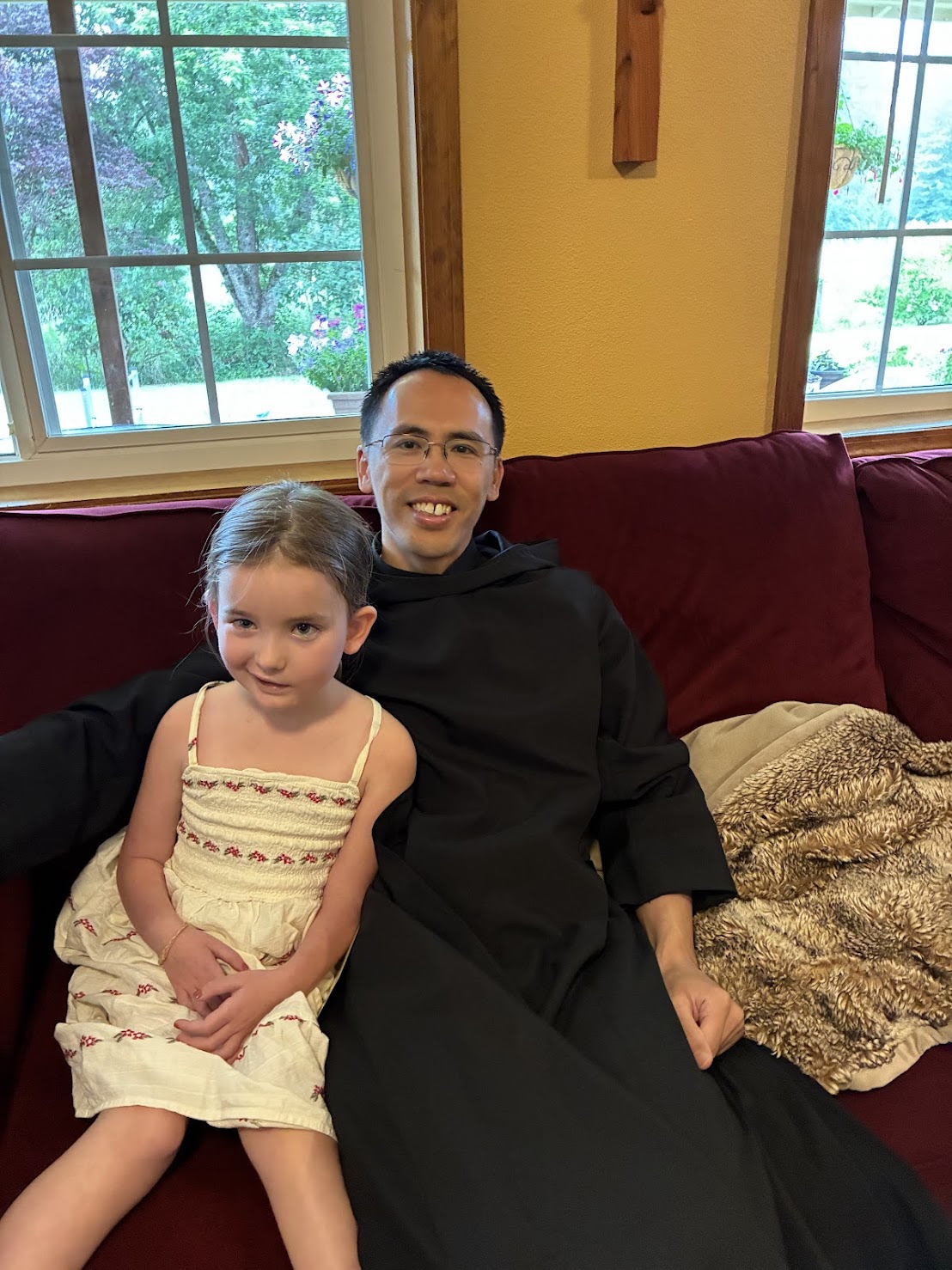
At the Defilippis home with their granddaughter, Ava.
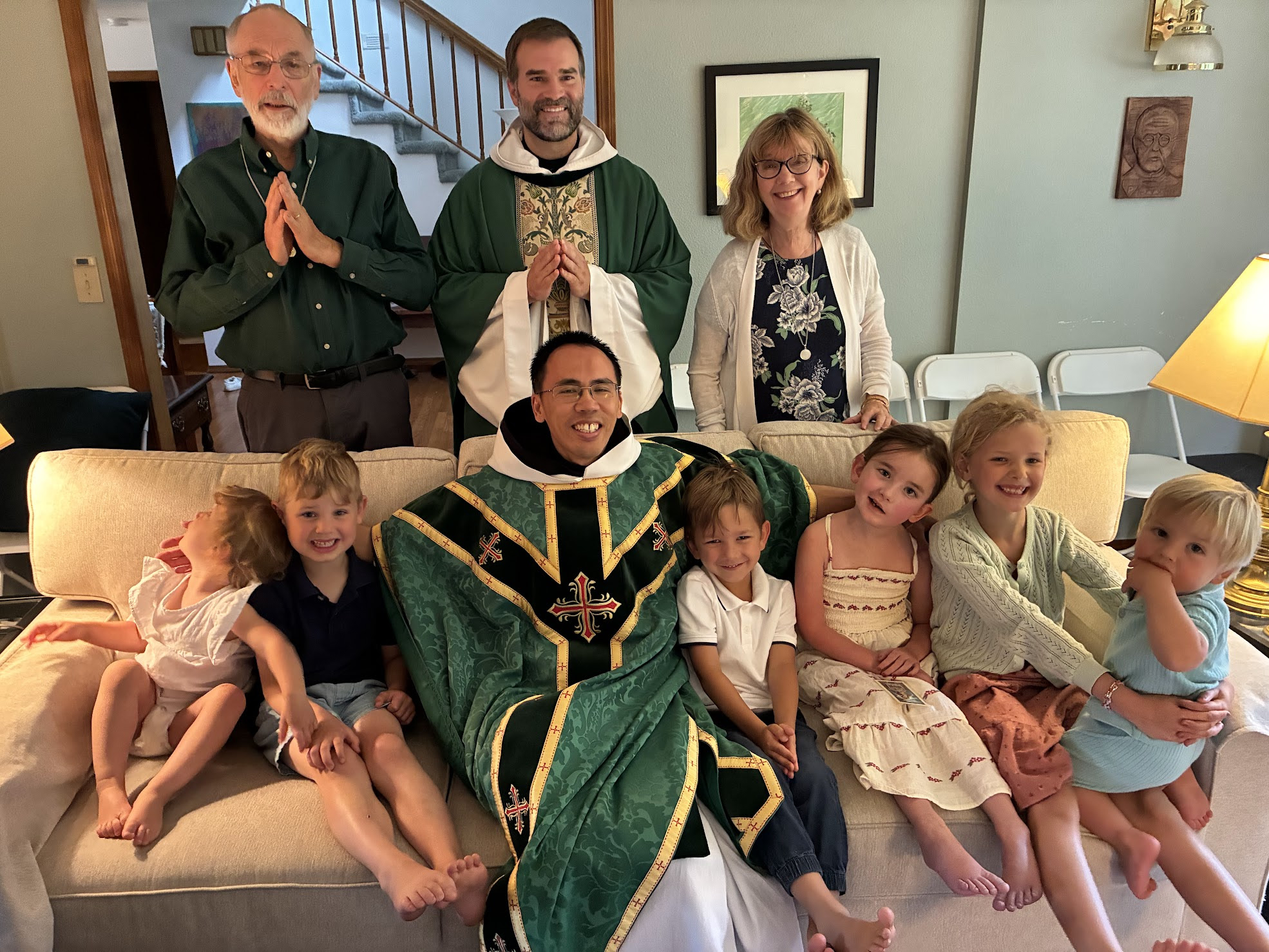
Group picture after Mass with Leonardo, Patti, their grandchildren and Fr. Simon.
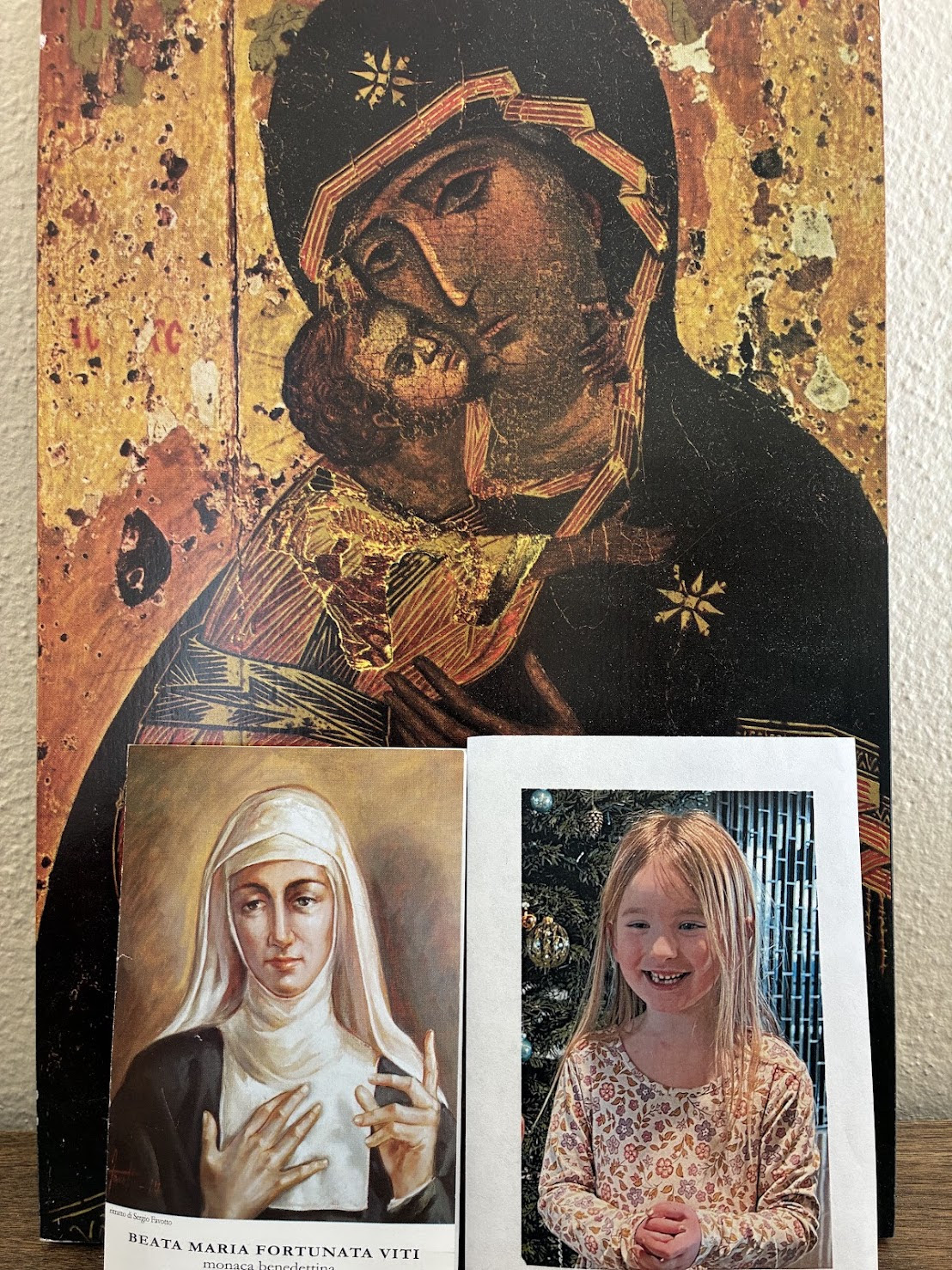
Please join me in seeking Bl. Fortunata Viti’s intercession for Ava.
Oblate Calendar
2026
Aug
9 – Oblate Sunday: Fr. Michael. Food and Drink.
Sept
13 – Oblate Sunday: Fr. Michael. Work.
18-20 – Oblate Retreat. Fr. Ephrem.
29 – Solemnity of Archangels (plenary indulgence may be obtained by oblates)
Oct
11- Oblate Sunday: Fr. Michael. Leisure.
Nov
6-8 – Oblate Retreat. Fr. Michael
8 – Oblate Sunday: Fr. Philip. Our Lady of Guadalupe: Part I.
Dec
8 – Immaculate Conception (plenary indulgence may be obtained by oblates)
13 – Oblate Sunday: Fr. Philip. Our Lady of Guadalupe: Part II.-
A Note to Our Dear Oblates - July 17, 2026
A Note to Our Dear Oblates
July 17, 2026Dear Oblates,
16th Sunday
“The kingdom of heaven is like yeast that a woman took and mixed with three measures of wheat flour.” The yeast is the kingdom of heaven, which is also Christ. To have Christ within us is to have heaven in our souls. The woman who takes the yeast and mixes it is Our Blessed Mother. Through her fiat at the Annunciation, she has opened for all believers the kingdom of heaven. The three measures of wheat flour are our body, mind, and heart. Our Lady, through her intercession, thoroughly mixes the yeast of Christ so that it fully permeates our entire lives. When the whole dough is leavened, we glorify God with our bodies, we keep his presence continually in our minds, and we love him with our whole hearts.
As our spiritual mother, Our Lady loves us so much and is deeply concerned about our salvation and sanctification. She does all within her power to shower God’s graces upon her beloved children. She does her work of mixing primarily through her intercession. As we read in Lumen Gentium, “Taken up to heaven, she [does] not lay aside this saving office but by her manifold intercession continues to bring us the gifts of eternal salvation. By her maternal charity, she cares for the brethren of her Son, who still journey on earth surrounded by dangers and difficulties, until they are led into their blessed home. Therefore the Blessed Virgin is invoked in the Church under the titles of Advocate, Helper, Benefactress, and Mediatrix.” (LG 62)
For our part, we simply have to be open to Our Lady’s role in our life, and to be docile to grace. If we resist, the life of Christ will not penetrate every aspect of our lives. We may simply give him a few moments in prayer and think that is enough, but if that is the case, the leaven will not be mixed and the dough of our lives will fail to rise to new life. By cultivating a deep and loving relationship with Our Lady, she can help us conquer sin and vice, and grow in virtue. As all mothers desire faith and holiness in their children, and will do everything possible to make this happen, so too, Our Lady. May we allow her to mix the yeast of Christ into the dough of our lives, that we may rise to new life with him.
When do you find yourself most in need of a mother’s care? How can you allow Mary to bring Jesus closer to you and you closer to her son?
Prayer request. Please pray for blessings upon all the retreatants who will be attending my retreat this weekend. Please also pray for the liturgical Fellowship of Scholars retreat, which starts next Monday. Please know that you can always send your prayer requests through our Oremus program.
Yours in Christ,
Fr. John Paul, OSB
Director of Oblates
Click here to see festival video.
Oblate Calendar
2026
Aug
9 – Oblate Sunday: Fr. Michael. Food and Drink.
Sept
13 – Oblate Sunday: Fr. Michael. Work.
18-20 – Oblate Retreat. Fr. Ephrem.
29 – Solemnity of Archangels (plenary indulgence may be obtained by oblates)
Oct
11- Oblate Sunday: Fr. Michael. Leisure.
Nov
6-8 – Oblate Retreat. Fr. Michael
8 – Oblate Sunday: Fr. Philip. Our Lady of Guadalupe: Part I.
Dec
8 – Immaculate Conception (plenary indulgence may be obtained by oblates)
13 – Oblate Sunday: Fr. Philip. Our Lady of Guadalupe: Part II.-
A Note to Our Dear Oblates - July 10, 2026
A Note to Our Dear Oblates
July 10, 2026Dear Oblates,
The Solemnity of St. Benedict
Tomorrow, we celebrate the feast day of our most holy father St. Benedict. It’s amazing to think that a man who lived three years in a cave in Italy 1500 years ago can have such an impact on our lives. I hope you can celebrate this day most gloriously. Here at the Abbey, we are fortunate to have the solemnity fall on Saturday, which is also the St. Benedict Festival.
Jesus says, “Everyone who has given up houses or brothers or sisters or father or mother or children or lands for the sake of my name will receive a hundred times more, and will inherit eternal life” (Mt 19:29). St. Benedict’s life is a perfect realization of this verse. He left his family, property, friends, even a good education so that he could seek God with his whole heart. For three years he was hidden in the cave of Subiaco, where he battled against the vices of the flesh and mind. After obtaining a high degree of sanctity, the Lord wished to reveal his saint to the world. As an abbot he established 12 monasteries and wrote a rule for the governance of the community. This rule is known for its moderation and discretion, and is a sure path to the Kingdom of God. The hundred-fold reward of St. Benedict’s sacrifice is evident in the lives of monks, nuns and oblates world-wide.
While we cannot imitate the life of St. Benedict literally, I do think we can still profit spiritually from this saying of our Lord. When we take time and escape into our cave of prayer, when we leave our work, family and other obligations to spend quiet time with the Lord, we too will be rewarded a hundred-fold by the Lord. It is not a material reward but a relational one. That alone time we spend with God is never wasted. In those brief or long moments of prayer, we pour out our hearts before the Lord. We grow in intimacy with him. We express our love for him and simply allow him to love us, to look at us. May we follow the example of St. Benedict and make time to leave everything behind for the sake of Jesus.
Reflect on your oblation and the initial fervor you had, like Benedict, in seeking God with your whole heart. How has your relationship with God grown since this time? Are there practices or habits you had at first of spending time with the Lord that you would like to rekindle?
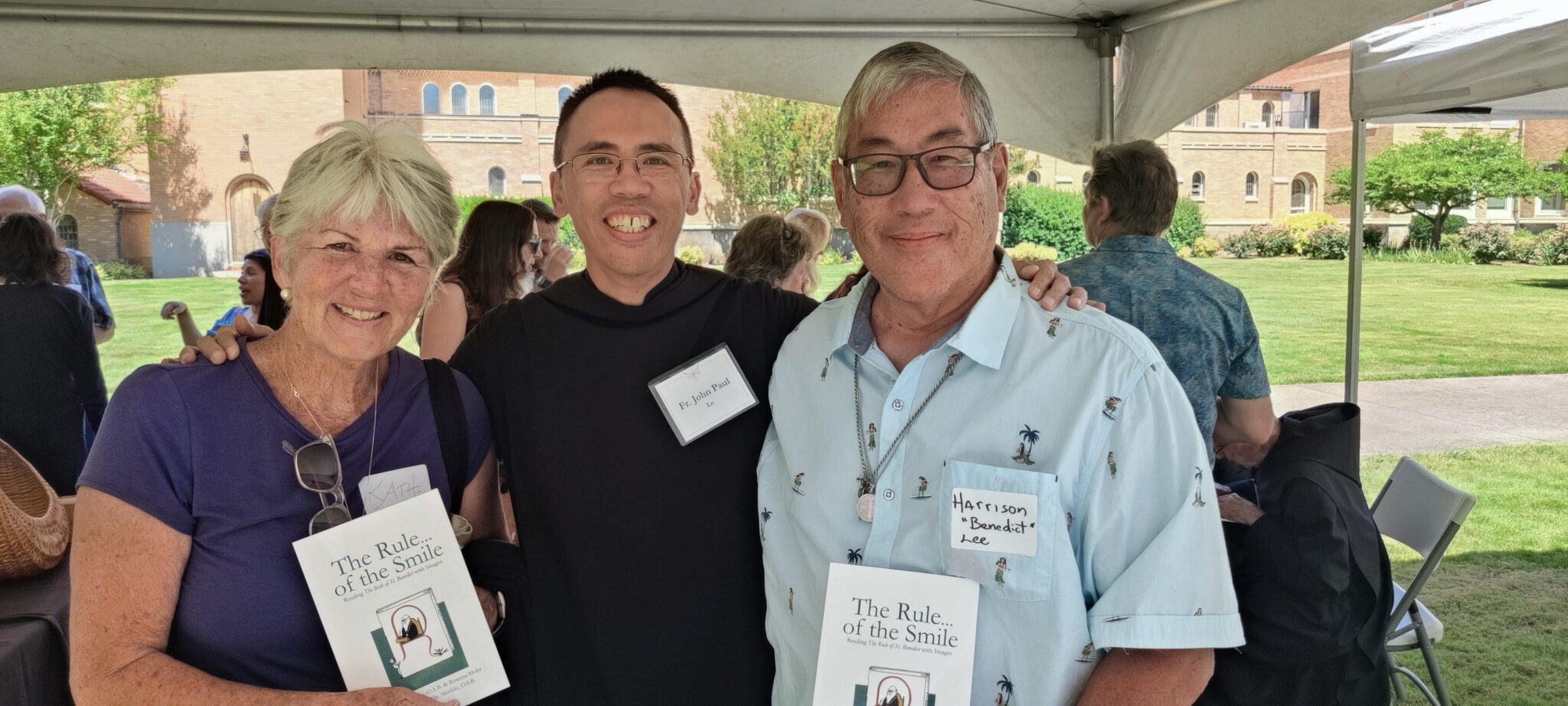
If you are coming to the St. Benedict Festival, please stop by the Monastic Experience booth between 1-3pm. I will be there working and selling my new book called The Rule of the Smile.
Br. Jesse has been appointed as the new Hispanic Oblate Director. He will continue his duties as my assistant with the English-speaking oblates.
Prayer request. Please pray for the success of the festival tomorrow. Please also pray for Fr. Basil in his work as navy chaplain. We had a grand old time in D.C. Please know that you can always send your prayer requests through our Oremus program.
Yours in Christ,
Fr. John Paul, OSB
Director of Oblates
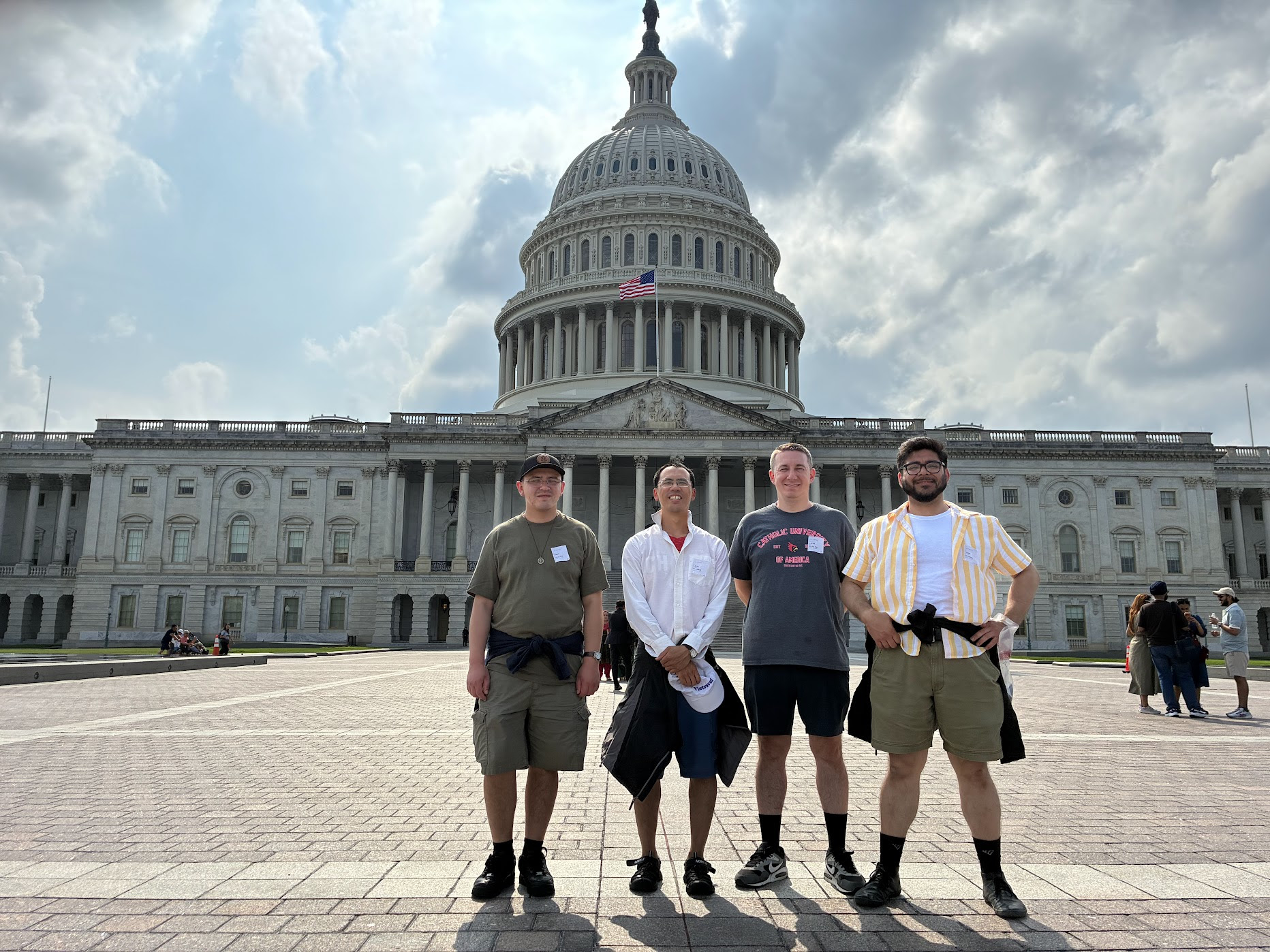
Monks standing in front of the Capitol building.
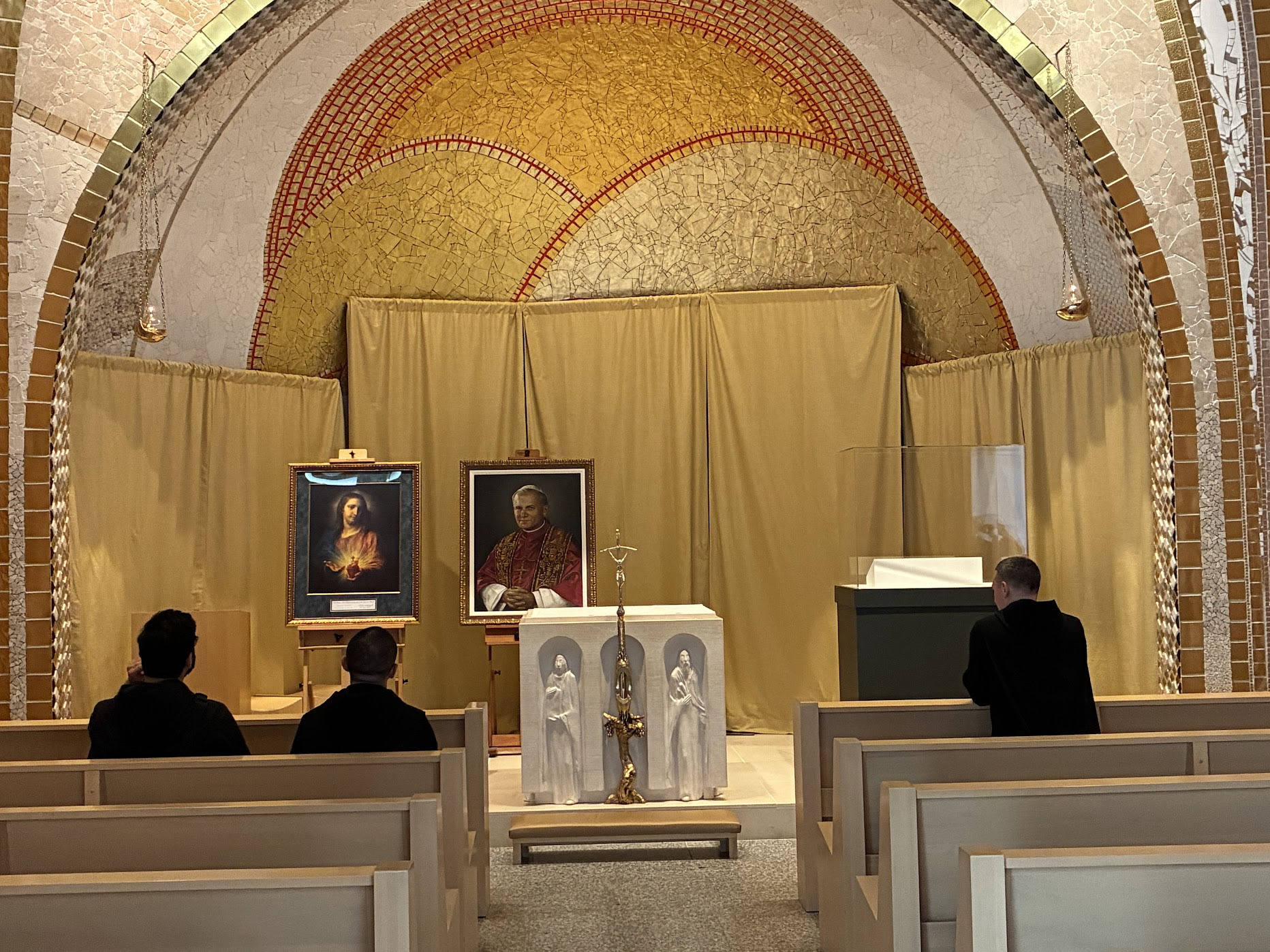
Praying in the St. John Paul II National Shrine.
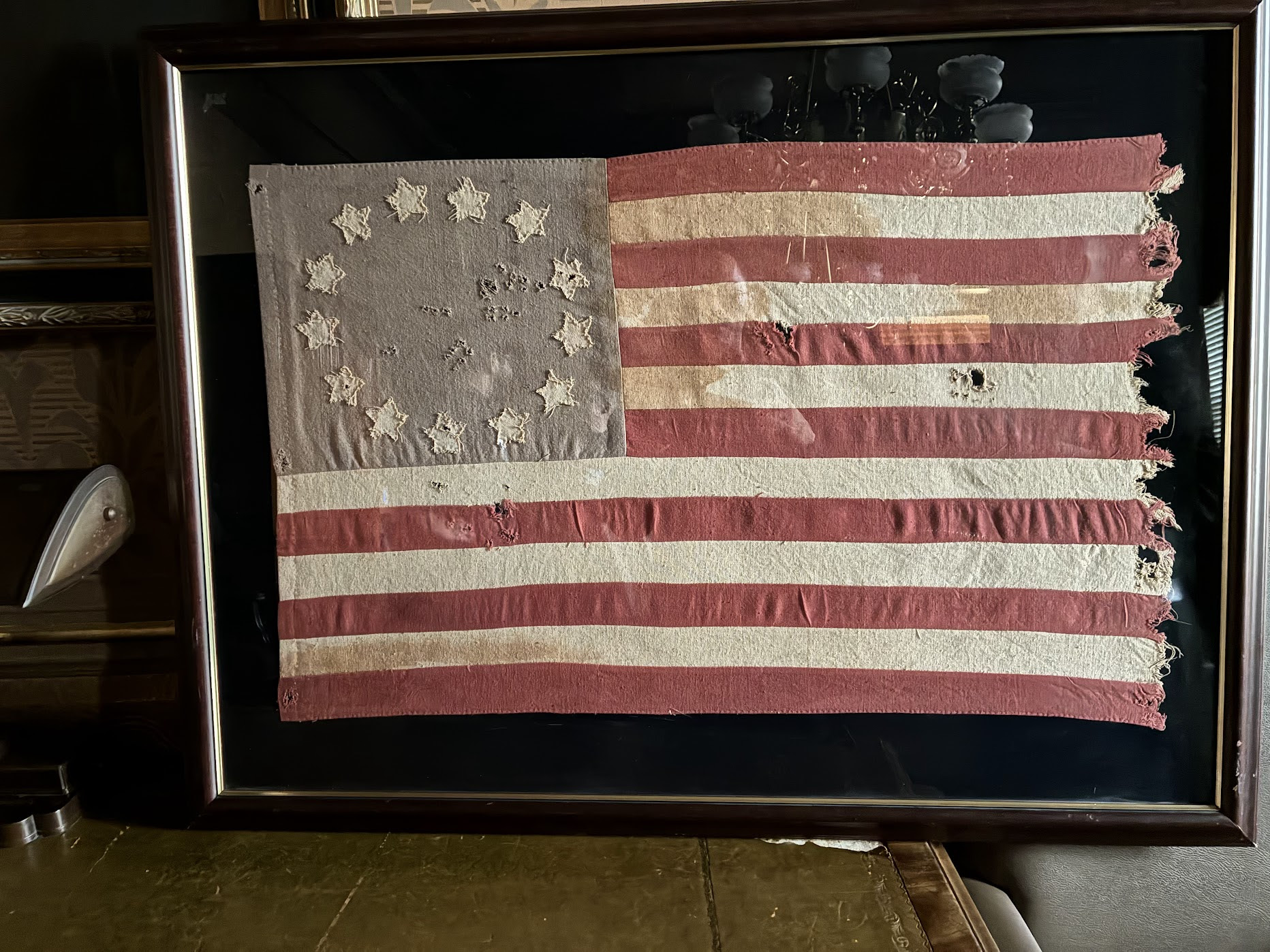
One of the original 13 colony flags.

Fr. John Paul at the podium in the press building: “Next question, please.”
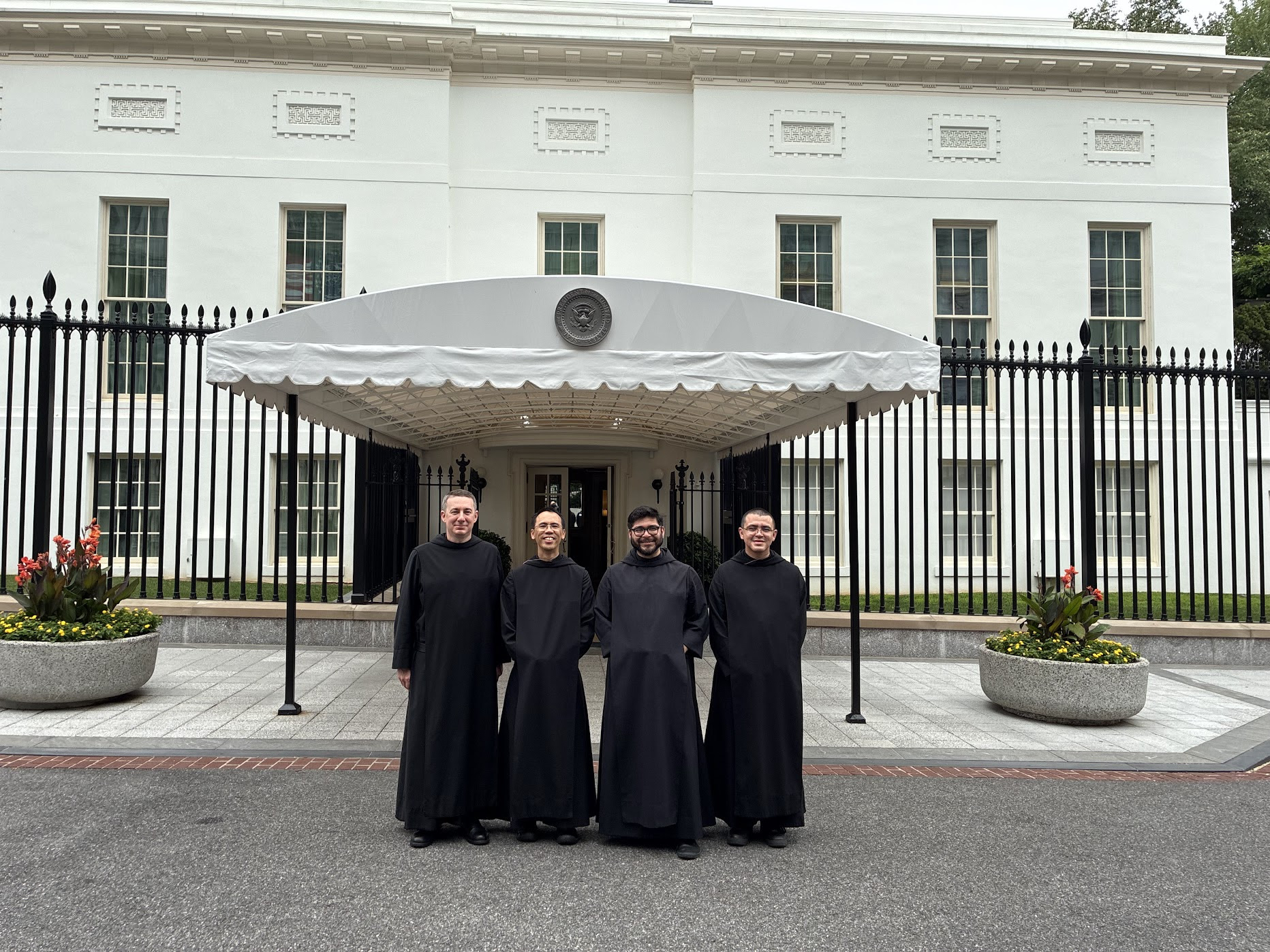
Standing outside the West Wing of the White House.
Oblate Calendar
2026
July
11 – St. Benedict Festival
11 – Solemnity of St. Benedict (plenary indulgence may be obtained by oblates)
Aug
9 – Oblate Sunday: Fr. Michael. Food and Drink.
Sept
13 – Oblate Sunday: Fr. Michael. Work.
18-20 – Oblate Retreat. Fr. Ephrem.
29 – Solemnity of Archangels (plenary indulgence may be obtained by oblates)
Oct
11- Oblate Sunday: Fr. Michael. Leisure.
Nov
6-8 – Oblate Retreat. Fr. Michael
8 – Oblate Sunday: Fr. Philip. Our Lady of Guadalupe: Part I.
Dec
8 – Immaculate Conception (plenary indulgence may be obtained by oblates)
13 – Oblate Sunday: Fr. Philip. Our Lady of Guadalupe: Part II.-
A Note to Our Dear Oblates - July 3, 2026
A Note to Our Dear Oblates
July 3, 2026Dear Oblates,
14th Sunday
“Come to me…for I am meek and humble of heart.” Christ, the almighty and eternal God, so loves us that he calls us to himself. He is not a haughty lord, who makes his authority of his subjects felt, but rather he so humbles himself, lowers himself so that we can come to him and remain with him. It is not easy for us to approach a stern taskmaster, who expects perfection, but it is much easier to come to a shepherd, who is compassionate and merciful.
Christ becomes little, like a child so we can approach him. When we see a little baby, we are not moved by fear. Instead, we are filled with joy and wonder and our hearts desire to draw near to the baby, touch the baby and even hold the baby in our arms. In some ways, that is how we can think of Jesus. He is so humble, so innocent, so gentle that he breaks down our walls. We know that we can approach him and love him and rest in his love.
As a mother of a newborn infant receives much joy at being in the presence of the baby, so too, we are filled with peace and joy at being in the presence of the Lord. All our worries seem to wash away as we gaze upon him. Nothing seems to matter as we give him our love and allow him to love us.
Christ allows us to love him, how can you allow Christ to love you more? Are there people in your life that you can open yourself to more, people God is seeking to love you through?
Retreat dates 2027
2/5-7/27 – Fr. Pius
5/14-16/27 – Fr. Charles
9/17-19/27 – Fr. Timothy
11/5-7/27 – Abbot PeterSt. Benedict Novena Prayer July 3rd-11th
O glorious St. Benedict, sublime model of all virtues, pure vessel of God’s grace! Behold me, humbly kneeling at thy feet. I implore thy loving heart to pray for me before the throne of God.To thee I have recourse in all the dangers which daily surround me.
Shield me against my enemies, inspire me to imitate thee in all things. May thy blessing be with me always, so that I may shun whatever God forbids and avoid the occasions of sin.
Graciously obtain for me from God those favors and graces of which I stand so much in need, in the trials, miseries and afflictions of life.
Thy heart was always so full of love, compassion, and mercy toward those who were afflicted or troubled in any way.
Thou didst never dismiss without consolation and assistance anyone who had recourse to thee. I therefore invoke thy powerful intercession, in the confident hope that thou wilt hear my prayers and obtain for me the special grace and favor I so earnestly implore (mention request here…) if it be for the greater glory of God and the welfare of my soul.
Help me, O great St. Benedict, to live and die as a faithful child of God, to be ever submissive to His holy will, and to attain the eternal happiness of heaven. Amen.
Prayer request. Please pray for Fr. Israel, Br. Isaiah and me as we go to D.C. to visit Fr. Basil and celebrate our country’s 250th anniversary of independence. God bless America! Please know that you can always send your prayer requests through our Oremus program.
Yours in Christ,
Fr. John Paul, OSB
Director of Oblates
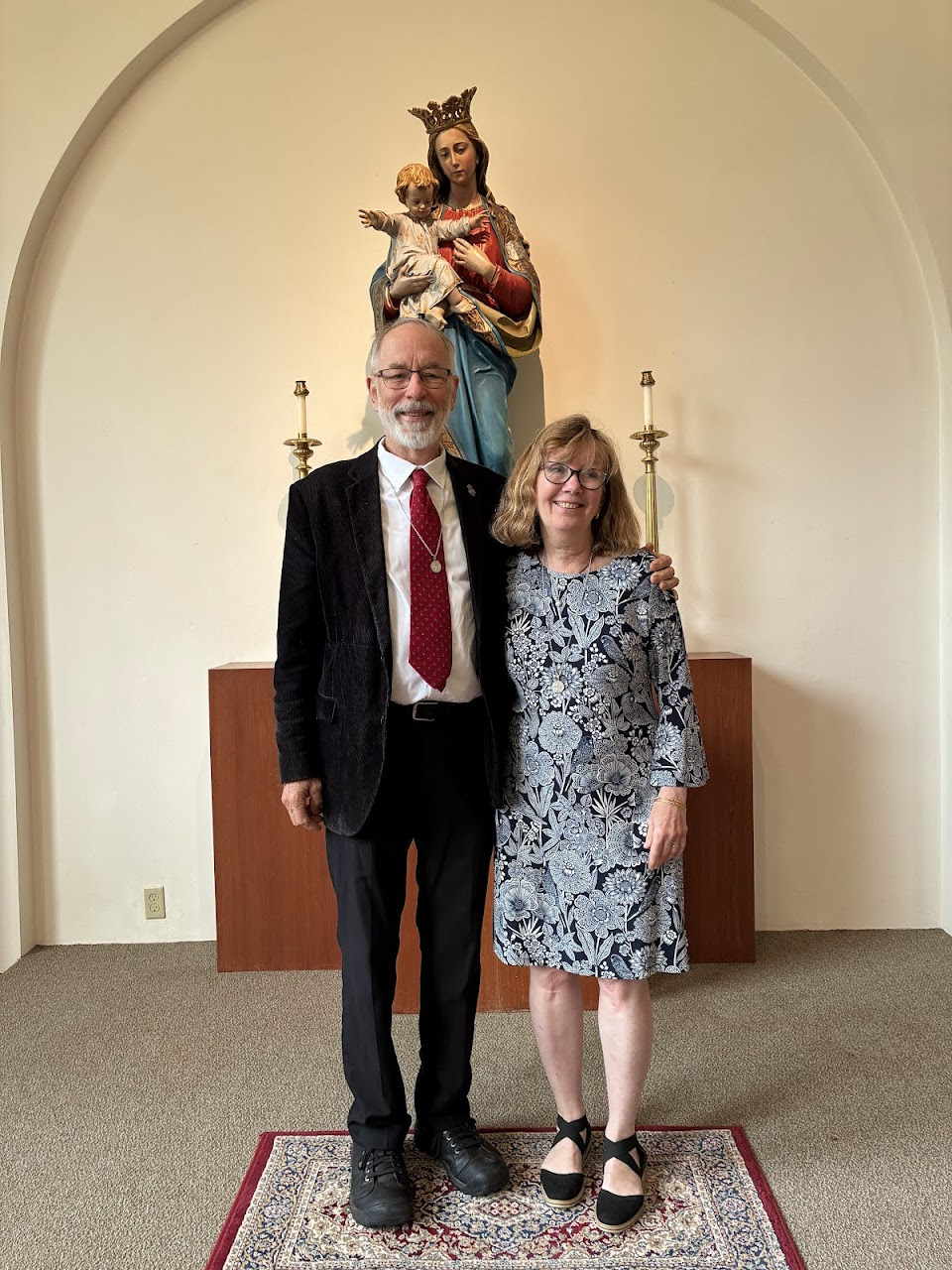
Leonardo “Bernard” and Patti “Therese” Defilippis
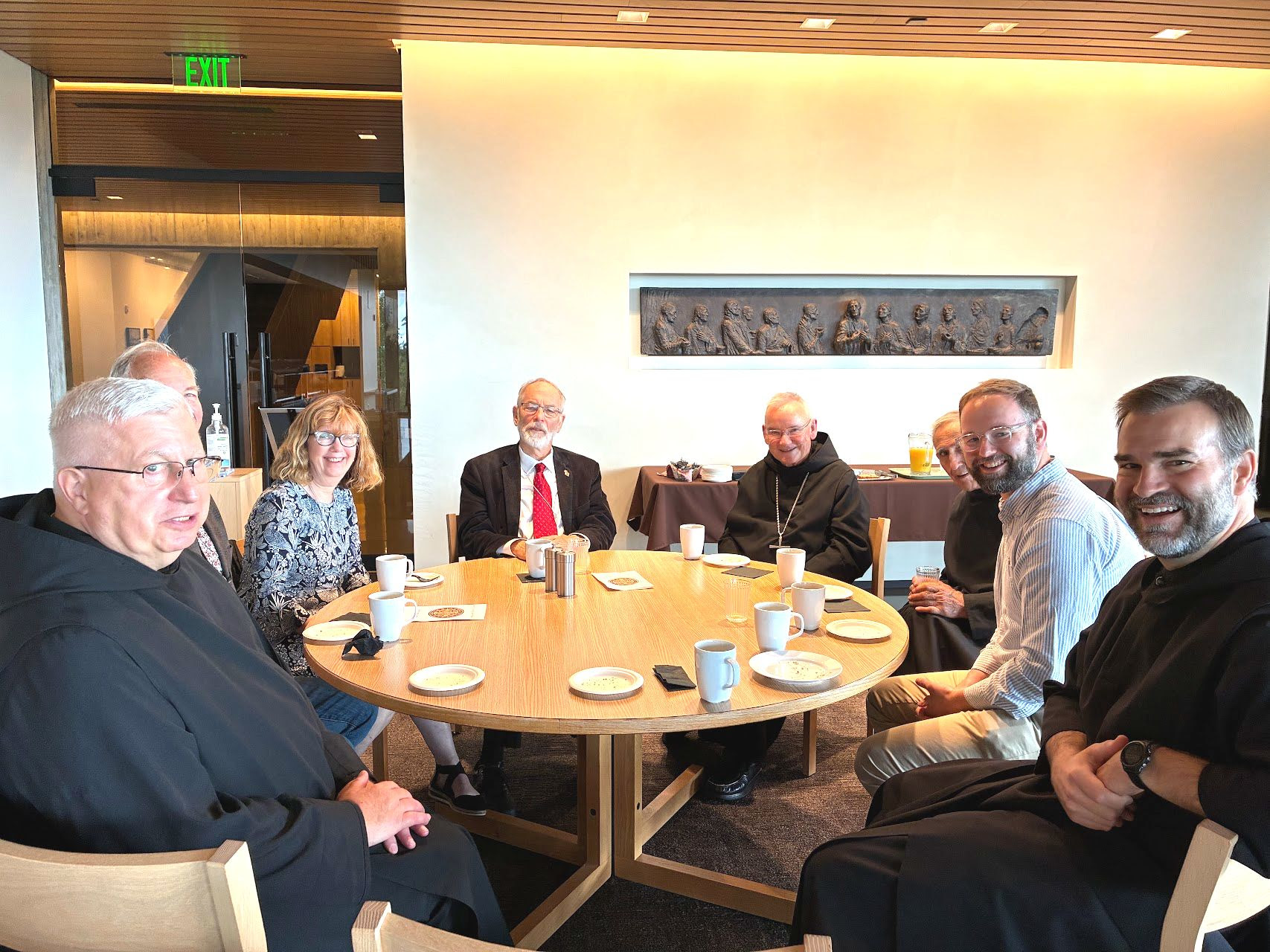
Reception after oblation
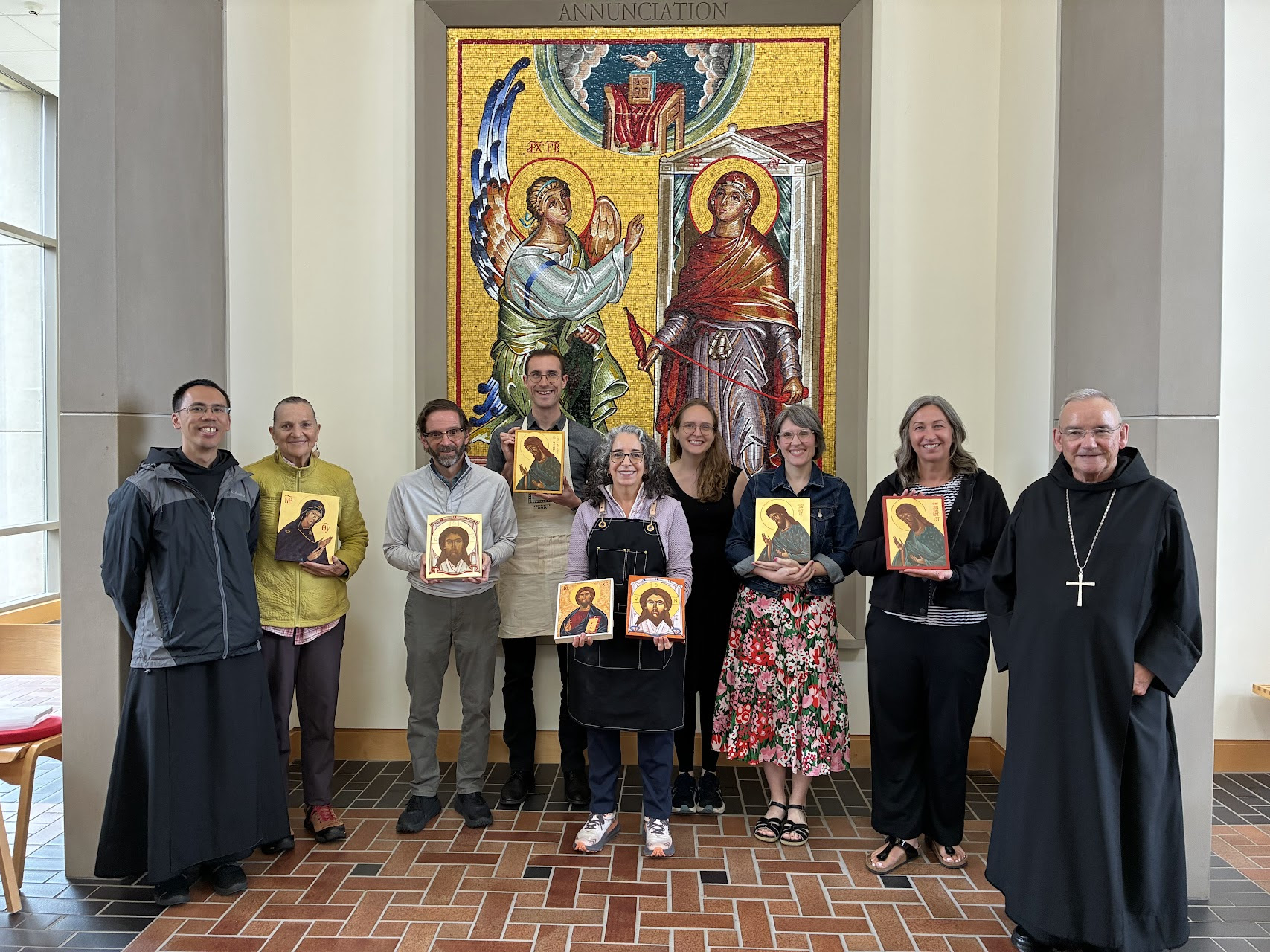
Oblate iconographers
Oblate Calendar
2026
July
11 – St. Benedict Festival
11 – Solemnity of St. Benedict (plenary indulgence may be obtained by oblates)
Aug
9 – Oblate Sunday: Fr. Michael. Food and Drink.
Sept
13 – Oblate Sunday: Fr. Michael. Work.
18-20 – Oblate Retreat. Fr. Ephrem.
29 – Solemnity of Archangels (plenary indulgence may be obtained by oblates)
Oct
11- Oblate Sunday: Fr. Michael. Leisure.
Nov
6-8 – Oblate Retreat. Fr. Michael
8 – Oblate Sunday: Fr. Philip. Our Lady of Guadalupe: Part I.
Dec
8 – Immaculate Conception (plenary indulgence may be obtained by oblates)
13 – Oblate Sunday: Fr. Philip. Our Lady of Guadalupe: Part II.-
A Note to Our Dear Oblates - June 26, 2026
A Note to Our Dear Oblates
June 26, 2026Dear Oblates,
13th Sunday in Ordinary Time
Our Lord speaks of the radicality of the Christian vocation in today’s gospel. He tells us directly that our love for him ought to be greater than our love for our father, mother, son and daughter. Not that we should not love our family, but that it should not take precedence over our love for the Lord. How many of the saints followed the path of our Lord to the chagrin of their family. I think this is one of the “hard” sayings of Jesus because naturally we love our family so much, and we would do anything for them, even die for them. However, this is where grace is necessary, to follow God even when it may be inconvenient for our family.
Perhaps this is why Jesus follows up this statement by saying that whoever does not take up his cross and follow after me is not worthy of me. Putting our Lord first in our life can be a very heavy cross. We not only get push back from the world but also from our own families and communities. We may have to bear with insults, accusations and persecutions, but when born with love, grace flows forth.
This love for Christ above all else is nothing other than the greatest commandment, to love the Lord, our God with all our heart, soul, mind and strength. In loving God first, in putting him before all others, we actually love our family more, for we love God in them. There is no opposition between the love of God and the love of our neighbor. The devil may, however, tempt us in believing this is true. When we prioritize our spiritual life above all else, we love our family better and we become a blessing to them. Mother Teresa, who had so many demands, said that because of her communities’ commitment to prayer, they are able to love more. She said, “It [Prayer] has brought us closer together. We love each other better,…we love the poor with greater and deeper faith and love.” Therefore, let us not be afraid to put God first, to seek first his kingdom, for we know that if we do, all things will be given us as well.
When have you noticed God calling you to spend more time with him in the midst of family or community life? How did you respond and why? Can you acknowledge any blessings on the people in your life from times you have given your full attention to God?
If you would like a book recommendation try Benedict’s Way by Lonni Collins Pratt and Daniel Homan. One of our Deaneries is currently reading this book together.
Prayer request. Please pray for Please pray for Br. Ignatius as he leaves for L.A. tomorrow. Thankfully he has a job working as Religious Ed. coordinator at a parish. Please know that you can always send your prayer requests through our Oremus program.
Yours in Christ,
Fr. John Paul, OSB
Director of Oblates

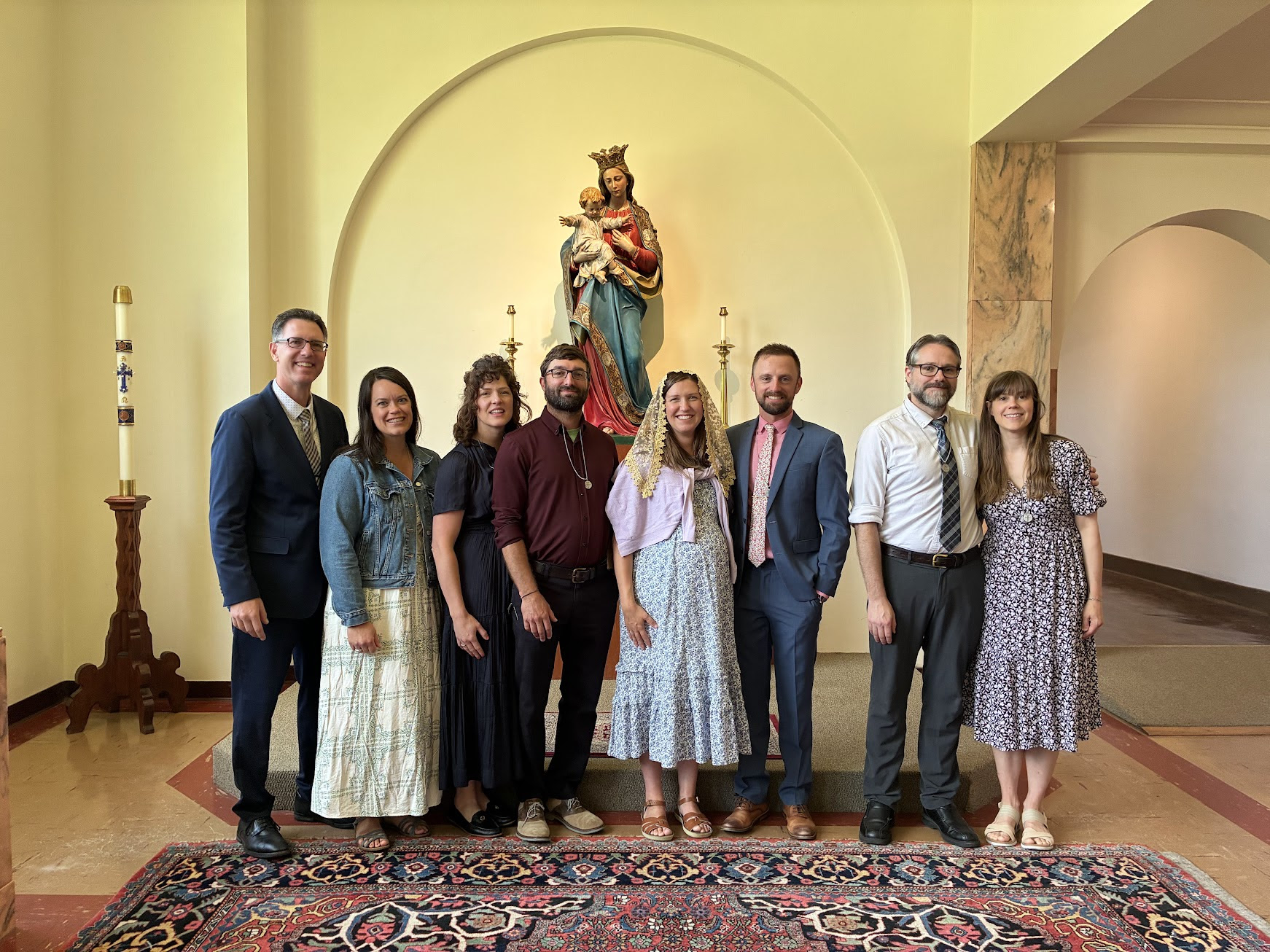
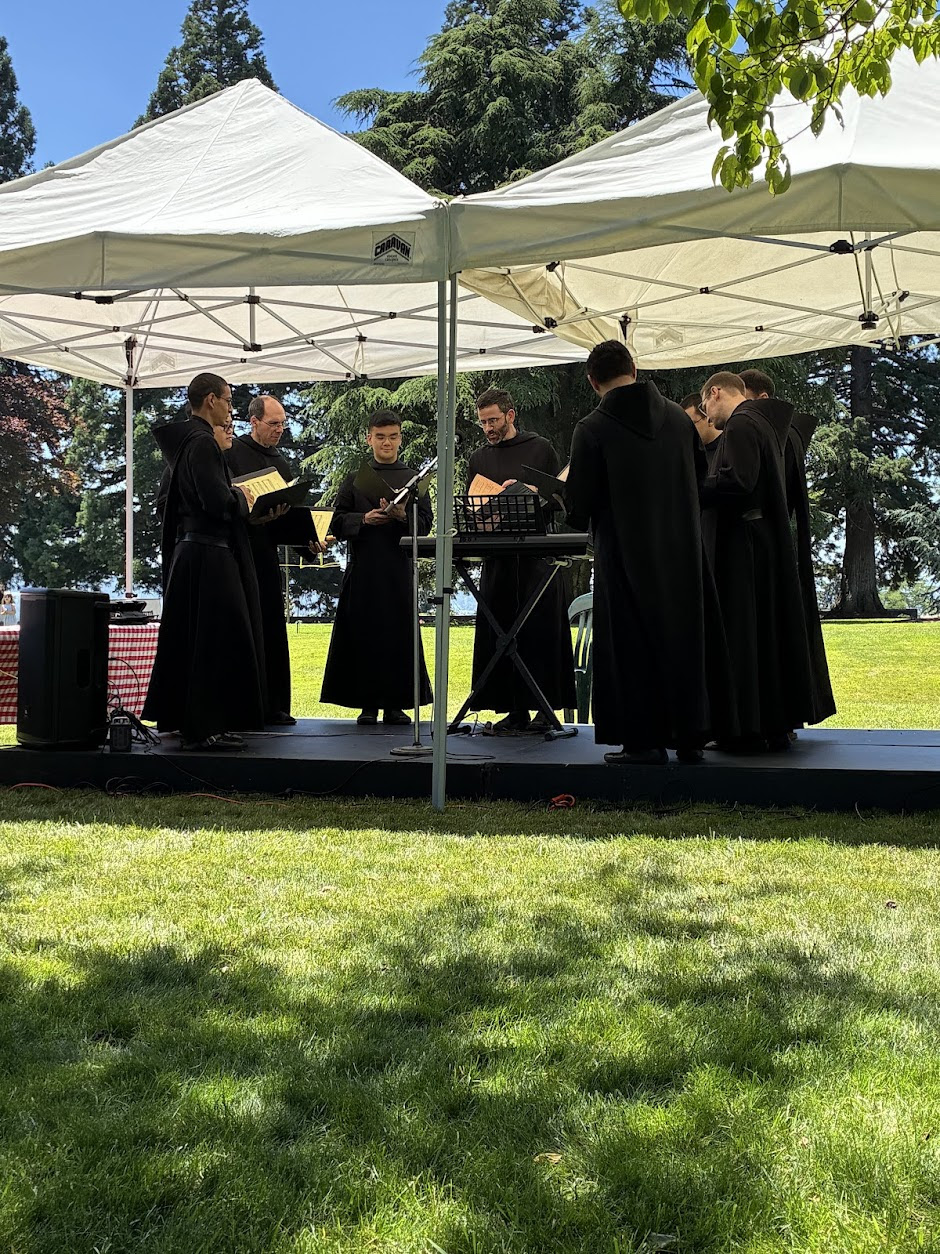
Oblate Calendar
2026
July
11 – St. Benedict Festival
11 – Solemnity of St. Benedict (plenary indulgence may be obtained by oblates)
Aug
9 – Oblate Sunday: Fr. Michael. Food and Drink.
Sept
13 – Oblate Sunday: Fr. Michael. Work.
18-20 – Oblate Retreat. Fr. Ephrem.
29 – Solemnity of Archangels (plenary indulgence may be obtained by oblates)
Oct
11- Oblate Sunday: Fr. Michael. Leisure.
Nov
6-8 – Oblate Retreat. Fr. Michael
8 – Oblate Sunday: Fr. Philip. Our Lady of Guadalupe: Part I.
Dec
8 – Immaculate Conception (plenary indulgence may be obtained by oblates)
13 – Oblate Sunday: Fr. Philip. Our Lady of Guadalupe: Part II.-
A Note to Our Dear Oblates - June 19, 2026
A Note to Our Dear Oblates
June 19, 2026Dear Oblates,
12th Sunday in Ordinary Time
“What I say to you in the darkness, speak in the light; what you hear whispered, proclaim on the housetops.” These are the words spoken by our Lord to the apostles, but they are also words spoken to us. Yes, Christ speaks to us in the darkness in a whisper. Through the course of our lives, there are moments and seasons of darkness. It may last for a few minutes or even be prolonged for years, and even decades. During these times it is difficult to hear the voice of Christ speaking to us. We hear, rather, the voice of the world, the voice of the devil. The words they speak keep us in the darkness, lead us to confusion and give no reason for hope. We can very often be cornered and trapped by these discouraging thoughts.
However in this darkness, another voice speaks to us if we quiet our souls and open our hearts. It is the voice of God, often spoken in a soft whisper. These words can come all of a sudden, or from the scriptures or from a friend. This quiet whisper from God restores life to our souls, gives us hope and reminds us of God’s never-failing love. They are for us a ray of light shining through the dark clouds of darkness and despair.
A few weeks ago I was wallowing in my own sinful state, wondering how I can be a monk and priest. I recognized all too clearly my infidelity to the Lord and the ways in which I had offended him. And then, when I was saying Mass, God spoke to me during the words of consecration, “This is the chalice of my Blood…which will be poured out for you and for many for the forgiveness of sins.” These words reminded me that Christ came not for the healthy but for the sick, that through his Blood we have redemption, the forgiveness of sins. It was for me a powerful word from God spoken through a whisper. Of course, no one else at Mass knew what was going on in my soul, but my heart was lifted and a deep peace came to rest upon me.
When has God “spoken” to you in a whisper? Where were you? What did God want you to know? When has God prompted you to share what he whispered to you with someone else–someone who needed to hear this same message from him?
Prayer request. Please pray for the 19 discerners who are with us on retreat. Pray for the eight novices, who will be making oblation on Sunday. Please know that you can always send your prayer requests through our Oremus program.
Yours in Christ,
Fr. John Paul, OSB
Director of Oblates
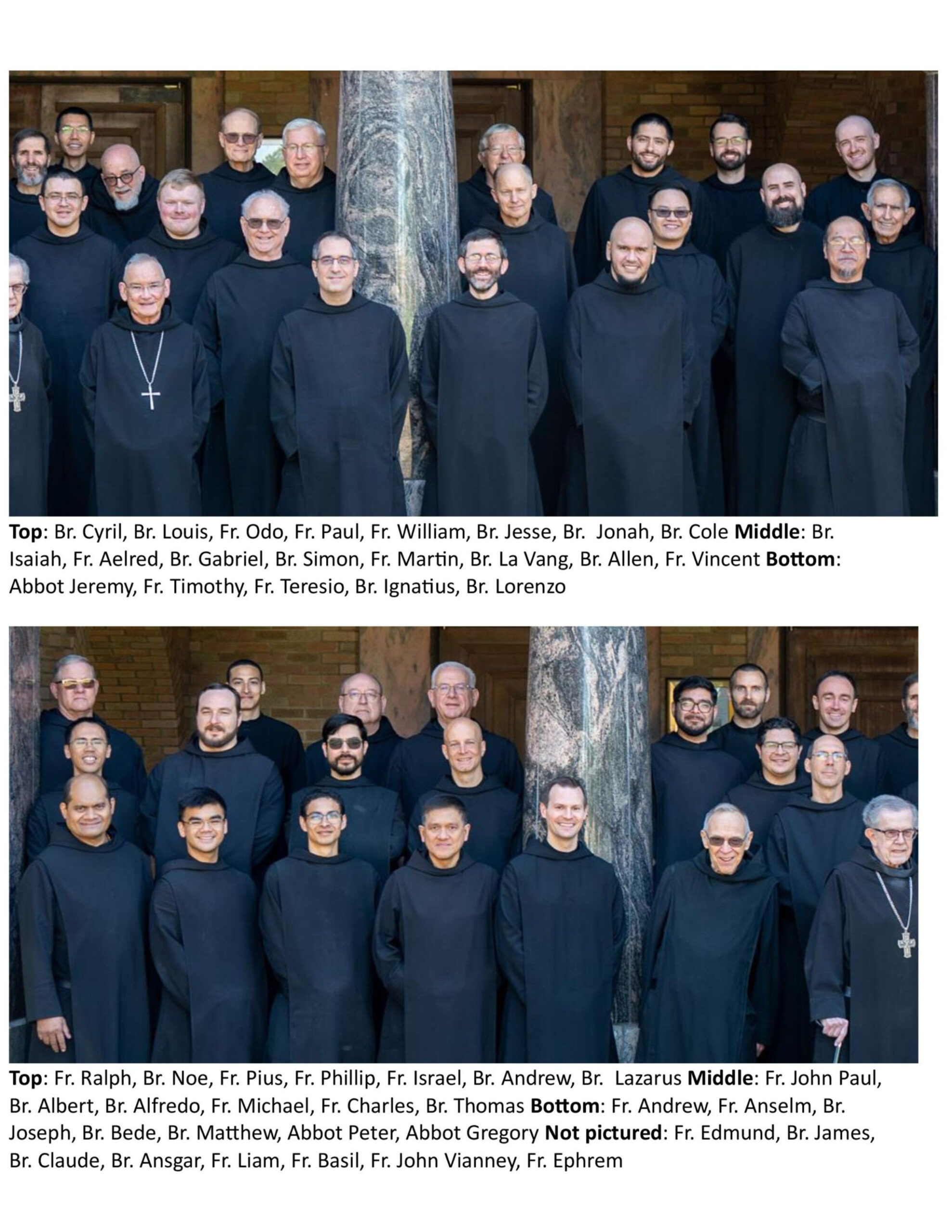
Oblate Calendar
2026
June
18-21 – Oblate Study Days
21 – Oblate Picnic
July
11 – St. Benedict Festival
11 – Solemnity of St. Benedict (plenary indulgence may be obtained by oblates)
Aug
9 – Oblate Sunday: Fr. Michael. Food and Drink.
Sept
13 – Oblate Sunday: Fr. Michael. Work.
18-20 – Oblate Retreat. Fr. Ephrem.
29 – Solemnity of Archangels (plenary indulgence may be obtained by oblates)
Oct
11- Oblate Sunday: Fr. Michael. Leisure.
Nov
6-8 – Oblate Retreat. Fr. Michael
8 – Oblate Sunday: Fr. Philip. Our Lady of Guadalupe: Part I.
Dec
8 – Immaculate Conception (plenary indulgence may be obtained by oblates)
13 – Oblate Sunday: Fr. Philip. Our Lady of Guadalupe: Part II.-
A Note to Our Dear Oblates - June 12, 2026
A Note to Our Dear Oblates
June 12, 2026Dear Oblates,
11th Sunday in Ordinary Time
The Gaze of ChristIn the gospel for this Sunday, we read that at the sight of the crowds, Jesus’ heart was moved with pity for them. This is the loving gaze of Christ with which he looks upon the crowds and the whole world. While our eyes make a superficial glance upon others and their suffering, Christ’s gaze is deep and penetrates to the depths of his heart. When he sees the exterior he does not stop there, but penetrates the depths of our souls to the source of our pain. In a simple phrase, Christ sees the whole person. How comforting is this truth.
Just as Christ looked at the crowds, so too does he look at us. He sees us when we wake up, when we eat, when we work and so on. However, this is not merely a superficial gaze, but his gaze pierces the depths of our souls. He knows when we are in pain, when we are joyful, when we are confused and troubled. Seeing us in our entirety, his heart is moved with deep compassion.
We might think that the Lord must have a feeling of disgust when he looks at us. We might think that if he knew our hearts, he would reject us. This is an utter lie. We may sometimes be our worst critic. We see every blemish and fault, and we hold a magnifying glass up to it. These sins and defects are too much for God we think. He can’t possibly love me just as I am, yet he does, even more than we can ever imagine. I hope that you may always know this loving gaze of Christ. In your shame, doubt and despair, imagine him looking at you with his penetrating eyes filled with compassion. This can be a wonderful meditation for us. We may be inclined to turn away from such love, but I encourage you to allow the gaze of Christ to penetrate your heart and soul, so that your gaze upon him may allow you to penetrate his heart.
Where is a place you find it easiest to open yourself to receive Christ’s gaze upon you? Try to notice his gaze upon you in the people around you this week, and ask him to allow his gaze to fall on others through your eyes as well.
Prayer request. Please pray for blessings upon the Day of Recollection I am giving tomorrow. Please pray for the success of the oblate Study Days next week. Please know that you can always send your prayer requests through our Oremus program.
Yours in Christ,
Fr. John Paul, OSB
Director of Oblates
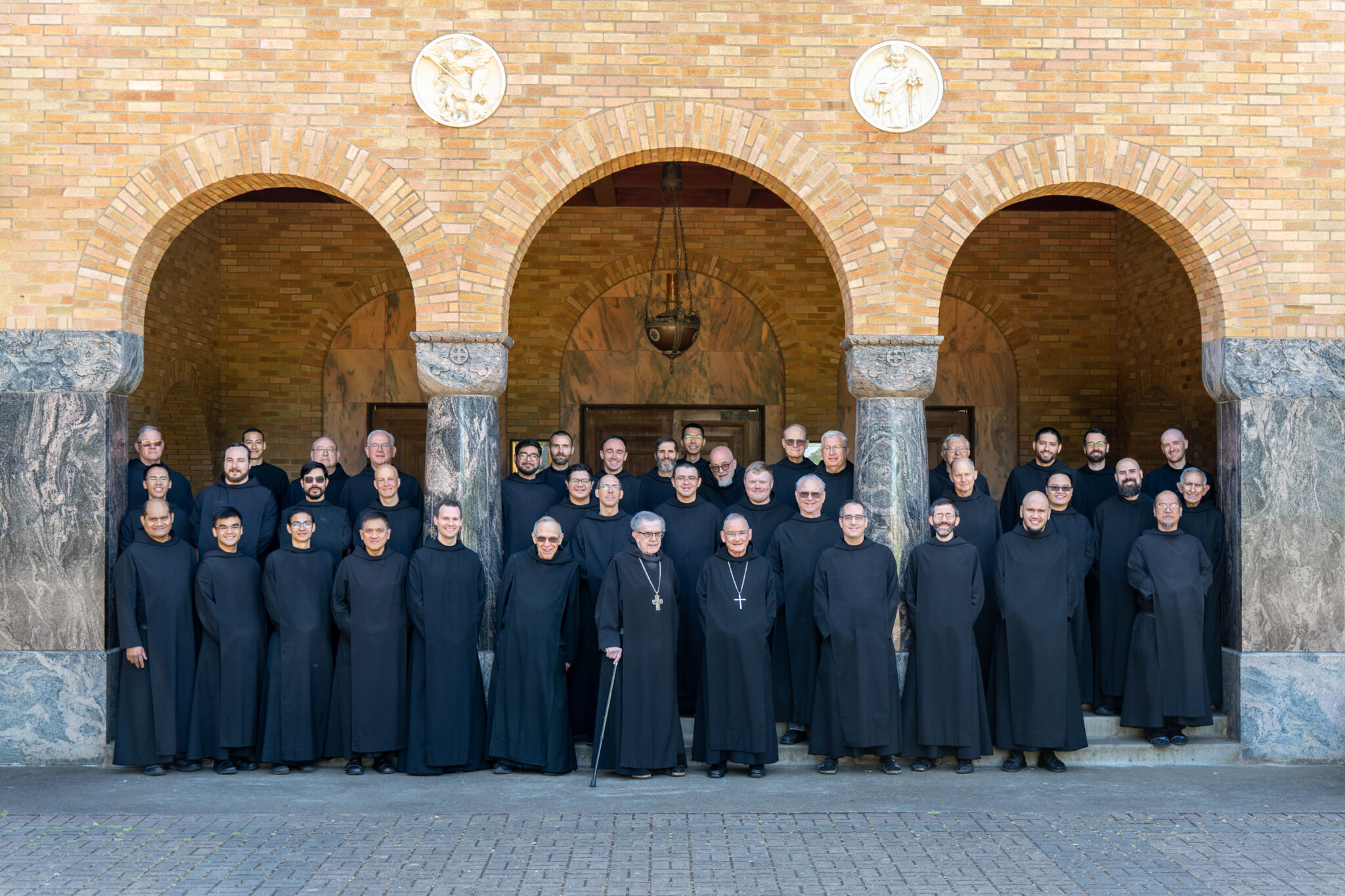
Photo from the May retreat.
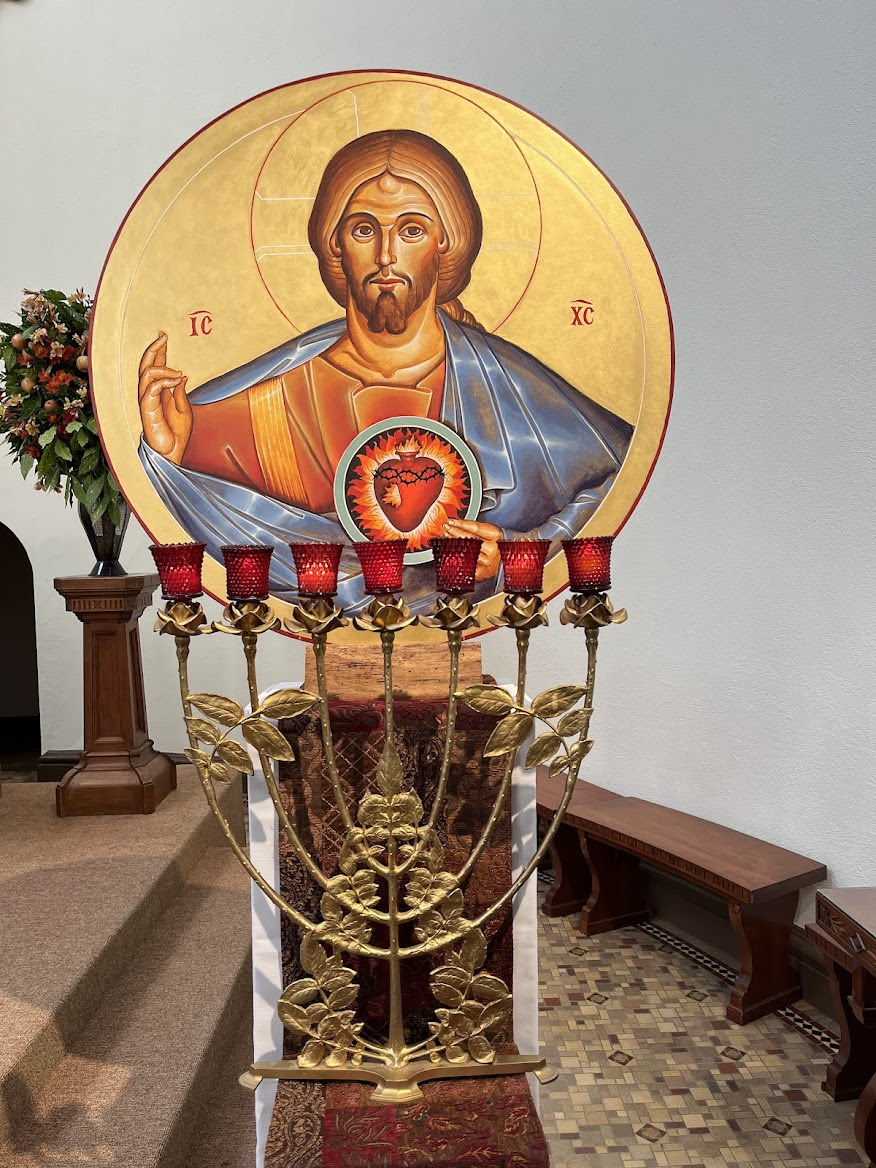
Sacred Heart Icon. Please remember to pray the consecration prayer to the Sacred Heart.
Oblate Calendar
2026
June
14 – Oblate Sunday: Fr. Anselm. Redirecting Love: Part IV.
18-21 – Oblate Study Days
21 – Oblate Picnic
July
11 – St. Benedict Festival
11 – Solemnity of St. Benedict (plenary indulgence may be obtained by oblates)
Aug
9 – Oblate Sunday: Fr. Michael. Food and Drink.
Sept
13 – Oblate Sunday: Fr. Michael. Work.
18-20 – Oblate Retreat. Fr. Ephrem.
29 – Solemnity of Archangels (plenary indulgence may be obtained by oblates)
Oct
11- Oblate Sunday: Fr. Michael. Leisure.
Nov
6-8 – Oblate Retreat. Fr. Michael
8 – Oblate Sunday: Fr. Philip. Our Lady of Guadalupe: Part I.
Dec
8 – Immaculate Conception (plenary indulgence may be obtained by oblates)
13 – Oblate Sunday: Fr. Philip. Our Lady of Guadalupe: Part II.-
A Note to Our Dear Oblates - June 5, 2026
A Note to Our Dear Oblates
June 5, 2026Dear Oblates,
The Solemnity of Corpus Christi
“For as the heavens are higher than the earth, so are my ways higher than your ways, and my thoughts than your thoughts” (Is 55:9). The ways of God, the thoughts of God, the love of God are incomprehensible. As we celebrate the Solemnity of Corpus Christi, we encounter in a profound way this stunning truth. Who could have ever imagined that the infinite, eternal, all powerful God would so condescend himself, so to become man, and not only that, but to make himself food for the life of our souls? How awesome is our faith. What dignity we have been endowed with that the maker of heaven on earth were desired to unite himself to us in a bond of love, in the sacrament of charity.
Yet, how easily it is to forget these amazing truths. We get caught up in the demands of life: school, work, family, friends, and entertainment. We get swept away by the waves of distraction, and can easily forget the God, who made us; the God, who is with us, always in the Eucharist. For this reason, we read that Moses tells the people to remember and not forget the marvelous deeds of God. Remember, remind yourself continually of God’s love, God’s providence, God’s care, God’s gift of himself. As children need a timeout to re-center themselves, so too, we need a timeout to pray to redirect our minds and hearts back to the ultimate reality, that is God.
What are we to remember? Jesus tells us that he is the living bread. Indeed, the Eucharist is the living and glorified Body and Blood of our Lord. Therefore, he who lives eternally can give life to us. We can sometimes be half dead, but Christ came so that we may be fully alive, transformed. Saint Augustine says that when we consume Christ in the Eucharist, he will not change into us, but we will be transformed into him. Hence, we are all sharers in the divine nature. In the Eucharist, Jesus tells us that we remain in him and he and us. It is a bond of charity that established deep communion between God and us. Christ with me; Christ before me; Christ behind me; Christ in me.
Here is a link to Pope Leo’s Encyclical, Magnifica Humanitas:
Encyclical Letter of His Holiness Leo XIV Magnifica Humanitas (15 May 2026)Our next Oblate Sunday is June 14th with Fr. Anselm giving the fourth of his four part series on redirecting love – Benedictine discipline and the formation of desire. For in-person, click here; for remote option, click here. The Oblate Sunday begins with Mass at the Abbey at 9 am. It is followed by a potluck brunch after Mass in the guesthouse dining room. The conference starts at 11 am in the Westminster Room.
Prayer request. Please pray for Br. Ignatius, who has discerned that he is called to leave the monastery after nine years. He has faithfully served our Hispanic oblates over the past three years. His replacement has yet to be determined. Please also pray for Br. Damien-Joseph of St. Martin’s Abbey, who will be ordained to the priesthood tomorrow. Please pray for the eternal rest of oblate Gregory “Francis Gregory” Smith. Please know that you can always send your prayer requests through our Oremus program.
Yours in Christ,
Fr. John Paul, OSB
Director of Oblates
Oblate Calendar
2026
June
14 – Oblate Sunday: Fr. Anselm. Redirecting Love: Part IV.
18-21 – Oblate Study Days
21 – Oblate Picnic
July
11 – St. Benedict Festival
11 – Solemnity of St. Benedict (plenary indulgence may be obtained by oblates)
Aug
9 – Oblate Sunday: Fr. Michael. Food and Drink.
Sept
13 – Oblate Sunday: Fr. Michael. Work.
18-20 – Oblate Retreat. Fr. Ephrem.
29 – Solemnity of Archangels (plenary indulgence may be obtained by oblates)
Oct
11- Oblate Sunday: Fr. Michael. Leisure.
Nov
6-8 – Oblate Retreat. Fr. Michael
8 – Oblate Sunday: Fr. Philip. Our Lady of Guadalupe: Part I.
Dec
8 – Immaculate Conception (plenary indulgence may be obtained by oblates)
13 – Oblate Sunday: Fr. Philip. Our Lady of Guadalupe: Part II.